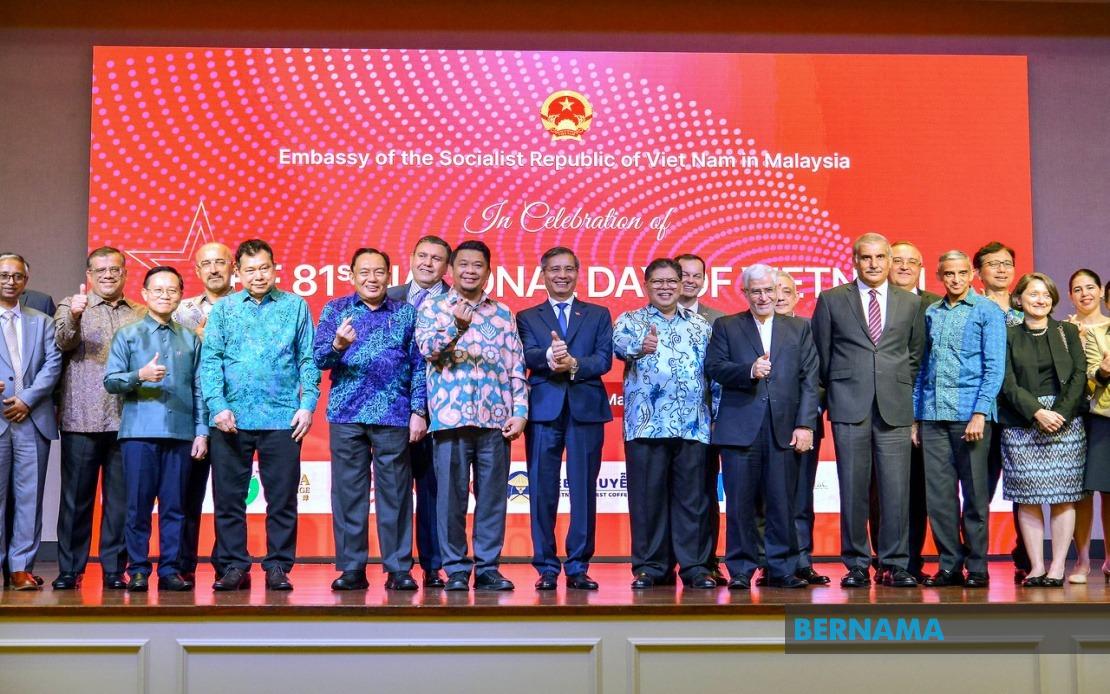
Vietnam's diplomatic mission in Malaysia has underscored the significant momentum in bilateral relations, framing the partnership as a cornerstone of regional stability in an increasingly volatile geopolitical landscape. Speaking at ceremonies marking Vietnam's 81st National Day, Ambassador Dinh Ngoc Linh characterised Malaysia as a crucial ally for Hanoi as it navigates an international environment marked by unprecedented uncertainty and rapid transformation. The elevation of ties to a Comprehensive Strategic Partnership framework last year represents not merely a diplomatic gesture but a substantive recalibration of how the two nations engage across multiple domains.
The scope of Vietnam-Malaysia cooperation has expanded considerably in recent years, extending well beyond traditional diplomatic niceties into practical collaboration on commerce, agricultural development, knowledge exchange, and people-to-people tourism. This diversification reflects both countries' recognition that shared prosperity depends on interwoven economic ties and cultural familiarity. For Malaysian stakeholders in agriculture, education, and tourism, Vietnam represents an increasingly accessible market and partnership opportunity, particularly as supply chains in Southeast Asia reorganise in response to global trade tensions.
Defence and security cooperation occupies a particularly sensitive position within the bilateral framework, carrying implications that extend beyond the bilateral context into regional architecture. Ambassador Dinh's emphasis on this dimension signals Vietnam's commitment to building the trust necessary for deeper military-to-military engagement, intelligence sharing, and coordinated responses to transnational security challenges. For Malaysia, such cooperation strengthens its capacity to manage maritime security concerns in the South China Sea while maintaining prudent distance from great power competition. This aspect of the partnership carries particular relevance given Malaysia's geographically sensitive position and its balancing act between major powers.
The role of parliamentary exchanges in strengthening mutual comprehension merits particular attention, as legislative engagement often precedes and facilitates broader policy alignment. When parliamentarians from both nations interact formally and informally, they build personal relationships and networks that transcend individual administrations. This institutional dimension provides continuity to bilateral ties regardless of electoral outcomes, creating what might be termed structural resilience in the relationship. For Malaysia's legislators, exposure to Vietnamese perspectives on regional integration and economic development offers valuable insights applicable to domestic policy formulation.
At the regional level, the partnership's significance intensifies considerably. Both nations have vested interests in maintaining ASEAN's centrality as the primary framework for regional dialogue, particularly as the grouping confronts pressures from extraregional powers to fragment along ideological or strategic lines. Vietnam's articulation of commitment to ASEAN unity reflects Hanoi's view that the bloc's cohesion serves its interests better than alternative arrangements. Malaysia, as a long-standing ASEAN member with distinct diplomatic traditions, finds common cause with Vietnam in resisting pressures that would subordinate Southeast Asian agency to external powers' strategic designs.
The historical trajectory of Vietnam-Malaysia relations adds perspective to current developments. Since establishing formal diplomatic relations half a century ago, the two nations have methodically built institutional foundations for cooperation. The 2024 elevation to Comprehensive Strategic Partnership status did not emerge from vacuum but rather represents culmination of incremental trust-building. For Malaysian observers, this gradual approach contrasts favourably with more transactional relationships, suggesting durability rooted in demonstrated commitment rather than temporary convenience.
Ambassador Dinh's imminent departure from Malaysia after three years of service carries symbolic weight beyond conventional diplomatic rotations. His parting remarks, emphasizing continued personal investment in the bilateral relationship regardless of future postings, reflect patterns common among career diplomats who develop genuine attachment to countries where they serve. The warmth with which he acknowledged his tenure suggests that personal relationships between diplomatic personnel, accumulated over years, form an important substrate upon which formal state-to-state relations rest. Malaysia's government, through Deputy Foreign Minister Datuk Lukanisman Awang Sauni's attendance, reciprocated this sentiment, signalling appreciation for Dinh's stewardship of the relationship.
Trade and investment flows provide the economic sinews binding the two nations together. Vietnamese businesses have progressively integrated into Malaysian supply chains while Malaysian enterprises have identified Vietnam as an increasingly attractive destination for investment and labour-intensive manufacturing operations. The evolving economic interdependence creates constituencies within each nation's business community with vested interests in smooth bilateral relations. For Malaysian small and medium enterprises, Vietnam's growing consumer middle class presents significant commercial opportunities, while Vietnamese exporters benefit from Malaysia's established logistics and financial infrastructure.
The broader Southeast Asian context illuminates why the Vietnam-Malaysia partnership matters beyond its bilateral dimensions. As the region confronts challenges ranging from climate change and pandemics to geopolitical competition and economic volatility, cooperation among major ASEAN members becomes increasingly valuable. Vietnam and Malaysia, though with distinct histories and strategic positions, share interests in maintaining regional autonomy and preventing hegemonic arrangements that would disadvantage smaller nations. The Comprehensive Strategic Partnership provides a vehicle through which these shared interests can translate into coordinated action.
Educational and cultural exchanges deserve recognition as often-overlooked pillars of sustainable bilateral relations. Young Malaysians studying in Vietnam and their Vietnamese counterparts in Malaysia become ambassadors for mutual understanding in ways that formal diplomacy cannot replicate. These individuals, dispersed across professional sectors throughout their careers, maintain informal networks that facilitate cooperation on practical problems. The emphasis placed on parliamentary and people-to-people exchanges in Ambassador Dinh's remarks indicates awareness that diplomatic breakthroughs require popular constituencies in both nations predisposed toward favourable attitudes toward their counterpart.
Looking forward, the Vietnam-Malaysia partnership faces both opportunities and challenges. Opportunities arise from complementarities in economic structures, shared interest in ASEAN centrality, and growing recognition that regional problems require regional solutions. Challenges include managing differing approaches to South China Sea issues, navigating pressures from extraregional powers to align with competing strategic visions, and ensuring that economic integration produces benefits for broader populations rather than narrow elites. The Comprehensive Strategic Partnership framework provides mechanisms for addressing these complexities, though success depends on consistent political will from both capitals and flexibility in adapting arrangements as circumstances evolve.
The transition of diplomatic personnel also highlights questions about institutional memory and continuity in bilateral relations. While Ambassador Dinh's successor will bring fresh perspectives, maintaining the relationships and understandings developed during his tenure requires deliberate effort. Both governments typically invest in briefing transitions and ensuring that incoming ambassadors have adequate background on the nuances of their postings. The warmth of Dinh's departure remarks suggests that his successor inherits a fundamentally sound foundation upon which to build.

