Vietnam's Phu Quoc Special Zone has launched an all-encompassing emergency response to a speedboat incident that struck Indian tourists on July 11, mobilising medical personnel, rescue teams, and administrative resources across multiple jurisdictions in the Mekong Delta province of An Giang. The coordinated effort, involving the Phu Quoc Special Zone administration alongside Sun Group International Hospital and diplomatic authorities, underscores the scale of the incident and the urgency with which regional officials have moved to contain the fallout and support affected visitors.
Sun Group International Hospital declared a hospital-wide emergency protocol immediately upon receiving notification of the accident, triggering a cascade of responses that saw ambulances and specialised medical teams dispatched to the scene. The institution mobilised its entire medical staff to support rescue operations, a measure reflecting the severity of injuries sustained by those aboard the vessel. This rapid activation of internal protocols proved critical in the immediate aftermath, when every minute counted in stabilising the most gravely hurt passengers.
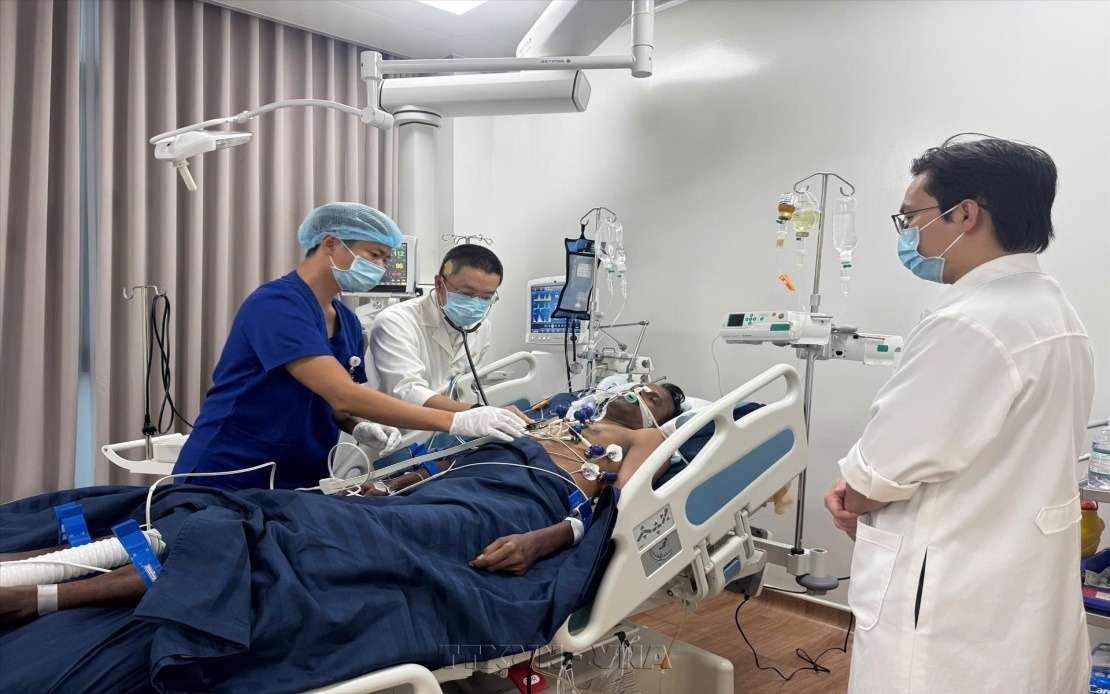
The intensity of medical intervention became apparent in the hospital's account of two critically injured patients who underwent nearly two hours of continuous resuscitation before achieving stabilisation. These two individuals were subsequently transferred to the intensive care unit, where they later regained consciousness and remained in stable condition, marking a significant milestone in their recovery trajectory. The successful restoration of consciousness, particularly following such prolonged resuscitation efforts, suggests that the hospital's emergency response team possessed both the technical capability and experience necessary to manage complex trauma cases.
By the evening of July 11, the hospital had received 15 additional victims, all of whom arrived conscious and able to undergo medical examination. This cohort underwent comprehensive trauma screening and initial treatment protocols designed to identify and address injuries that might not be immediately apparent. The distinction between the two critically injured patients and the 15 conscious arrivals suggests considerable variation in injury severity, with rescue personnel or the hospital itself performing preliminary triage to direct resources where they were most needed.
Dr. Nguyen Quang Thang, Director of Sun Group International Hospital, disclosed that two admitted patients faced severe respiratory complications, a condition that can prove fatal if inadequately managed. One of these individuals has since recovered from respiratory distress and awaits discharge pending continued monitoring, while the second remains hospitalised partly due to pre-existing medical conditions that complicate recovery. The hospital engaged Cho Ray Hospital in Ho Chi Minh City to coordinate intensive treatment protocols, pooling expertise across the country's leading medical institutions to optimise outcomes for this high-risk patient.
Financial assistance has materialised quickly, with the vessel's operator committing to provide compensation to families and injured passengers. Each bereaved family will receive 1,000 USD, while injured passengers are entitled to 500 USD in immediate assistance from the operator. This private-sector contribution represents a baseline of support, as it is being supplemented by government funds at the local level, demonstrating a multi-layered approach to victim assistance that distributes responsibility across private operators and public authorities.
The Phu Quoc Special Zone administration has pledged an additional 26 million Vietnamese Dong—approximately 1,000 USD—for each fatality, a commitment announced by Tran Minh Khoa, Chairman of the People's Committee. This official contribution ensures that compensation extends beyond what private operators provide, reflecting governmental acknowledgment of responsibility to support affected families. The decision to quantify assistance per fatality suggests that authorities have completed preliminary casualty counts, though full details of the accident's death toll have not been disclosed in available reports.
Vietnam's approach to the aftermath reveals a more sophisticated understanding of crisis management than mere immediate medical response. Authorities are simultaneously expediting civil registration procedures, legal formalities, and investigations in accordance with Vietnamese law, while actively facilitating the repatriation of deceased victims and their affected families. This multi-track approach acknowledges that Indian nationals involved in the accident require consular coordination and that their return to India constitutes a priority that extends beyond standard incident protocols.
For Southeast Asian nations grappling with tourism safety standards, the Phu Quoc incident illustrates both the capabilities and limitations of existing emergency infrastructure. Vietnam's coordinated response—involving hospital systems, local administration, diplomatic channels, and private operators—suggests institutional readiness for major incidents. Yet the occurrence of such an accident in a major tourist destination raises questions about vessel safety regulations, operator licensing, and passenger screening protocols that transcend national borders and implicate the broader tourism industry across Southeast Asia.
The incident carries particular resonance for Malaysian policymakers, given Malaysia's own substantial tourism sector and the regulatory frameworks governing speedboat and water-based activities throughout the region. The speed with which Vietnamese authorities activated compensation mechanisms and coordinated international repatriation suggests a template that regional governments might examine when assessing their own disaster response protocols and victim support mechanisms. The involvement of diplomatic authorities in repatriation underscores the international dimension of modern tourism accidents, where victim management extends beyond emergency medicine to encompass consular affairs, legal proceedings, and cross-border coordination.
As investigations continue, the incident serves as a reminder that premium tourism destinations across Southeast Asia must sustain vigilance regarding maritime safety standards, even as economic pressures incentivise high passenger volumes and rapid turnarounds. The financial capacity demonstrated by both private operators and government authorities in Vietnam suggests that resource constraints do not fully explain incident management outcomes; rather, institutional prioritisation and established crisis protocols appear equally significant in determining how effectively nations respond when tourists are harmed within their territorial jurisdiction.

