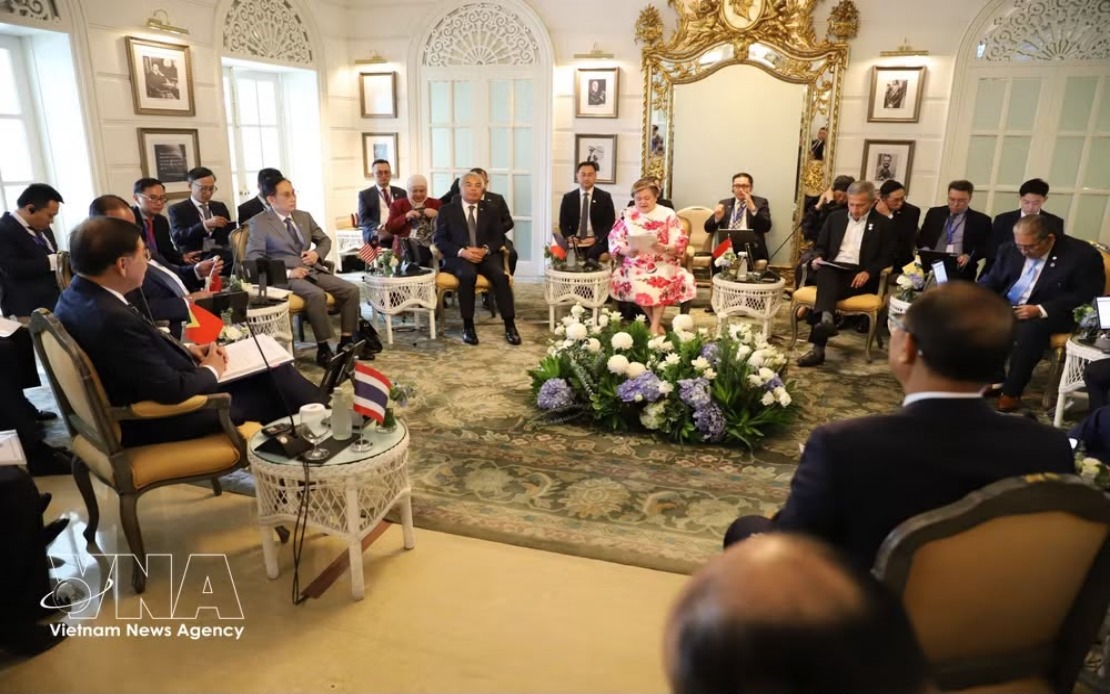
Vietnam's commitment to Myanmar's recovery and stability featured prominently at a high-level ASEAN gathering in Bangkok this week, signalling the bloc's continued determination to keep the troubled nation on a path towards reconciliation and development. At an informal meeting of ASEAN foreign ministers with their Myanmar counterpart on July 12, Vietnamese Minister of Foreign Affairs Le Hoai Trung underscored his country's unwavering support for Myanmar as a full ASEAN member, framing the Five-Point Consensus as an essential mechanism through which the regional organisation can channel assistance and maintain constructive engagement.
The July 12 gathering, convened under Philippine leadership as the incoming 2026 ASEAN Chair, represented a significant milestone in the bloc's Myanmar diplomacy. This was the first in-person assembly of senior foreign ministry officials from multiple ASEAN capitals to meet directly with Myanmar's administration since the military-backed government consolidated control in 2021. The symbolic importance of the meeting underscored ASEAN's central position as a mediator and anchor for stability in Southeast Asia, even as geopolitical tensions and internal conflicts complicate the region's outlook.
Vietnamese Foreign Minister Trung acknowledged concrete steps undertaken by Myanmar's authorities in recent months to restore governmental functionality and economic vitality. He specifically noted efforts to stabilise political institutions, revitalise sectors of the economy damaged by prolonged conflict, strengthen institutional governance structures, enhance crackdowns on cross-border criminal enterprises ranging from drug manufacturing to sophisticated cybercrime networks, and secure control over frontier areas prone to lawlessness. These developments, while incremental, demonstrate that Myanmar's administration is attempting to address multiple fractures simultaneously, though progress remains uneven and challenges persist.
The minister expressed cautious optimism that momentum towards peace, social reconciliation, enhanced security, and improved living standards for Myanmar's population would accelerate. However, his language also betrayed recognition that aspirations must be tempered by realistic assessment of the obstacles ahead. Myanmar's transition from instability to genuine peace requires not merely governmental proclamations but sustained institutional reform, inclusive dialogue with armed groups and ethnic minorities, and economic restructuring that creates opportunities for ordinary citizens displaced or impoverished by conflict.
Beyond verbal endorsements, Trung articulated a forward-looking agenda for ASEAN's role in Myanmar's rehabilitation. He contended that while the Five-Point Consensus provides an essential framework, ASEAN must complement this with action-oriented measures grounded in pragmatism and realism. Central to this approach, Trung suggested, must be regular, substantive engagement and dialogue channels that enable ASEAN representatives to maintain visibility into developments on the ground, troubleshoot emerging crises before they escalate, and facilitate concrete progress on peacebuilding initiatives. This emphasis on persistent dialogue reflects a view that Myanmar cannot be left to navigate its challenges in isolation, particularly given the potential for instability to spill across borders and destabilise neighbouring countries including Thailand, Laos, and Bangladesh.
Vietnam itself pledged active partnership with the Philippine ASEAN Chair and other member states in advancing this agenda. Specifically, Hanoi committed to supporting Myanmar's economic recovery strategies, addressing pressing social welfare needs, combating organised transnational crime networks that exploit porous borders and weak governance, and deepening bilateral and subregional cooperation frameworks. This multilayered support reflects recognition that Myanmar's stabilisation serves Vietnam's own strategic interests by preventing refugee flows, criminal spillover, and the kind of regional instability that could disrupt supply chains and investment patterns critical to Southeast Asian prosperity.
The gathering also provided Myanmar's Foreign Minister Tin Maung Swe with an opportunity to brief ASEAN counterparts on his government's initiatives, including a 100-day action plan designed to accelerate progress on peace, reconciliation, and stability objectives. The minister outlined specific programmatic measures and reaffirmed his administration's commitment to maintaining engagement with relevant stakeholders across Myanmar's fractious political landscape. This transparency, while potentially revealing gaps between ambition and capacity, signals willingness to subject Myanmar's trajectory to scrutiny from fellow ASEAN members who retain leverage through aid, investment, and diplomatic recognition.
ASEAN foreign ministers approached the discussions with what observers characterised as frank but constructive engagement, shared their independent assessments of Myanmar's situation, and identified concrete mechanisms through which the bloc could enhance coordination and support. The emphasis on substantive implementation of the Five-Point Consensus—rather than merely reaffirming its principles—suggested determination to move beyond rhetoric towards measurable outcomes. However, ASEAN's constraints as a consensus-based organisation that prizes non-interference mean that pressure on Myanmar's government remains diffuse and indirect rather than coercive.
The reaffirmation that ASEAN will continue dialogue with Myanmar's administration and support the country in developing locally-rooted, long-term solutions for peace and stability represents both commitment and acknowledgment of limitations. ASEAN cannot impose solutions or fundamentally reshape Myanmar's political economy from outside. Instead, the bloc positions itself as a supportive framework within which Myanmar can pursue its own trajectory, provided that stability is maintained and the country does not become a haven for organised crime or a flashpoint for regional conflict.
For Malaysian readers and other Southeast Asian observers, the outcomes of this meeting carry particular relevance. Malaysia, as a coastal trading nation with significant investment exposure throughout ASEAN and beyond, has direct economic stakes in Myanmar's stabilisation. Regional instability in Myanmar translates to higher shipping costs, insurance premiums, and supply chain vulnerability. Additionally, Myanmar's drug trafficking organisations pose direct threats to Malaysia's domestic security and social fabric. By backing Vietnam's diplomatic initiatives and ASEAN's collective support framework, Malaysia and other nations reinforce mechanisms that, while imperfect, offer the most plausible pathway towards incremental improvement in Myanmar's governance and security environment. The coming months will test whether this sustained engagement generates momentum or whether Myanmar's underlying institutional and political fractures prove too deep for external support to overcome.

