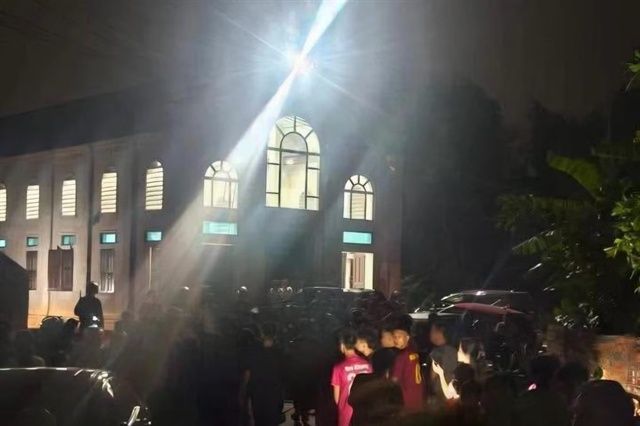
A devastating domestic violence incident in Bac Ninh Province has claimed four lives in what authorities have classified as a murder-suicide case. The tragedy unfolded in Viet Yen Ward's Bai Bang residential quarter, where police were called following reports of violence on Sunday, June 21. The Northern Vietnamese province's police force confirmed the deaths after preliminary investigations established a clear sequence of events rooted in relationship conflict between the two adults involved.
According to initial findings, the incident arose from a relationship dispute between 31-year-old N.T.N. and Nguyen Van Tuyen, 36, who hailed from Bac Lung Commune in Bac Ninh Province. The conflict escalated into violence when Tuyen allegedly armed himself with a knife and launched a fatal attack. The victims of his assault included N., his girlfriend, along with her 10-year-old son, N.H.P., and her six-year-old daughter, N.B.B. After perpetrating these attacks, Tuyen then took his own life, bringing the total death toll to four individuals. The youngest victims—children aged just six and ten—became casualties in what represents a tragic intersection of domestic discord and lethal violence.
The attack did not end with only fatalities. An 11-year-old girl identified as N.B.N., who is the adopted sister of N.T.N., also fell victim to Tuyen's knife assault. She sustained serious injuries requiring immediate medical attention. First responders transported her to Viet Yen General Hospital, where she was admitted for emergency treatment. Her survival, though marked by trauma and physical wounds, contrasts sharply with the fatal outcomes suffered by the other household members caught in the violence.
The incident underscores the severe and often hidden threat that domestic violence poses within Vietnamese households. Children living in homes marked by intimate partner conflict face compounded risks, not only from direct violence but also from the instability and danger that such environments create. The involvement of two young children in this tragedy highlights how domestic disputes between adults can have catastrophic consequences for vulnerable family members, particularly minors who have no agency in the situation and cannot remove themselves from danger.
Local residents were the first to alert authorities to the unfolding crisis. Their swift reporting enabled police to respond and secure the scene, though by the time officers arrived, the lethal sequence of events had already concluded. The immediate deployment of investigators from the provincial Police Investigation Agency, working in coordination with the Criminal Police Division of Viet Yen Ward, demonstrated the rapid institutional response to such serious crimes. These officers took control of the scene and began the methodical process of evidence collection.
Forensic and crime scene examination procedures have been initiated as part of the ongoing investigation. Police are working systematically to reconstruct the exact timeline and circumstances of the violence, gathering physical evidence and conducting forensic analysis to document each aspect of the incident. These technical investigations form the backbone of the official record, even though the perpetrator's death means there will be no prosecution phase in the traditional sense. The investigative work remains significant for establishing an authoritative account of what occurred and for understanding the factors that contributed to the tragedy.
Domestic violence remains a persistent social problem across Southeast Asia, with Vietnam among the countries where such incidents continue to claim lives at troubling rates. Cases like this one in Bac Ninh Province reflect broader patterns of intimate partner violence that often escalate beyond the two adults involved. Children in these households become secondary victims, facing both immediate physical danger and lasting psychological trauma. The presence of weapons, particularly knives commonly found in homes for kitchen use, transforms arguments into potentially fatal confrontations with no opportunity for de-escalation once violence begins.
The circumstances of this case—a relationship dispute spiraling into lethal violence and ultimately a murder-suicide—follow a tragic pattern documented in crime statistics across the region. Such outcomes, while representing the most extreme end of domestic violence incidents, are not entirely isolated. The psychological state of individuals involved in relationship breakdown, particularly when custody or separation issues are factors, can contribute to catastrophic decision-making. The involvement of children compounds the emotional stakes and can amplify tensions to dangerous levels.
For Malaysian and Southeast Asian readers, this incident serves as a stark reminder of the importance of community vigilance regarding domestic violence warning signs and the critical need for accessible intervention services. Countries throughout the region have increasingly recognised that domestic violence is not merely a private family matter but a serious crime requiring coordinated institutional response. Neighbours, healthcare providers, educators, and law enforcement all play roles in identifying at-risk situations and providing pathways to safety for vulnerable individuals, particularly children.
The tragedy in Bac Ninh also raises questions about prevention strategies and the availability of crisis intervention services in rural and semi-urban areas of Vietnam. While metropolitan centres may have established domestic violence hotlines, shelters, and counselling services, more remote communities often lack these critical resources. Expanding access to mental health services, relationship counselling, and domestic violence prevention programmes remains an essential policy priority for reducing the incidence and severity of such incidents throughout the region.

%22%2F%3E%3C%2Fpattern%3E%3C%2Fdefs%3E%3Crect%20width%3D%22100%25%22%20height%3D%22100%25%22%20fill%3D%22url(%23ph56fyng)%22%2F%3E%3Crect%20width%3D%22100%25%22%20height%3D%22100%25%22%20fill%3D%22url(%23ph56fynp)%22%2F%3E%3Ctext%20x%3D%2250%25%22%20y%3D%2250%25%22%20text-anchor%3D%22middle%22%20dominant-baseline%3D%22central%22%20fill%3D%22rgba(255%2C255%2C255%2C0.95)%22%20font-family%3D%22Georgia%2C%20'Times%20New%20Roman'%2C%20serif%22%20font-weight%3D%22700%22%20font-size%3D%22151%22%20letter-spacing%3D%22-0.02em%22%3EMalaysian%3C%2Ftext%3E%3C%2Fsvg%3E)