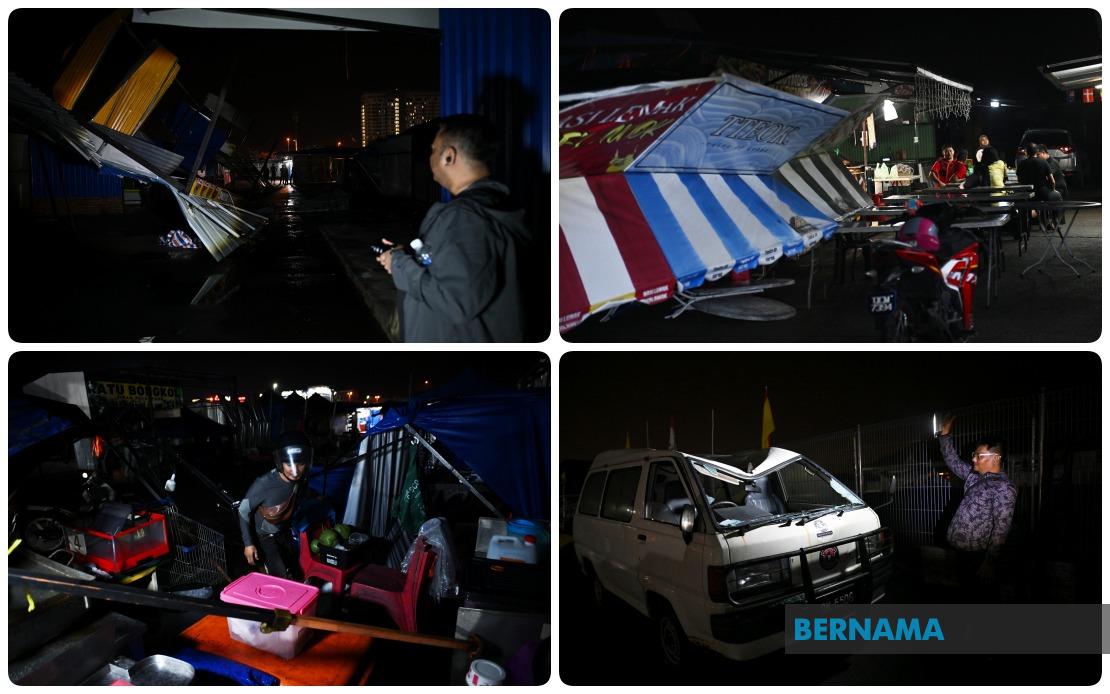
A sudden and intense storm system swept through Kuching on the weekend, triggering the temporary closure of the N6 Metrocity 2 Youth Night Market and leaving dozens of hawkers facing substantial financial hardship. The meteorological event, which struck during peak business hours when foot traffic typically surges, resulted in rapid and catastrophic damage to the market's physical infrastructure and the livelihoods of its operators. The incident stands out as one of the most severe weather-related disruptions to affect the popular trading venue in recent years, according to market officials.
Vendor Mohamad Faisal, aged 42, described the harrowing scenes as high winds violently uprooted and destroyed the temporary canopy structures that provide shelter for traders and their goods. The force of the gales was such that the heavy metal and fabric coverings became airborne hazards, sweeping across the market in a manner that posed immediate physical danger to anyone in their path. Faisal recounted how traders instinctively abandoned their stalls and merchandise to seek safety, recognising that remaining on site could result in serious injury from the flying debris.
The disruption proved particularly damaging given the timing of the incident. Weekend nights represent the commercial heartbeat of such markets in Malaysia, when customer attendance reaches its zenith and traders realise the bulk of their weekly revenue. The sudden evacuation meant that perishable goods, partially prepared food items, and commercial equipment were left exposed to the elements or destroyed outright. For traders operating on thin profit margins typical of the hawking sector, such forced closures represent not merely a single day's lost earnings but potential cascading financial consequences.
Market management confirmed that approximately 40 out of roughly 300 trader lots sustained severe damage, though the impact rippled across the broader site. Deputy chairman Hamzah Hassan characterised the storm as the most destructive natural disaster event the market has experienced in its operational history. The physical toll extended beyond individual vendor canopies to encompass critical shared infrastructure, including the central stage used for entertainment and promotional activities, the management office, and the electrical distribution system that powers the entire market.
Financial losses mounted rapidly across affected businesses. Individual traders reported immediate expenses ranging from RM2,000 to RM5,000 solely for replacing or repairing their canopy structures, with this figure dependent upon the size and engineering specifications of each setup. These figures exclude secondary damage to cooking equipment, water containers, display fixtures, and inventory—suggesting that true individual losses likely approached or exceeded RM10,000 for many operators. For a cohort of traders who have collectively operated at the site for approximately a decade, the disaster represented an unprecedented financial shock.
The collective losses accrued by the affected vendor community prompted market management to actively solicit assistance from government agencies, elected representatives, and cooperative organisations. Hassan explicitly welcomed intervention from relevant ministries and administrative bodies to mitigate the financial burden now shouldered by hawkers attempting to restore their operations. The request underscores the recognition that individual traders lack sufficient personal reserves to absorb such catastrophic losses without external support.
Weather monitoring agencies had provided advance notification of the dangerous meteorological conditions developing across the region. The Malaysian Meteorological Department issued a thunderstorm warning spanning four hours from 5 pm to 9 pm on the day in question, covering multiple locations throughout Sarawak including Kuching, Serian, Siburan, Samarahan, Simunjan, Kapit, and Song. The alert system, whilst functional, could not prevent the intensity of the storm that ultimately materialised or the concentrated destructive force it unleashed upon the market venue.
The incident illuminates the structural vulnerability of Malaysia's informal trading sector to climatic events. Night markets represent a crucial employment ecosystem supporting thousands of micro-entrepreneurs across the nation, yet the majority operate using temporary infrastructure designed primarily for cost efficiency rather than resilience against extreme weather. As climate patterns potentially shift toward greater frequency of intense localised storms, the protection of hawker markets and similar venues becomes an increasingly pressing policy consideration for municipal authorities and state governments.
For Kuching and Sarawak more broadly, the disruption to the Metrocity night market affects both the vendor community and the local consumer base that depends upon these markets for affordable dining and shopping options. The market's temporary closure creates a service gap in the district, whilst the extended period required for infrastructure restoration and vendor recovery may extend the disruption beyond initial expectations. Market officials have not yet publicly announced a timeline for full reopening or the status of restoration efforts underway.
The storm incident also raises questions about insurance coverage and risk management protocols within Sarawak's hawker sector. Few individual traders maintain comprehensive business interruption or property damage insurance, leaving them entirely exposed to losses from natural disasters. Similarly, market associations and management bodies rarely maintain sufficient reserve funds to rapidly mobilise infrastructure repairs or provide emergency relief to affected vendors. These structural gaps suggest opportunities for government intervention through subsidised insurance schemes or designated disaster relief mechanisms specific to informal trading communities.

