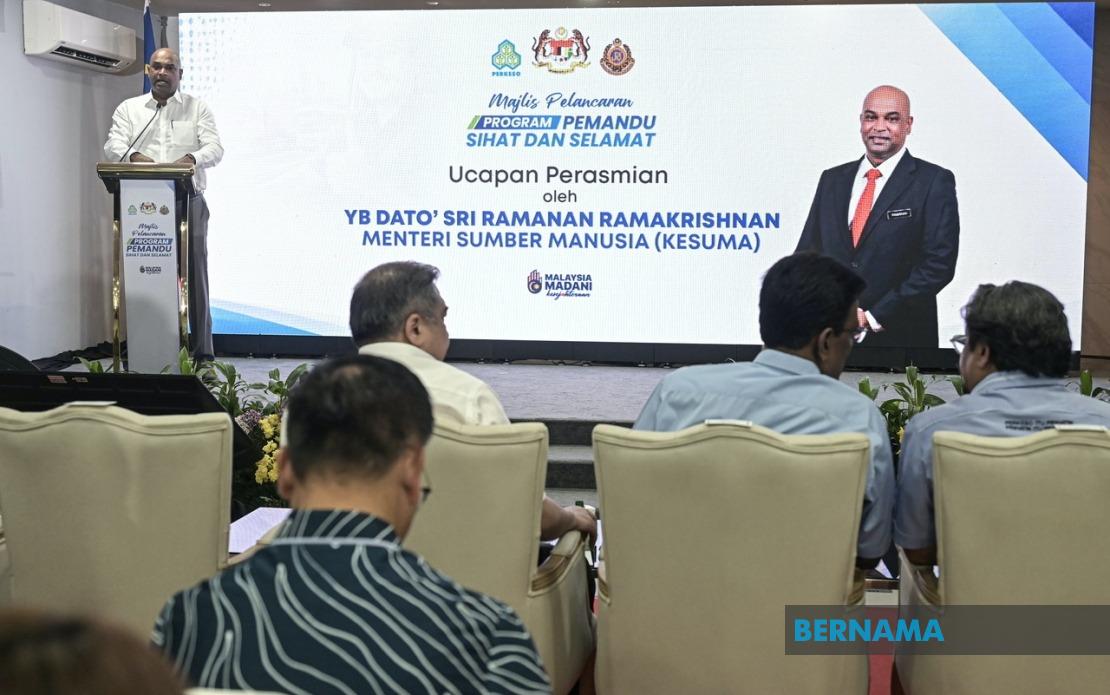
Malaysia's government has introduced a mandatory health screening requirement for all vocational drivers seeking to renew their professional driving licences, marking a significant shift in the country's approach to road safety. The Healthy and Safe Driver Programme (PSS), launched by Human Resources Minister Datuk Seri R. Ramanan on June 30, mandates that drivers undergo comprehensive medical assessments at designated panel clinics across the nation before their licences can be renewed. Currently available at 500 clinics nationwide, the programme represents a coordinated effort between the Ministry of Human Resources and the Ministry of Transport to reduce fatalities among professional road users.
The screening protocol is notably extensive, covering far more than routine medical checks. Participants undergo physical examinations alongside specialised tests for vision and hearing acuity, which directly influence driving safety. Critically, the programme includes screening for sleep disorders such as obstructive sleep apnea, a condition increasingly recognised by transport safety authorities as a significant contributor to road accidents. Beyond these assessments, drivers face evaluations of key physiological systems including cardiovascular, respiratory, and neurological function. Additionally, glycated haemoglobin blood tests are administered where necessary, identifying drivers at risk from uncontrolled diabetes—a metabolic condition that can impair cognitive function and reaction times.
The financial structure of the PSS reflects a deliberate policy decision to minimise barriers to compliance while distributing costs across multiple stakeholders. Drivers contribute only RM30 toward their screening fee, with the Social Security Organisation (Socso) subsidising the remaining RM55. This arrangement means the MADANI Government is effectively absorbing approximately 65 percent of the examination costs, demonstrating a commitment to prioritising public safety over budget constraints. The model also suggests confidence that the health benefits derived from early detection of medical conditions will generate savings elsewhere in the healthcare and emergency response systems.
Minister Ramanan emphasised that the programme's primary objective is preventive rather than restrictive. By identifying health issues at an early stage, drivers can receive timely treatment and intervention, potentially preventing serious medical episodes while operating vehicles. This framing is important for public acceptance—the initiative aims to position health screening as a protective measure benefiting drivers themselves, rather than merely as a bureaucratic hurdle. For professional drivers who depend on their licences for income, early detection of manageable conditions could enable them to address health concerns before they pose risks to themselves or others on Malaysian roads.
The government's stated ambition to expand the PSS to 3,000 panel clinics nationwide over time signals long-term commitment to the programme's success. Such expansion would represent a six-fold increase in available screening facilities, dramatically improving accessibility for vocational drivers in rural and suburban areas where medical services may be limited. This scaling strategy also suggests the government anticipates potential implementation challenges and is building capacity proactively. For medical practitioners and clinic administrators, this expansion represents significant business opportunities, though it also raises questions about training standardisation and quality assurance across such a large network.
The backdrop for this initiative lies in troubling accident statistics that have prompted government action. In 2025, 115 workers were killed in road accidents—a concerning 22 percent increase from 94 fatalities the previous year. These figures encompass lorry drivers, bus operators, van drivers, motorcyclists, and others whose livelihoods depend on road use. The data reveals a particular vulnerability among lorry drivers, who accounted for 62 deaths, representing 21 percent of total work-related road fatalities. This disproportionate burden among heavy vehicle operators suggests that factors such as fatigue, longer driving hours, and the physical demands of managing large vehicles contribute meaningfully to accident rates in this demographic.
The rising toll of road deaths among working professionals reflects broader concerns about transport safety in Malaysia and the region. Unlike private motorists who may only occasionally drive, vocational drivers spend extended periods on roads daily, multiplying their exposure to accident risk. The physical and mental demands of professional driving—managing heavy or large vehicles, maintaining schedules, navigating congested urban areas and long-distance routes—create conditions where health issues become particularly critical. A driver experiencing untreated sleep apnea, uncontrolled hypertension, or undiagnosed neurological problems poses risks not only to themselves but to other road users and cargo.
The PSS programme reflects international best practices in occupational health and transport safety. Many developed nations require periodic medical certification for professional drivers, recognising that health status directly correlates with accident prevention. Malaysia's adoption of this approach indicates willingness to learn from global evidence about what works in reducing transport-related fatalities. However, the programme's success will depend on implementation quality, driver compliance, and clinical consistency across the 500 clinics. Issues such as standardised assessment protocols, data management, and follow-up procedures for drivers identified with health concerns will determine whether the PSS achieves its stated objectives.
For the broader Southeast Asian context, Malaysia's initiative may serve as a pilot for regional approaches to occupational road safety. As other countries in the region contend with rising road death statistics, the PSS model offers a tested framework combining affordability, accessibility, and preventive health screening. The programme also demonstrates how social security organisations can partner with government to finance public health initiatives, potentially inspiring similar models elsewhere in the region.
Implementation will require clear communication with affected drivers and their employers. Professional driver associations, transport companies, and union representatives will need to understand the screening requirements, clinic locations, and renewal deadlines. The perceived burden of adding a health screening requirement to the licence renewal process could generate resistance if not properly explained and facilitated. Employer education about the programme's benefits—reduced accident risk and potential insurance savings—may help build support among transport operators who ultimately benefit from safer driver pools.
The programme also raises questions about data privacy and medical confidentiality. Information gathered during health screenings must be securely managed and protected from misuse. Drivers will need assurance that health conditions identified during screening remain confidential and are used solely for treatment and fitness-to-drive determination, not for discriminatory purposes. Clear protocols governing data handling, access permissions, and retention schedules will be essential to maintaining public trust in the PSS.
Looking forward, the programme's success will be measurable through several indicators: compliance rates among vocational drivers, changes in road accident statistics within professional driver populations, and the effectiveness of medical interventions following screening. If the PSS demonstrates measurable reductions in work-related road fatalities over time, it could justify further expansion and become a model for other occupational safety initiatives. Conversely, if implementation challenges emerge or compliance remains low, the government may need to adjust the programme's structure, incentives, or enforcement mechanisms to improve outcomes.

