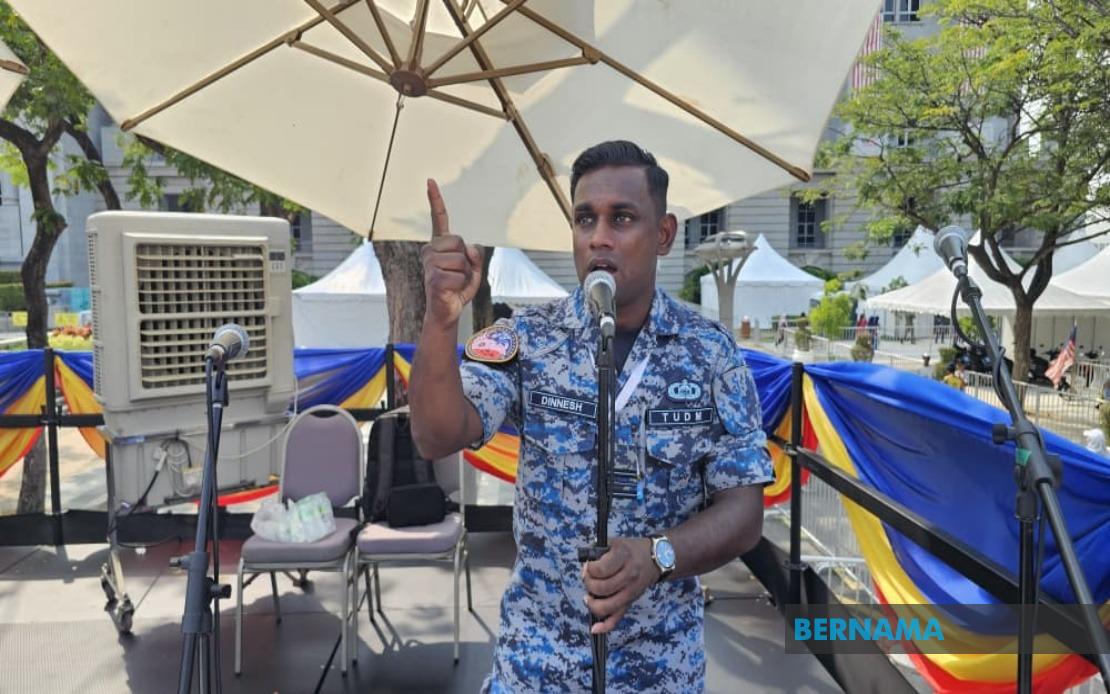
During Malaysia's 2026 National Day parade at Dataran Putrajaya, as military fighter jets carved dramatic patterns across the sky, Major Dinnesh Nicolas Rene's voice provided the crucial narrative thread connecting the aerial spectacle to thousands of spectators craning their necks skyward. The 34-year-old Royal Malaysian Air Force officer wielded his microphone with practiced precision, transforming complex flight manoeuvres into gripping storytelling that amplified the emotional resonance of each pass and formation.
The position of air show commentator, Dinnesh explains, represents far more than simply reciting scripted descriptions into a public address system. The role demands comprehensive understanding of aviation principles, intimate knowledge of the specific aircraft performing, familiarity with individual pilot capabilities and experience levels, detailed sequences of planned manoeuvres, and the capacity to deliver compelling narration while maintaining constant communication with ground personnel and flight leaders. This synthesis of technical aeronautical knowledge and theatrical communication sets the role apart from conventional event commentary.
Dinnesh's path into this specialized field began when he was selected to provide commentary at the Langkawi International Maritime and Aerospace Exhibition in 2019, a prestigious platform that launched his subsequent career as a narrator for Royal Malaysian Air Force aerial displays and anniversary celebrations. His regular posting within the RMAF Air Defence Control Division has provided him with operational insights that inform his commentary, particularly regarding the defensive and tactical dimensions of the aircraft demonstrations. Yet despite this professional proximity to military aviation, each assignment demands rigorous, dedicated preparation.
Preparing for major national occasions involving dignitaries such as the King and Prime Minister introduces an additional layer of complexity. Dinnesh coordinates extensively with flight commanders, ground control personnel, and fellow commentators Major Neny Suhaida Ab Suki and Captain Muhammad Iqbal Nasrudin to establish precise timing, verify aircraft specifications, confirm pilot identities and unit affiliations, and document squadron emblems and historical significance. This preparation extends beyond the commentary team, requiring liaison with security agencies, protocol officials, and logistics coordinators whose work intersects with the aerial demonstration.
The challenge of navigating protocol at state-level events remains substantial. Commentators must internalize strict guidelines regarding permissible information, sensitive subjects, and appropriate tone while simultaneously maintaining audience engagement and delivering commentary at precisely calibrated moments. A premature revelation, an awkward pause, or an inappropriate phrasing could undermine the ceremonial dignity that such occasions demand, particularly when delivered in the presence of Malaysia's highest state officials.
Yet the most persistent occupational hazard facing air show commentators remains their most vital instrument: the human voice itself. Unlike traditional master of ceremonies who speak at conversational volumes, commentators must project powerfully enough to overcome the ambient noise generated by military jet engines, a demand that imposes extraordinary strain on vocal cords and throat tissues. Throughout rehearsals, sound checks, and the actual performance day, maintaining vocal clarity and stamina requires disciplined voice management, proper hydration, warming exercises, and conscious pacing to prevent deterioration.
Dinnesh emphasizes that technical preparation alone proves insufficient without cultivating genuine emotional investment in the performance. He maintains that the commentator must internalize and authentically embody the patriotic spirit, pride, and sense of national achievement that the aerial display represents. This internal conviction translates into vocal authenticity that audiences instinctively recognize, creating an emotional bridge between the visual spectacle overhead and the observers below.
Despite his recurring exposure to high-performance military aircraft in professional contexts, Dinnesh insists that his sense of wonder and genuine excitement at witnessing aerial manoeuvres remains undiminished. This sustained enthusiasm, rather than becoming jaded familiarity, enables him to convey authentic passion and awe that resonates with spectators experiencing such displays for perhaps the first or only time. The commentator's capacity to access and transmit genuine emotion becomes as important as technical accuracy or vocal projection.
For Malaysia and Southeast Asia, where military aviation capabilities represent both national pride and regional security considerations, the role of professional air show commentary carries subtle significance beyond mere entertainment. Commentators effectively serve as public educators, helping civilian audiences develop informed appreciation for their national defence infrastructure, understanding the capabilities and complexity of military operations, and fostering patriotic identification with state institutions. As Malaysia continues hosting major international aerospace exhibitions and national celebrations featuring military demonstrations, the sophisticated narrative skills of officers like Dinnesh help bridge the distance between specialized military domains and public consciousness, translating technical achievement into accessible national pride.

