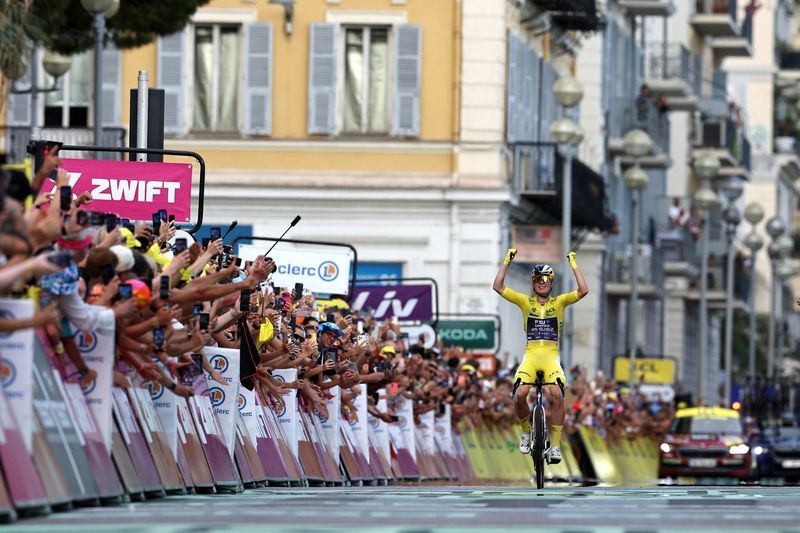
Demi Vollering etched her name among cycling's elite once again by capturing her second Tour de France Femmes title on Sunday, the 29-year-old FDJ-Suez rider putting on a masterclass during the ninth and final stage to secure cycling's premier women's competition. The Dutch champion's emphatic victory near Nice underscored her status as one of the sport's most accomplished contemporary athletes, adding another significant chapter to a career already decorated with multiple grand tour successes.
Vollering's dominance throughout the three-week race came to a crescendo in the concluding 99.2-kilometre stage, where she held an eight-second advantage over Poland's Katarzyna Niewiadoma-Phinney before the day's racing commenced. That narrow margin transformed into commanding control once the peloton reached the challenging terrain of the Col d'Eze on its fourth and final ascent, the decisive moment where Vollering's superior climbing prowess became impossible to match. She surged clear of the 31-year-old Niewiadoma-Phinney on the mountain pass and continued her solo effort all the way to the finish line in Nice, ultimately crossing with one minute and 18 seconds of advantage in the general classification.
The victory represents a remarkable achievement when considered alongside Vollering's other recent successes. Beyond this second Tour de France Femmes title, the Dutch rider claimed the 2023 edition and the 2026 Giro d'Italia Women, whilst also securing back-to-back La Vuelta Femenina crowns in 2024 and 2025. Such a roll of honours positions her among the rare cyclists capable of winning multiple editions of sport's biggest races, a distinction earned through exceptional consistency and mental fortitude across demanding competition.
Vollering's attitude toward Sunday's concluding stage reflected the psychological demands of sport at this level. In the immediate aftermath, she discussed having never previously won a Tour de France Femmes whilst wearing the yellow jersey, indicating the additional pressure that comes with defending a leader's position during the final stage. Rather than viewing victory as an individual accomplishment, however, she shifted focus to her support network, specifically mentioning teammate Celia Gery who had endured a difficult night before the stage.
Her post-race comments underscored the team-oriented nature of grand tour cycling, particularly for women's racing that has dramatically expanded in profile and resources over recent years. Vollering emphasised the collective effort behind her triumph, acknowledging the preparation work preceding the race and the shared commitment with her FDJ-Suez squad. She expressed that the true achievement extended beyond mere victory, encompassing the opportunity to pursue professional cycling alongside individuals united by passionate dedication to the sport. This perspective, delivered with genuine humility, contributed to her vision of winning the Tour de France Femmes with both humility and pride.
The decisive attack strategy Vollering employed on the Col d'Eze demonstrated the tactical clarity required in the sport's most important moments. Having seized the yellow jersey the previous day, she faced the critical choice of whether to control the race conservatively or press her advantage. She opted for aggression, launching an assault on a climb where her climbing credentials provided decisive superiority. Spain's Paula Blasi secured second place on the stage, finishing one minute and four seconds behind Vollering, with Niewiadoma-Phinney rounding out the top three positions. This final stage represented Vollering's third victory of the 2025 edition and extended her career tally at the Tour de France Femmes to six stage wins.
Niewiadoma-Phinney's runner-up finish nevertheless reflects creditable performance throughout the three-week contest, though the final margin proved decisive in determining which cyclist would claim the sport's most coveted women's prize. Italy's Elisa Longo Borghini completed the podium in third position, demonstrating the depth of talent competing at cycling's highest level. The race showcased several compelling storylines and multiple candidates possessing legitimate aspirations of overall victory, ultimately decided by Vollering's superior finishing strength and tactical acumen.
Vollering's achievement arrives in a notable year for the sport, occurring roughly six weeks after Slovenia's Tadej Pogacar secured his fifth Tour de France title in the men's competition, equalling a historic record. Pogacar's recent victories represent three consecutive triumphs in cycling's most prestigious event, achievements that parallel Vollering's emergence as a dominant force in the women's peloton. Both developments signal the growing competitiveness and intensity characterising elite professional cycling across both disciplines.
For Malaysian cycling enthusiasts and regional sports observers, Vollering's success represents inspiration from an athlete demonstrating that sustained excellence remains achievable in professional sports through dedicated commitment and surrounding oneself with passionate support networks. Her emphasis on collective achievement rather than individual glorification provides a philosophical perspective increasingly valued in Southeast Asian sporting contexts, where team-oriented cultures have traditionally emphasised group harmony over individual distinction. The expansion of women's cycling into major international competitions with genuine investment and media attention mirrors global shifts toward gender parity in sports, a transformation gradually gaining momentum throughout the Asian cycling community.

