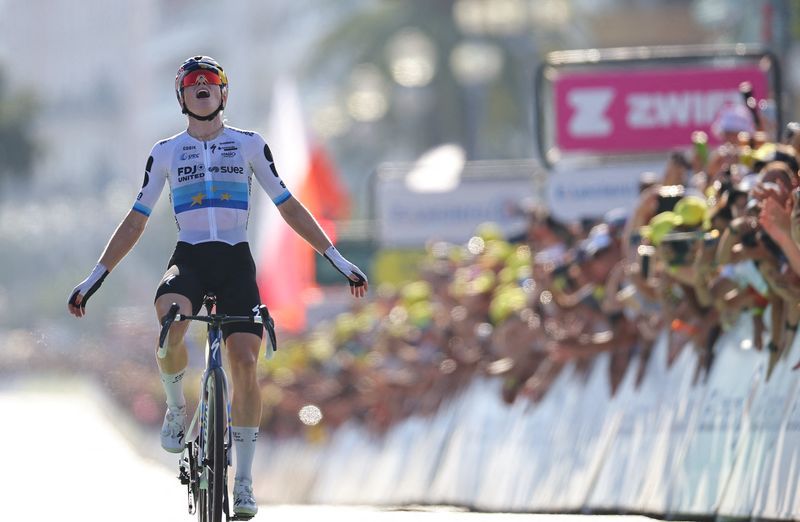
Dutch cyclist Demi Vollering delivered a masterclass in mountain racing on Saturday to seize control of the Tour de France Femmes, capturing the prestigious yellow jersey after a dramatic victory on the gruelling eighth stage. The 171.9-kilometre mountain stage from Sisteron to Nice provided the decisive turning point, allowing Vollering to overturn a significant deficit and move into the overall lead heading into Sunday's final stage around Nice.
The stage itself was framed by significant drama before the racing even began. Pauline Ferrand-Prevot of Visma-Lease a Bike, the defending champion of the race, withdrew from competition due to illness, removing a major contender from contention just hours before the day's decisive climbing challenge. This withdrawal would significantly reshape the dynamics of the race and the pressure facing the remaining leaders as they tackled the demanding alpine terrain.
Vollering's decisive moment came on the steep Chemin de l'Arieta climb with six kilometres remaining. The FDJ United-Suez rider accelerated with surgical precision at the point where the gradient became most punishing, quickly distancing herself from the race leader Niewiadoma-Phinney and Italy's Elisa Longo Borghini. She subsequently extended her advantage on the technical descent into Nice, demonstrating not just climbing prowess but also bike-handling skills under pressure.
The victory represented a remarkable psychological turnaround for Vollering, who had surrendered one minute and 16 seconds to Niewiadoma-Phinney during the previous day's brutally steep Mont Ventoux climb. Rather than surrendering to that setback, Vollering regrouped overnight and returned with renewed intensity, showcasing the mental resilience required to compete at the highest levels of professional cycling.
Speaking after the stage, Vollering reflected on the emotional roller-coaster of stage racing, emphasizing how quickly fortunes can shift across consecutive days of racing. She acknowledged the disappointment of the previous day but stressed the importance of moving forward with a clear tactical plan executed in consultation with her team. Her comments underscore the psychological dimension of multi-day cycling, where managing expectations and maintaining focus across temporary setbacks remains paramount.
Vollering's ascent to the yellow jersey represented her fifth time wearing the race leader's jersey during this edition of the Tour de France Femmes, making her the fifth distinct rider to lead the 2026 iteration of the event. This statistic reflects the competitive depth and unpredictability of the race, where different riders have assumed control at various junctures.
The stage podium reflected the intensity of the racing, with Longo Borghini edging out Niewiadoma-Phinney in a thrilling sprint for second place. The Polish rider's third-place finish meant relinquishing the overall lead she had held coming into the day, a bitter pill to swallow given how close the finish proved to be. Niewiadoma-Phinney's frustration was evident in post-stage comments, as she alleged that FDJ United-Suez's tactics had impeded her position during the critical climb.
Newiadoma-Phinney specifically criticized FDJ teammate Celia Gery for deliberately blocking her against the barriers during the crucial ascent, forcing her to stop pedalling and lose momentum at the most critical moment of the stage. Such tactical interventions are not uncommon in professional cycling, but Niewiadoma-Phinney's pointed criticism suggested that the Polish rider felt the conduct crossed the line from acceptable team support into unsporting behaviour. Her remarks indicated that respect had been damaged between the competing camps.
With stage bonuses incorporated into the overall timings, Vollering now holds an eight-second advantage over Niewiadoma-Phinney heading into Sunday's final stage. This slender margin means that the race remains genuinely open, with the Polish rider retaining realistic chances to mount a comeback during the closing kilometres around Nice. The proximity of these times ensures that the finale will generate significant tension and tactical chess-play from both camps.
The final stage around Nice presents unpredictable variables that could favour either rider. Circumstances including weather conditions, positioning during the racing, and the willingness of supporting teammates to invest their energy in either attacking or defensive tactics will all influence the outcome. For Malaysian and Southeast Asian cycling enthusiasts, this Tour de France Femmes has demonstrated the evolution of women's professional cycling, showcasing the same dramatic narratives, athletic excellence, and fierce competition that characterize the men's race.
Vollering's emergence as the race leader provides an intriguing final chapter, as she seeks to defend her eight-second advantage against a determined challenger who remains mathematically well-positioned despite the reversal of fortune. The stage-to-stage volatility evident throughout this edition reminds observers that cycling remains fundamentally a sport where preparation, mental fortitude, and tactical execution can overcome numerical advantages, and where opportunities to shift momentum exist until the final pedal stroke.

