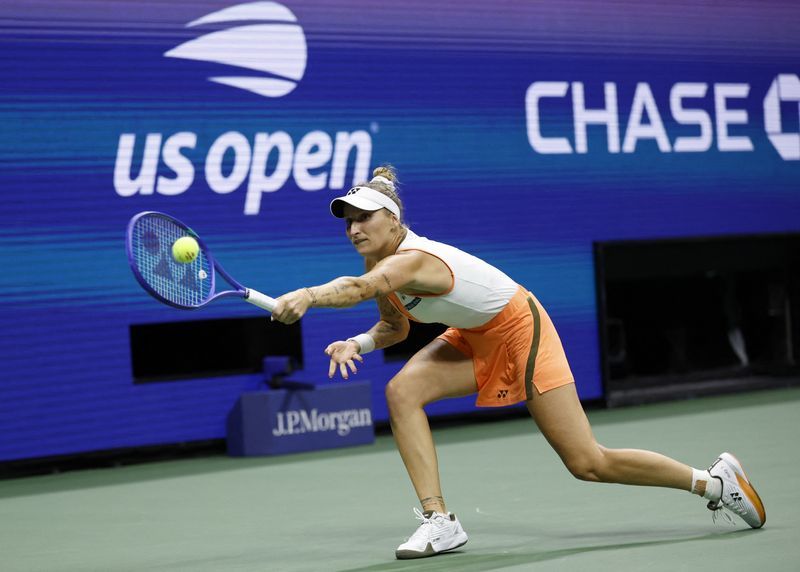
Former Wimbledon champion Marketa Vondrousova has taken her case to the Court of Arbitration for Sport in a bid to overturn a four-year ban imposed for refusing to submit to an out-of-competition doping test. The appeal marks a significant moment in professional tennis, as one of the sport's brightest recent talents fights to salvage her career during what should be her prime competitive years.
The International Tennis Integrity Agency issued the suspension in June after determining that the Czech player failed to provide a sample when a doping control officer arrived unannounced at her residence in December. According to the agency's account, Vondrousova did not comply with the testing protocol during what was supposed to be a routine, unscheduled examination. The incident has become a flashpoint in the ongoing debate about balancing anti-doping enforcement with athlete privacy and personal circumstances.
Vondrousova's defence centres on the circumstances surrounding the December 3 incident. The 27-year-old explained in April that she had endured months of mounting physical and mental strain, reaching what she described as a breaking point. When the doping officer arrived at her home at 8:15 p.m., demanding immediate compliance, she felt the intrusion crossed a line of personal privacy and boundaries that she could no longer accept. Her account reveals the human dimension often overlooked in doping cases—the psychological toll that intensive scrutiny places on athletes, particularly those dealing with injury or burnout.
Crucially for her appeal, Vondrousova underwent a voluntary test just three days after the disputed December 3 encounter, which returned a negative result. This detail strengthens her position considerably, as it demonstrates she had nothing to hide and was willing to cooperate with testing once the immediate circumstances had been resolved. The negative result provides tangible evidence supporting her contention that she never used performance-enhancing substances and was not attempting to evade legitimate anti-doping measures.
The player has consistently maintained her innocence throughout the process, emphasizing that her objection was directed at the specific conditions and timing of the test attempt rather than the principle of doping control itself. This distinction matters considerably for her legal position and public perception, particularly in a region like Southeast Asia where notions of privacy and respect carry significant cultural weight. Her argument suggests that the issue was procedural and contextual rather than substantive.
CAS confirmed receipt of the appeal on Tuesday but has not yet scheduled a hearing date. This procedural step begins a new chapter in what has already been a lengthy ordeal for the player. The uncertainty surrounding when the case will be heard compounds the difficulties Vondrousova faces, as she remains suspended from competition indefinitely pending the outcome. The potential duration of legal proceedings could extend well into 2025 or beyond, adding another layer of uncertainty to her rehabilitation efforts.
Vondrousova's career trajectory makes this suspension particularly consequential. She captured the Wimbledon title in 2023, representing a career-defining achievement and validation of years of hard work and sacrifice. Before that triumph, she had reached the French Open final in 2019 and won a silver medal at the Tokyo Olympics in 2021, establishing herself as a generational talent with genuine potential to dominate the sport. The four-year ban, if upheld, would essentially remove her from professional tennis during what many athletes consider their most productive years.
The impact of her enforced absence has already been evident in her rankings. Vondrousova has not competed since withdrawing from the Adelaide International in January, citing a shoulder injury. Without competitive matches, her ranking has plummeted from a career-high of world number six to world number 153. This dramatic drop illustrates how quickly players can lose ground in professional tennis when sidelined for extended periods, regardless of the reason. The longer she remains absent from competition, the more difficult her comeback becomes both athletically and psychologically.
For Malaysian and Southeast Asian tennis enthusiasts, Vondrousova's case raises important questions about the application of anti-doping rules and whether current protocols adequately account for athlete welfare and personal circumstances. The region has produced numerous international tennis competitors, and their treatment by global sporting bodies resonates with local audiences. The CAS proceedings will likely influence how tennis authorities approach similar situations in future, potentially affecting players across Asia.
The case also highlights ongoing tensions within professional tennis between protecting the integrity of the sport through rigorous doping control and respecting the human dimensions of athletes' lives. The sport's governing bodies maintain that unannounced testing is essential to the credibility of anti-doping efforts, while critics argue that current protocols can become unnecessarily invasive. Vondrousova's appeal may ultimately help clarify where that line should be drawn.
The suspension stipulates that Vondrousova's ban will conclude on June 21, 2030, when she will be thirty years old. Even if successful in her appeal, she faces an uphill battle to reclaim the form that made her a Grand Slam champion. The combination of the ban, the shoulder injury, and the psychological weight of this dispute means her path to competitive tennis remains extraordinarily challenging. For now, all eyes turn to CAS and the hearing that will ultimately determine whether a talented player receives a second chance.

