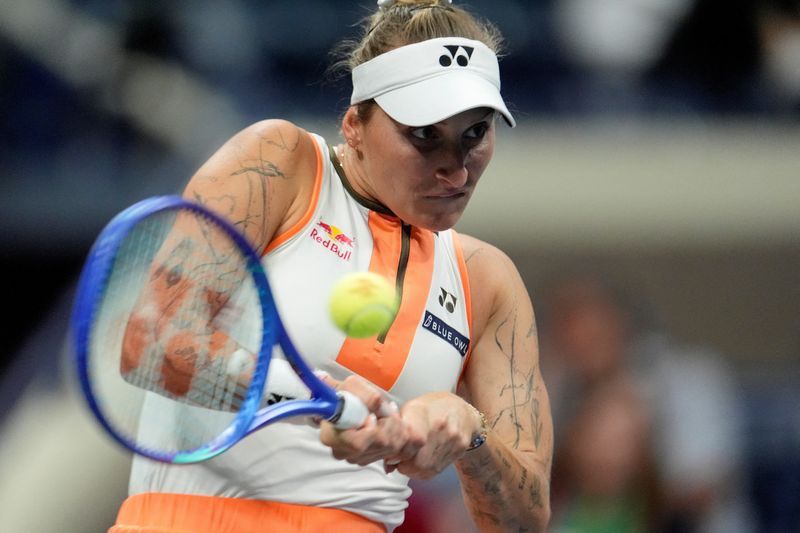
The tennis world faces mounting pressure to overhaul its anti-doping governance framework following the International Tennis Integrity Agency's decision to ban former Wimbledon champion Marketa Vondrousova for four years after she refused to provide a sample during an unannounced test at her home last December. The Czech player's case has exposed widening rifts between sport administrators and competitors over how testing regimes balance the imperative to maintain integrity with legitimate concerns about player privacy, safety, and procedural fairness.
Vondrousova's suspension, issued on Monday, stems from her failure to comply with a doping control officer who arrived unannounced at her residence on a December evening. The 26-year-old subsequently explained that the late arrival of an unidentified official at her door triggered deep-seated anxiety rooted in a traumatic 2016 knife attack on fellow Czech player Petra Kvitova at her home. Her account resonated particularly with female athletes and advocates concerned about personal security during intrusive testing procedures conducted outside business hours.
The Professional Tennis Players Association has seized on Vondrousova's case to launch a broader campaign for structural reform. In a pointed statement, the PTPA acknowledged the necessity of anti-doping testing while arguing that the severity of the four-year ban—imposed on a player with no history of positive tests—warrants serious reflection within the sport. The association contended that athletes should hold meaningful seats at the table when anti-doping bodies design and modify testing protocols, rather than remaining passive subjects of enforcement mechanisms developed without their input.
This dispute emerges against a backdrop of recent controversies that have undermined public confidence in tennis's anti-doping administration. World number one Jannik Sinner received only a suspended fine and ranking points deduction after traces of a banned substance were detected in his system, while Iga Swiatek avoided lengthy sanctions following a separate case. These resolutions triggered accusations of inconsistency and preferential treatment, creating an impression that elite players face lighter consequences than lesser-ranked competitors.
The PTPA's efforts gain additional weight from a lawsuit filed last year challenging tennis governing bodies on privacy grounds. The association contends that the frequency and intrusiveness of random out-of-competition testing violates athletes' fundamental rights, particularly when officers conduct unannounced visits to private residences late at night. The Vondrousova situation crystallizes these abstract legal arguments into a concrete human narrative, illustrating how current procedures can intersect with legitimate safety concerns.
Tennis authorities defend their position by pointing to alignment with the World Anti-Doping Agency's global framework, which applies standardized rules across all Olympic and international sports. International Tennis Integrity Agency CEO Karen Moorhouse emphasized that testing decisions rest on objective facts and evidence rather than player status or nationality, implying that no athlete receives preferential consideration regardless of ranking or commercial value. This standardization, officials argue, ensures equitable treatment and protects the sport's competitive credibility.
However, Moorhouse acknowledged that testing procedures impose genuine burdens on athletes already navigating intense professional pressures. Yet she maintained that unpredictable, location-independent testing remains essential to prevent cheating and maintain fair competition. The ITIA contends that allowing players to negotiate testing schedules or locations would fundamentally compromise the deterrent value of anti-doping programs, as athletes could deliberately structure their lives to avoid surveillance.
The agency has implemented several safeguards intended to address player concerns. Testing officers carry identification and players may verify their credentials through alternative means before permitting entry. The gender of testing witnesses is matched to the player being tested. These measures, according to Moorhouse, reflect genuine commitment to player welfare and safety. Yet critics argue these protections remain insufficient when visitors arrive unannounced at residential addresses during evening hours, particularly for female athletes acutely conscious of security risks.
Vondrousova's decision not to answer her door, while understandable given her articulated fears, triggered automatic penalties under ITIA regulations. The independent tribunal that reviewed her case upheld the principle that refusing a lawful test constitutes grounds for severe sanctions, reinforcing the system's deterrent architecture. This outcome troubles advocates of player rights, who argue the framework creates untenable dilemmas: comply with potentially unsafe procedures or accept career-ending consequences.
For Southeast Asian readers, this dispute carries particular resonance given the region's growing tennis development programs and expanding athlete participation in international competitions. As Malaysian and regional players aspire to Grand Slam contention, they will navigate these same anti-doping frameworks. Questions about procedural fairness, cultural sensitivity, and player agency in rule-making become increasingly relevant as tennis expands beyond traditional markets.
The regulatory conflict also reflects broader tensions in global sports governance between centralized, standardized approaches and localized, athlete-centered models. Vondrousova's case suggests that a one-size-fits-all methodology may inadequately account for legitimate safety disparities, particularly for women competing internationally. Her ability to appeal to the Court of Arbitration for Sport offers a potential avenue for legal recalibration, though the likelihood of overturning such severe sanctions remains low under current jurisprudence.
Looking ahead, the tennis establishment faces mounting pressure to convene stakeholder consultations bringing together players, administrators, legal experts, and gender safety advocates. Creating genuine athlete representation in anti-doping governance would not necessarily weaken testing integrity but might generate procedures commanding greater legitimacy and compliance. Vondrousova's suspension, while formally justified under existing rules, represents an opportunity for the sport to demonstrate whether its commitment to fairness extends beyond competitive outcomes to encompass the lived experiences of athletes navigating these systems.