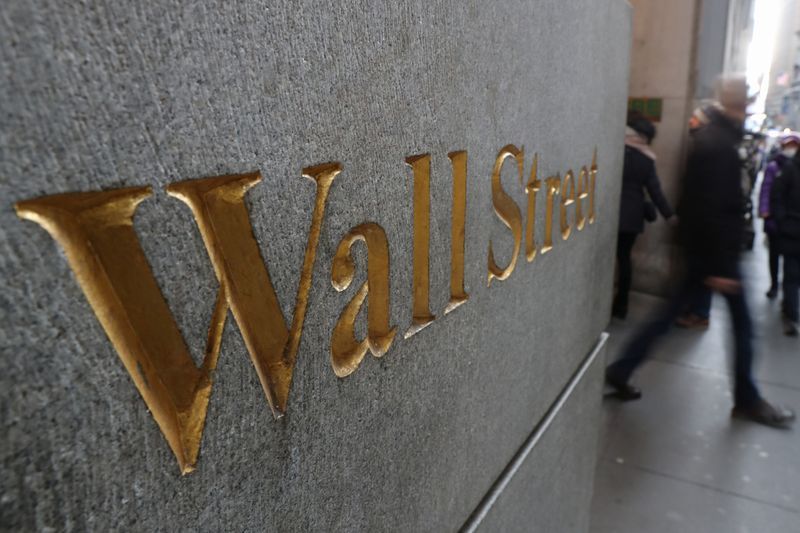
U.S. equity markets opened August with decisive gains, propelling the Dow Jones Industrial Average to an all-time closing record as investors reassessed geopolitical risks in the Middle East. The broad-based rally reflected a recalibration of market sentiment following signals that tensions between Washington and Tehran might ease. President Donald Trump's statement on Sunday that discussions regarding the reopening of the Strait of Hormuz would commence the following day proved sufficient to trigger a risk-on shift, despite Iran's subsequent denial that formal negotiations had been scheduled. This dynamic underscores how commodities-sensitive markets remain acutely responsive to any hint of de-escalation in conflict zones.
The immediate beneficiary of improved sentiment was the crude oil market, where prices retreated approximately 5% during the session. This decline rippled through fixed-income markets, pulling U.S. Treasury yields lower even as participants remained cautious about potential Federal Reserve policy responses should regional tensions persist and escalate into a prolonged confrontation. The interplay between geopolitical risk, energy prices, and monetary policy has created a complex backdrop for investors seeking conviction in their positioning. For Malaysian and Southeast Asian investors, movements in oil prices carry particular significance given the region's energy consumption patterns and the exposure of regional economies to fluctuations in petroleum costs.
The communication services sector emerged as the session's strongest performer, advancing 4.3% as major technology platforms capitalised on the improved risk environment. Meta Platforms and Alphabet drove much of this momentum, benefiting from reduced concerns about macroeconomic headwinds. Conversely, the energy sector proved most vulnerable, declining 1.2% as lower commodity prices weighed on sector valuations. This divergence reflects how different market segments respond to the same geopolitical signal—those with international revenue streams and digital business models tend to perform better when oil prices fall, whilst traditional energy producers face margin compression.
Art Hogan, chief market strategist at B. Riley Wealth in Boston, captured the precarious nature of current market dynamics: "Every day, everybody wakes up and looks at the price of a barrel of oil and the yield on the 10-year, and if that's going lower, the market's OK, and if it's going higher, the market's not good whatsoever." His observation highlights how investors have become fixated on a narrow set of indicators whilst struggling to find confidence in underlying economic fundamentals. Typically, quarterly earnings seasons provide respite from macroeconomic anxieties, allowing market participants to focus on company-specific performance. However, this earnings cycle has proven different, with geopolitical and monetary policy considerations continuing to overshadow corporate results.
Earnings momentum has nonetheless remained robust. Through Friday, 304 companies within the S&P 500 had reported results, demonstrating a combined earnings growth rate of 29.3%, with 85.2% surpassing consensus analyst expectations according to LSEG data. This performance validates the underlying health of the corporate sector, even as macro uncertainties persist. Amazon exemplified this strength, with shares climbing 4.6% following last week's earnings report, finally pushing the company's market capitalisation above the $3 trillion threshold—a symbolic milestone that underscores the dominance of mega-cap technology firms in current market leadership.
SpaceX delivered another notable performance, jumping 5.6% on renewed investor interest ahead of the company's initial quarterly results since listing in mid-June. The aerospace manufacturer's stock had traded below its $135 issue price for nearly three weeks following its June debut, suggesting that some investors had grown discouraged by initial valuations. The upcoming report provides a fresh opportunity for the company to establish credibility with public markets. Several other artificial intelligence-adjacent companies are scheduled to report earnings this week, including Advanced Micro Devices, SanDisk, and Western Digital, all of which remain closely watched by investors gauging the depth and durability of the AI investment cycle.
Index-level performance reflected the breadth of market enthusiasm. The Dow Jones Industrial Average rose 693.38 points, or 1.32%, closing at 53,178.41, whilst the S&P 500 gained 110.78 points, or 1.48%, to 7,600.50. The Nasdaq Composite posted the most impressive percentage advance, climbing 540.04 points, or 2.13%, to 25,913.90. These movements represented a sharp reversal from July's performance, when concerns about artificial intelligence trajectories, the U.S.-Iran conflict, and interest rate expectations had created significant headwinds. The breadth of the rally, evidenced by advancing issues outnumbering decliners by 2.62-to-1 on the New York Stock Exchange and 3.01-to-1 on the Nasdaq, suggests that the positive sentiment extended well beyond the largest firms.
Other corporate developments added texture to the trading session. Bristol Myers Squibb shares eased up 0.2% following reports of preliminary merger discussions with AstraZeneca, a combination that could produce one of the world's largest pharmaceutical manufacturers with an approximate valuation near $400 billion. Such consolidation moves often face regulatory scrutiny, particularly when they concentrate market power within already-concentrated sectors. Marriott International, by contrast, experienced a sharp 7% decline after guiding investors toward third-quarter profit forecasts below consensus expectations, demonstrating that strong macro sentiment does not insulate companies from their own operational challenges and sector-specific headwinds.
Federal Reserve communications continued shaping investor calculations. New York Federal Reserve President John Williams signalled confidence that inflation pressures would moderate gradually, providing some reassurance about the central bank's inflation-fighting trajectory. However, recent reporting that Fed Chair Kevin Warsh had raised the possibility of scheduling fewer rate-setting meetings introduced fresh uncertainty about how frequently and transparently the central bank would communicate policy shifts. This ambiguity has generated investor concern about reduced clarity regarding Fed intentions. Market pricing currently reflects a 64.5% probability of at least a 25 basis point rate increase at the Fed's September meeting, according to CME FedWatch data, maintaining elevated stakes around near-term monetary policy decisions.
The labour market emerges as the critical data point for the week ahead. Several employment-related reports are scheduled for release, culminating with the government's official jobs report on Friday. Labour market strength remains one of the few factors potentially constraining the Fed's willingness to cut rates aggressively, as persistent employment growth could suggest the economy retains sufficient momentum to warrant maintained policy restraint. For Southeast Asian observers, Fed policy decisions carry outsized importance given the region's exposure to U.S. dollar strength, capital flows, and broader economic cycles.
Technical indicators suggested broad-based participation in the rally. The S&P 500 recorded 15 new 52-week highs against just one new low, whilst the Nasdaq Composite showed more mixed action with 121 new highs offset by 96 new lows. Trading volume reached 19.36 billion shares across U.S. exchanges, modestly above the 20-day average of 17.66 billion, indicating that conviction behind the advance remained meaningful. The combination of record index levels, healthy earnings growth, and improved geopolitical sentiment has created conditions that could support further equity appreciation in the near term, though the persistence of macro uncertainties suggests that complacency would be premature.

