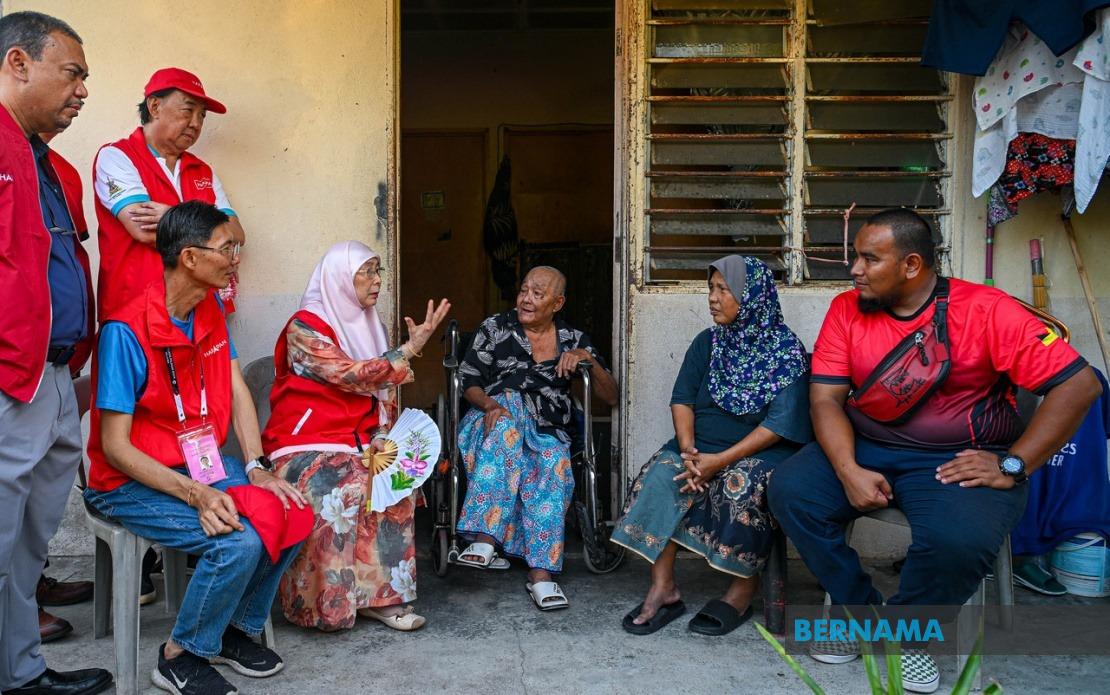
Wan Azizah made an unscheduled visit to the modest home of Zaiton Hasan, 60, and Paimin Sapari, 71, in the Chuah constituency, accompanied by Pakatan Harapan's state legislative assembly candidate Datuk Yew Boon Lye. The roughly 20-minute encounter represented a rare moment of direct engagement between senior party leadership and rural constituents grappling with compounding challenges of age, chronic illness, and financial strain.
The couple's health circumstances underscore vulnerabilities affecting many Malaysian households in their demographic. Paimin manages diabetes while his wife contends with hypertension—conditions requiring ongoing medical attention and medication expenses that strain household budgets already depleted by limited income streams. Their situation mirrors broader patterns across Negeri Sembilan and rural Malaysia, where aging populations increasingly live on pensions and irregular family support whilst facing escalating healthcare costs.
Zaiton described the visit as transformative, emphasizing the emotional significance of receiving attention from high-profile political figures. In interviews following Wan Azizah's departure, she articulated a sense of validation and recognition, noting that this represented the first occasion a major national leader had visited their residence. The interaction transcended transactional politics, instead creating a moment of human connection that resonated deeply with individuals accustomed to invisibility within formal political structures.
Beyond the symbolic dimensions of the visit, tangible assistance accompanied the engagement. The Port Dickson People's Spirit Welfare Association presented Paimin with a wheelchair, addressing immediate mobility constraints that had restricted his independence and daily functionality. This material contribution addressed practical realities—the need for assistive devices that enable elderly individuals to maintain dignity and participate within household and community life.
The timing of this outreach aligns strategically with Negeri Sembilan's upcoming state election scheduled for August 1, with advanced polling commencing July 28. Yew contests the Chuah seat in a direct contest against Pau Jeou Ching, the Perikatan Nasional candidate, making grassroots mobilization and constituent engagement central to both camps' electoral strategies. For Pakatan Harapan, demonstrating visible concern for elderly and economically vulnerable populations strengthens narrative positioning around social responsibility and inclusive governance.
The Chuah constituency represents terrain where election outcomes remain competitive and contested. Direct constituent engagement, particularly targeting demographic segments perceiving themselves marginalized by incumbent administrations, constitutes standard electoral methodology. However, the personalised nature of Wan Azizah's visit—spending concentrated time listening to concerns rather than delivering scripted remarks—creates differentiation from conventional campaign appearances.
Wan Azizah's involvement underscores Pakatan Harapan's broader positioning as champion of ordinary Malaysians navigating systemic disadvantage. As deputy president of PKR and a prominent figure within the coalition, her participation lends organisational weight and symbolic gravitas to Yew's candidacy. The message conveyed suggests that senior party leadership remains attentive to grassroots experiences and committed to translating electoral mandates into material improvements for vulnerable constituencies.
For elderly Malaysians more broadly, narratives emerging from such encounters reflect broader anxieties about retirement security and healthcare access. Malaysia's social safety net, whilst providing fundamental pension structures, frequently proves insufficient for managing chronic conditions and maintaining adequate living standards. Advocacy organisations and political parties increasingly recognise that elderly welfare represents both demographic imperative and electoral opportunity, given the expanding proportion of retirees within the overall population.
The Negeri Sembilan state election carries significance extending beyond local constituency outcomes. As a predominantly Malay-Muslim state with complex political dynamics, results will signal voter sentiment regarding Pakatan Harapan's governance record and Perikatan Nasional's appeal. The state has experienced considerable political volatility, with shifting alliances and defections creating unpredictable electoral terrain. Individual seats like Chuah therefore acquire heightened importance within broader statewide calculations.
Yew's candidacy in a straight contest against Pau positions the election as direct binary choice between competing visions and party affiliations. Grassroots mobilisation through personalised constituent engagement—exemplified by Wan Azizah's visit—aims to translate voter sympathy into actual ballot-box support. The elderly couple's receptivity to the visit and the media coverage generated demonstrate how individual human interactions can amplify political messaging and reinforce partisan identity among target constituencies.
Looking toward the August 1 polling date, both Pakatan Harapan and Perikatan Nasional will intensify efforts to mobilise their respective voter bases whilst persuading undecided constituencies that their platforms offer superior governance and material benefits. For elderly and economically vulnerable populations like Zaiton and Paimin, electoral choices increasingly hinge on which party credibly promises addressing pension adequacy, healthcare accessibility, and social support systems—issues that senior voters regard as central to their material security and dignified aging.

