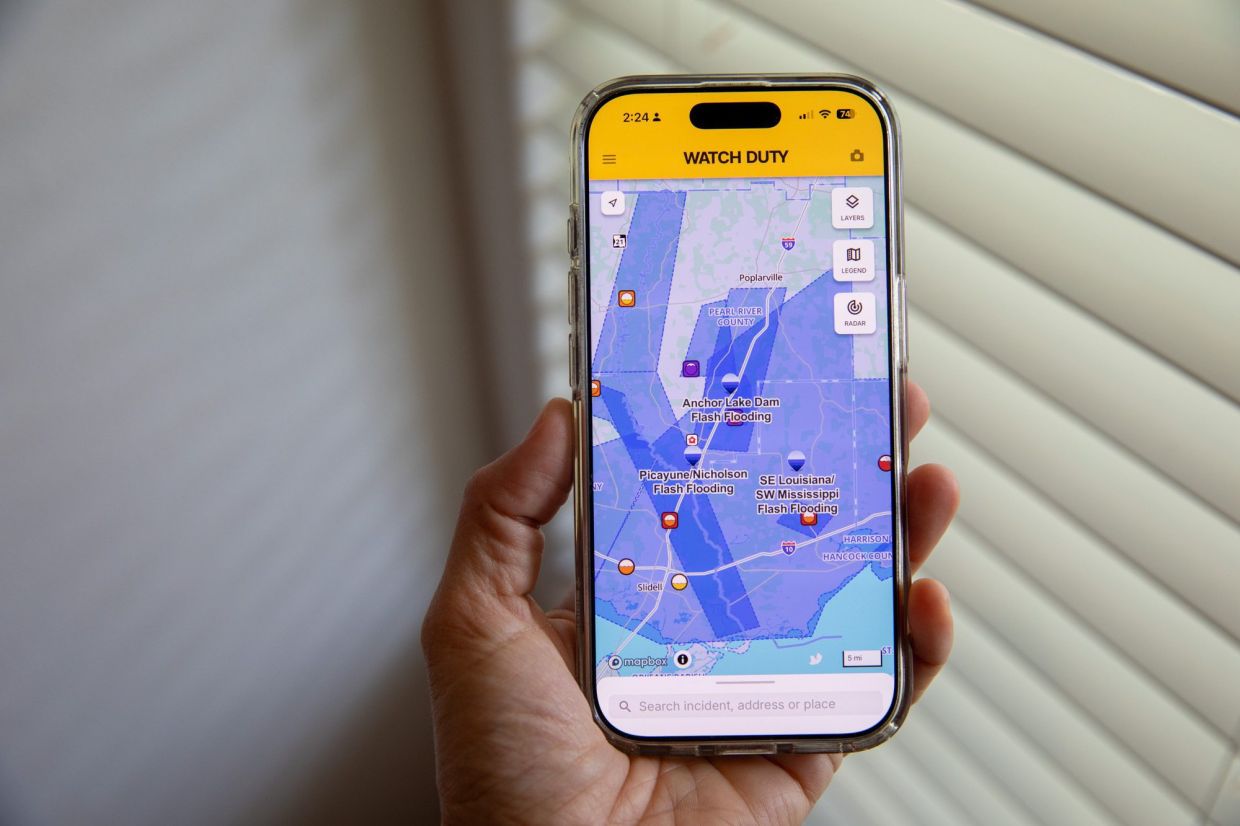
When the Eaton Fire threatened his Altadena home on the evening of January 7, Matt Blea faced an agonising choice: evacuate or stay put. A friend involved in mountain rescue directed him to a free application called Watch Duty, where he could monitor the fire's perimeter, track official evacuation orders and follow real-time emergency response updates. The decision to leave that night proved lifesaving—his home was later destroyed—yet he remained in control because he had access to the same information emergency responders and officials possessed. Blea exemplified millions of Californians who leaned on Watch Duty during the catastrophic Los Angeles fires, when the platform became an essential tool for survival in a disaster landscape where official channels sometimes proved inadequate.
The scale of Watch Duty's reach during those fires underscores the public's hunger for transparent, accessible emergency information. Over 2.5 million users activated the app to navigate the twin catastrophes of the Eaton and Palisades fires, which collectively claimed 31 lives and displaced thousands. Behind that user surge stood approximately two dozen paid staff members and more than 100 volunteers who worked continuously to collect, verify and distribute information harvested from emergency radio traffic, aircraft surveillance reports and communications from local agencies. David Hertz, a Malibu resident and captain of his community's fire brigade, credits Watch Duty with delivering what government channels often failed to provide: timely, comprehensible alerts. For residents in areas that received minimal official warning, the app functioned as a democratising force, channelling critical survival information to ordinary people during moments when bureaucratic delays could mean death.
Built on lessons learned during personal tragedy, Watch Duty emerged from frustration with governmental warning systems. John Mills, the app's CEO and co-founder, created the nonprofit in 2021 after discovering that he had received neither official alerts nor evacuation instructions when a fire approached his Northern California residence. His experience illuminated a systemic weakness in emergency management: critical information exists within government agencies and on public communications channels, yet the public struggles to access and interpret it in real time. Mills recognised that while America possesses multiple alert mechanisms—text messages, radio broadcasts, sirens—the process of translating a developing emergency into a specific, actionable warning frequently entangles itself in bureaucratic procedures and human judgment made under crushing pressure. The consequence manifests in preventable deaths and communities caught unaware when conditions deteriorate rapidly.
Watch Duty's operational model bypasses certain bureaucratic bottlenecks by harnessing volunteer labour and technological infrastructure to curate already-public information. The platform now deploys approximately 300 volunteer "reporters" who monitor radio scanners, analyse satellite imagery, review user-generated content and synthesise public agency announcements into coherent, actionable intelligence. This streamlined workflow offers advantages that government agencies cannot easily replicate: volunteers possess singular focus and responsibility, whereas emergency officials must simultaneously manage incidents, coordinate multiple organisations and navigate jurisdictional complexities. Pete Curran, Watch Duty's meteorologist and a retired firefighter, explains that the app can sometimes disseminate critical information faster than official channels precisely because volunteers shoulder no operational responsibilities. Their only mandate involves watching, listening and translating raw signals into plain language understandable to panicked householders.
The logical expansion into flood tracking reflects Watch Duty's recognition that climate change has fundamentally altered disaster geography. In June, the platform began incorporating flood monitoring capabilities as peak flash flood season commenced across the United States. This development responds to persistent failures in flood communication, exemplified by last July's devastating Texas floods that killed more than 130 people and sparked widespread recriminations over why residents of Texas Hill Country received inadequate warning. Mills characterised the repeated cycle of under-informed communities facing deadly floods as intolerable, insisting that information must spread across multiple channels with greater speed and reach. Dr Lori Moore-Merrell, who served as US Fire Administrator under President Joe Biden and now sits on Watch Duty's board, emphasises that unprecedented rainfall patterns in regions historically unaccustomed to flooding create novel hazards that demand community awareness.
Watch Duty's flood monitoring integrates weather modelling and hydrological data from the National Weather Service, the National Oceanic and Atmospheric Administration and the US Geological Survey, making government data more discoverable and actionable. Users can view flood warnings and watches, monitor river gauge levels in real time and receive notifications if water heights approach dangerous thresholds. Beyond immediate alerts, the platform enables residents to understand their baseline risk by displaying FEMA-designated flood zones and explaining what specific gauge readings signify for their locality. This educational dimension matters profoundly: people equipped with knowledge of their neighbourhood's vulnerability and clear benchmarks for dangerous conditions make better decisions when alerts arrive. Customisable notifications ensure that users receive warnings tailored to their particular geographic and hydrological circumstances rather than generic broadcasts applicable to broad regions.
The nonprofit received nearly six million US dollars in grants and donations during 2025, reflecting growing recognition that citizen-powered emergency information systems address genuine market failures. The platform maintains availability in five languages, accessible through digital maps, text feeds and push notifications that penetrate silenced phones to wake sleeping residents. Yet Watch Duty's explosive growth masks persistent challenges that technology alone cannot resolve. Chad Berginnis, executive director of the Association of State Floodplain Managers, cautions that receiving a warning means little if residents lack knowledge of how to respond, where evacuation zones lie or which routes lead to safety. Practical preparedness—knowing evacuation routes, having supplies prepared, practising departure procedures—remains disconnected from information technology, yet represents the difference between warning and survival.
Existing gaps in the national infrastructure for emergency monitoring and public alert systems compound these challenges. Proposed funding cuts to federal agencies and local emergency warning systems threaten the very monitoring capabilities that Watch Duty leverages. Berginnis stresses that maintaining distributed networks of human observers and sensor systems requires sustained financial investment that governments increasingly struggle to provide. The contradiction proves stark: Watch Duty can accelerate information dissemination, but it depends upon robust National Weather Service operations, adequate fire service capacity and functioning infrastructure at local and federal levels. Without investment in foundational monitoring systems, even the most sophisticated information app becomes a high-tech solution to problems that require institutional commitment.
Watch Duty's leadership explicitly rejects the notion that their platform supersedes traditional emergency systems, instead positioning it as a complement to established agencies. Mills emphasises that users must simultaneously enrol in local alert systems and maintain relationships with official emergency management structures. The nonprofit cannot and should not replace the National Weather Service, fire departments or other government infrastructure; rather, it aggregates and clarifies information that these organisations already produce. This humility reflects a realistic understanding of technological limits: an application proves useful only to people who download it and who possess cell coverage when alerts transmit. Redundancy in emergency warning systems becomes essential, with Berginnis advocating that communities maintain inexpensive NOAA weather radios alongside mobile applications. Sometimes, he notes, the most reliable technology remains the simplest—a battery-powered radio independent of cellular networks and servers.
For Malaysian and Southeast Asian observers, Watch Duty's expansion offers both inspiration and caution regarding emergency preparedness in climate-vulnerable regions. Malaysia experiences regular flooding, particularly in peninsular areas during monsoon seasons, and communities frequently report inadequate or delayed warnings. The voluntary, community-powered model that Watch Duty exemplifies could theoretically adapt to Southeast Asian contexts, yet doing so would require not merely downloading software but also cultivating volunteer networks, securing funding streams and establishing relationships with meteorological agencies. More fundamentally, the app's success reflects underlying problems in emergency communication that transcend national borders: bureaucratic delays, information fragmentation and communities' difficulty accessing official data. While technology cannot substitute for institutional capacity, better information architecture could improve survival outcomes across the region. Watching Watch Duty's evolution offers lessons about how to structure emergency systems that prioritise accessibility and speed, qualities increasingly essential as climate patterns intensify and disaster frequency accelerates.

