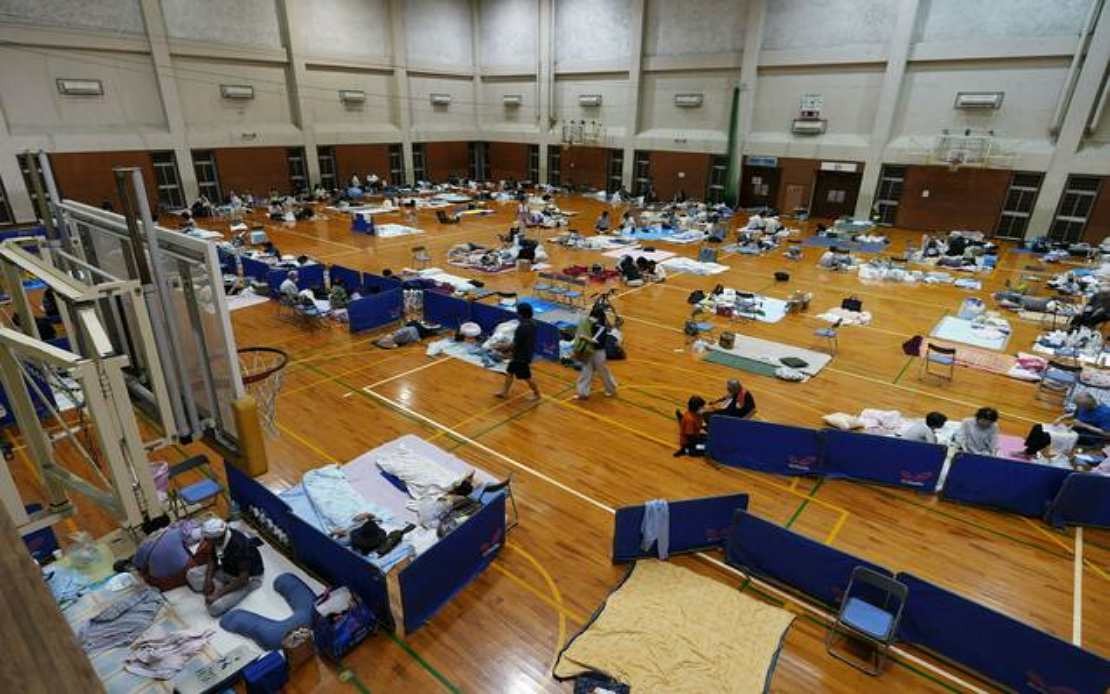
A magnitude 7.1 earthquake that struck Kumamoto Prefecture in southwestern Japan on July 28 continues to displace thousands of residents, with over 8,000 people still sheltering in evacuation centres seven days after the initial disaster. The compounding humanitarian challenge comes not from ongoing seismic activity but from a confluence of water supply failures and extreme heat conditions that have transformed the recovery into a race against time. Authorities across the prefecture are implementing emergency measures to prevent further casualties, even as reconstruction efforts remain in their earliest stages.
The scale of physical destruction provides context for the ongoing displacement crisis. Approximately 12,000 buildings sustained damage from the earthquake, with destruction concentrated in several municipalities. The initial quake claimed 38 lives, though the circumstances of these deaths reveal the disaster's varied impacts: seven people perished in an explosion at an Aeon shopping mall in Kashima, while nine died when a chimney at a Nippon Paper Industries facility in Yatsushiro collapsed. These figures underscore how modern infrastructure and industrial facilities can amplify earthquake dangers, transforming what might otherwise be survivable tremors into catastrophic events.
Temperature extremes are now compounding the earthquake's immediate dangers. Multiple areas across Kumamoto Prefecture recorded highs of 35 degrees Celsius or higher on Monday, with some locations reaching 40 degrees Celsius for the first time in recorded history. These are not merely uncomfortable conditions but life-threatening circumstances, particularly for those sleeping in vehicles or crowded evacuation shelters with limited ventilation. One suspected heatstroke death has already been documented among people sheltering in cars, establishing a grim pattern that authorities are desperately trying to prevent from accelerating.
Water infrastructure damage remains the crisis's most persistent element. Approximately 45,000 households across five municipalities continue without reliable water access, creating impossible sanitation conditions that amplify disease risks in crowded shelters. The Japanese government has mobilised water trucks from across the nation to deliver drinking water to affected areas, while authorities have expanded portable toilet provisions and deployed spot cooling equipment to shelters. These are emergency band-aids on a fundamentally broken infrastructure system that will require weeks or months to fully restore.
Prime Minister Sanae Takaichi's Monday visit to an evacuation shelter resulted in a consequential administrative decision: the government designated the earthquake a "disaster of extreme severity," a formal classification that unlocks significantly higher reconstruction subsidies for local governments. This distinction matters substantially for municipalities like Uki and Hikawa, which have already begun constructing temporary housing to transition evacuees from shelters into more permanent emergency accommodation. The government is simultaneously processing applications for secondary evacuation to hotels, recognising that shelters are inadequate for extended stays.
The personal testimony of those managing critical facilities illuminates the human dimension of the infrastructure collapse. Midori Tagata, director of Miyabien nursing home in Yatsushiro, acknowledged the city's vulnerability when she expressed gratitude for emergency care supplies provided by Kaohsiung, a major city in southern Taiwan. Her comments highlighted how water outages throughout Yatsushiro have rendered it nearly impossible to maintain basic hygiene standards for nursing home residents—a particularly acute concern for elderly and immunocompromised populations. This cross-border assistance gesture underscores how disasters create unexpected humanitarian networks.
Transportation infrastructure remains severely compromised, adding economic pressure to the disaster response. The Kyushu Shinkansen Line bullet train service between Kumamoto and Kagoshima-chuo stations has been suspended, severing a major regional artery. Simultaneously, the Kyushu Expressway remains closed to general traffic between the Matsubase and Ebino exits, restricting freight movement and business continuity across southwestern Japan. These closures will persist until comprehensive infrastructure inspections confirm safety, likely delaying regional economic recovery by weeks.
The broader implications for Southeast Asian disaster preparedness are worth considering. Malaysia, Indonesia, and the Philippines all face significant earthquake risks, yet the Kumamoto experience demonstrates that post-seismic challenges often exceed the initial impact. The combination of heat extremes, water system vulnerability, and transportation disruption created a cascading crisis that claimed lives through secondary causes—heatstroke rather than structural collapse. Regional authorities should examine how evacuation shelter standards account for climate extremes, how water distribution networks are designed with redundancy, and how temporary housing programmes can be activated rapidly.
The enumeration of those remaining displaced—8,000 in shelters plus an unknown but potentially substantial number sleeping in vehicles—represents only part of the picture. Economic displacement extends far beyond those requiring emergency shelter. Workers unable to reach employment, businesses lacking water for operations, and supply chains disrupted by expressway closures represent invisible disaster costs that will compound for months. The Japanese government's response, while comparatively well-resourced and coordinated, illustrates how even advanced economies struggle to manage the multiplier effects of natural disasters.
Looking forward, the Kumamoto recovery will test whether Japanese infrastructure resilience matches its reputation. The decision to grant extreme severity status means financial resources will not constrain reconstruction efforts, a luxury most Southeast Asian nations cannot afford when disasters strike. Yet money alone cannot immediately restore water systems or restart transportation networks. The evacuees currently sheltering in 150 facilities across the prefecture face an uncertain timeline for return home—weeks at minimum, potentially months for those whose homes sustained severe damage. Until water flows reliably and temperatures moderate, the humanitarian crisis will persist regardless of administrative designations or reconstruction funding allocations.

