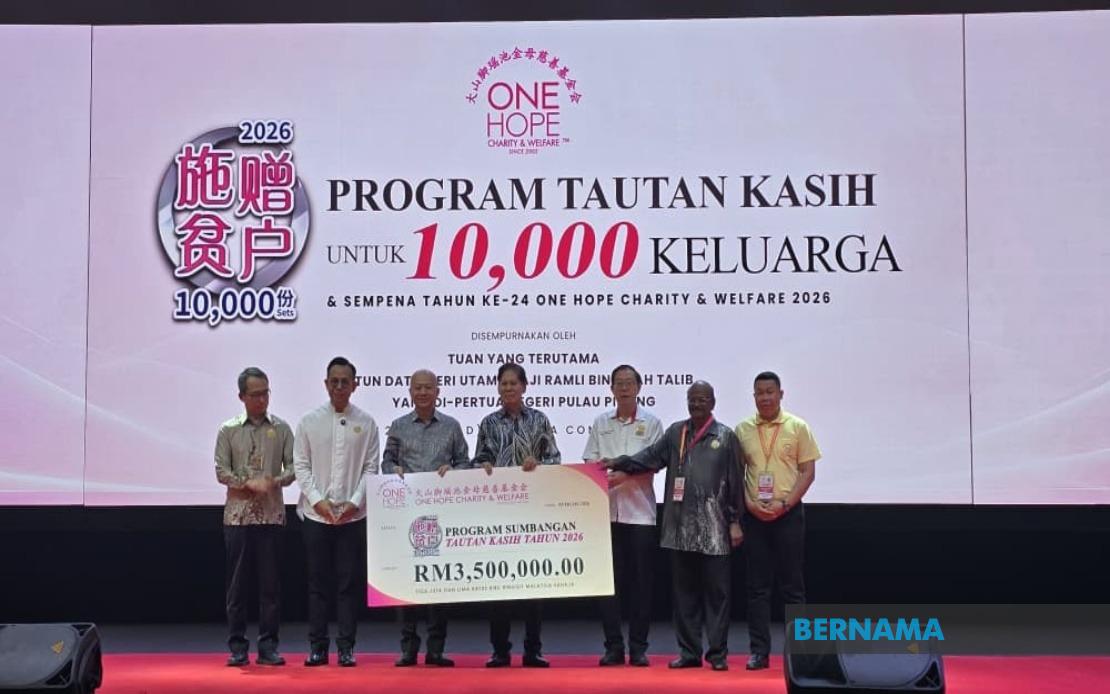
Malaysia's social safety net requires ongoing reinforcement to ensure that citizens experiencing financial strain, personal tragedy, or challenging life circumstances receive adequate assistance and protection, according to Minister of Entrepreneur Development and Cooperatives Steven Sim Chee Keong. Speaking at a welfare initiative event in Butterworth, Sim articulated a vision where a region's economic advancement cannot be divorced from its commitment to protecting the well-being of all residents, regardless of their socioeconomic position.
The minister's remarks underscore a fundamental principle increasingly central to policy discussions across Southeast Asia: that prosperity measured solely in economic indicators rings hollow without parallel progress in social cohesion and citizen welfare. Sim emphasized that life's inherent unpredictability—marked by periods of stability interspersed with genuine hardship—necessitates robust institutional frameworks to catch those who stumble. For Penang specifically, he stressed that when residents encounter financial difficulty, unemployment, illness, or other misfortunes, comprehensive welfare mechanisms must be available to provide both material support and psychological reassurance.
Beyond immediate relief, Sim positioned welfare initiatives as foundational to constructing a more compassionate national fabric. He argued that such programmes transcend mere charity, functioning instead as essential infrastructure for social solidarity. In a nation as ethnically and religiously diverse as Malaysia, welfare systems that operate impartially—extending assistance across communal and political lines—serve a crucial integrative function. They reinforce the principle that Malaysian citizenship carries with it mutual obligations and collective responsibility for vulnerable members.
One Hope Charity emerged from Sim's remarks as a model institutional actor fulfilling this welfare mandate. The organization has evolved substantially from its origins as a modest community initiative in Bukit Mertajam to become one of Penang and Malaysia's most significant charitable operations. Its current scale is noteworthy: the foundation distributes at least RM20 million in assistance annually, reaching tens of thousands of beneficiaries across the state and beyond. This trajectory illustrates how grassroots welfare efforts, when properly resourced and networked, can achieve genuine systemic impact.
The mechanics of One Hope Charity's assistance reveal a carefully calibrated approach to poverty relief. In the current year alone, the organization supported more than 10,000 families through targeted interventions. Each recipient household received a package combining practical essentials—food items, household goods, basic necessities—alongside RM200 in direct cash assistance. This hybrid model acknowledges that vulnerable families possess agency in determining their own priorities; while meeting immediate material needs through in-kind provision, the cash component respects recipients' judgment about how to deploy resources most effectively for their circumstances.
The organization's longer trajectory demonstrates sustained commitment to welfare expansion. Between 2021 and 2025, One Hope Charity channelled more than RM100 million into multiple welfare streams: direct medical assistance for patients requiring treatment, capital support for government hospital facilities, procurement of medical equipment, and implementation of diverse community support programmes. This investment pattern suggests recognition that vulnerability manifests across multiple dimensions—not only income poverty but also health insecurity and lack of access to quality medical care.
Founder and chairman Datuk Chua Sui Hau signalled intensifying ambitions as the organization approaches its 25th anniversary. Planned initiatives valued at approximately RM30 million will expand the Medical Assistance Programme and launch additional welfare interventions currently not fully specified. This expansion trajectory places One Hope Charity at the intersection of governmental and private welfare provision, filling gaps while complementing state-administered safety nets.
For Malaysian policymakers and observers, One Hope Charity's growth offers instructive lessons about welfare provision in a middle-income context. The organization demonstrates that substantial welfare impact emerges through systematic organization of private donations, corporate partnerships, and philanthropic networks rather than exclusively through government budgets. This model becomes increasingly relevant as Malaysia's population ages and social vulnerabilities diversify beyond traditional poverty metrics to encompass medical debt, single-parent household stress, and employment precarity.
Sim's emphasis on welfare policies reflects broader regional conversations about inclusive growth. Across Southeast Asia, governments face mounting pressure to ensure that economic development reaches beyond urban centers and benefit elites to reach marginalized populations. Malaysia's approach—combining government welfare provision with facilitation of organized private charity—offers a pragmatic middle path between market-driven inequality and state-heavy redistribution systems. The Governor Tun Ramli Ngah Talib's presence at the event alongside Sim signifies alignment between state and federal levels on welfare prioritization.
The welfare conversation also carries implicit significance for electoral politics in Penang and nationally. Welfare policies and their visible distribution affect public perception of government effectiveness and legitimacy. Organizations like One Hope Charity, operating across political and communal divides, implicitly demonstrate what non-partisan welfare provision might achieve. For a nation wrestling with political polarization, such examples carry weight beyond their immediate charitable impact.
Moving forward, several implications merit attention for Malaysian stakeholders. First, the One Hope Charity model suggests that welfare expansion requires not just larger government budgets but also institutional innovation and philanthropic mobilization. Second, the reach of major charitable organizations—potentially serving tens of thousands annually—indicates significant welfare demand persists despite Malaysia's middle-income status. Third, the medical assistance focus reflects how health insecurity intersects with income poverty in determining household vulnerability. As Malaysia contemplates its welfare architecture for coming decades, models combining targeted cash assistance, in-kind provision, and specialized support for medical crises may prove more resilient and efficient than single-mechanism approaches.

