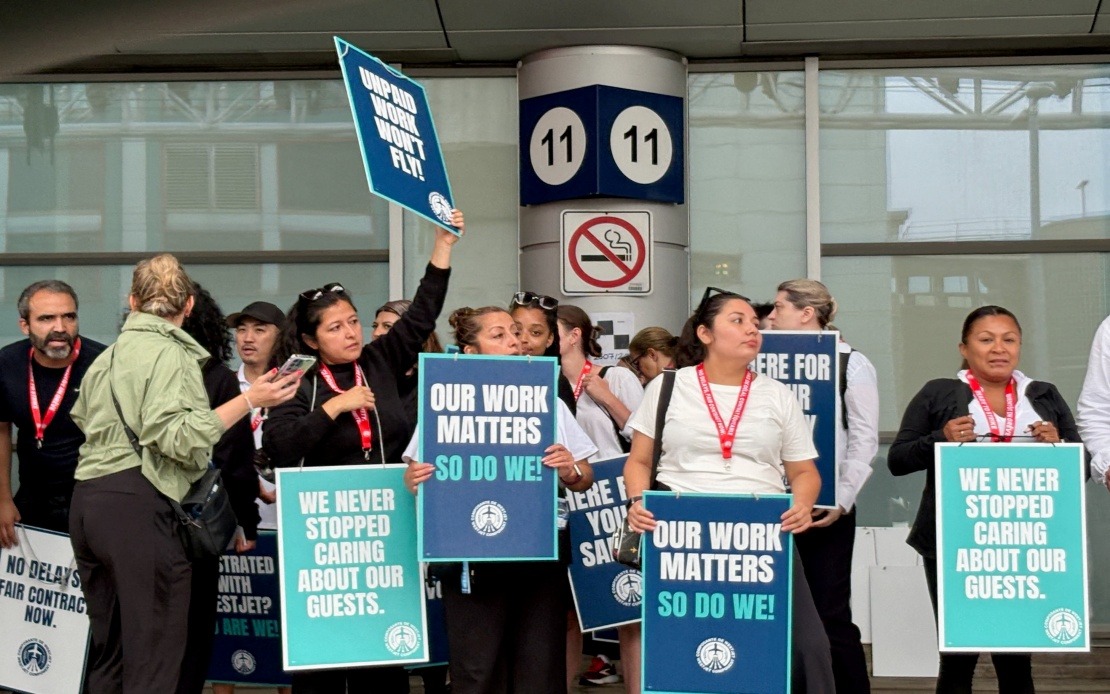
A major labour dispute has brought operations at WestJet, Canada's second-largest airline, to a standstill after more than 4,000 flight attendants initiated strike action on Sunday. The work stoppage has cascading consequences for the aviation sector and travelling public, with approximately 600 flights grounded each day and an estimated 250,000 passengers facing disrupted plans. The timing of the dispute could scarcely be worse, coinciding with what is traditionally one of Canada's busiest travel weekends, with Monday designated as a civic holiday across much of the nation.
The financial implications for WestJet are substantial. Beyond the immediate operational losses from cancelled flights, the airline faces reputational damage and potential compensation obligations to affected travellers. CEO Alexis von Hoensbroech acknowledged the impact in a statement to media, expressing disappointment that the disruption directly affects guests, staff members, and the communities and businesses dependent on the airline's operations. WestJet has committed to providing full refunds to passengers whose flights were cancelled, though the administrative and financial burden of processing such claims during an active labour dispute adds further pressure to the carrier's resources.
At the heart of the dispute lies a seemingly straightforward but contentious issue: compensation for work performed outside the cabin. Flight attendants are demanding that they receive payment for ground duties completed before departure and after landing. This encompasses tasks such as pre-flight safety checks, passenger boarding assistance, and post-flight cabin cleanup and preparation for subsequent flights. Currently, flight attendants at WestJet earn between $28.88 and $53.61 per credit hour, but this compensation does not account for ground-based labour that occurs outside scheduled flight times.
The precedent for such compensation already exists within the Canadian aviation industry. Delta Air Lines became the first major carrier to introduce pay specifically for ground work in 2022, recognising that flight attendants performing these duties should receive compensation for their time and effort. Air Canada subsequently followed suit in February of this year when negotiating a new labour contract, establishing a framework whereby flight attendants receive compensation of up to 70 per cent of their hourly rate for the hour immediately preceding takeoff. These developments have emboldened WestJet's flight attendants, who now argue that they should receive similar recognition and financial acknowledgement for their ground-based contributions.
The Canadian Union of Public Employees, which represents the striking flight attendants, has attributed the conflict directly to WestJet's negotiating stance. Union representative Alia Hussain issued a pointed statement indicating that the strike would not have occurred had the airline demonstrated willingness to address the attendants' concerns throughout nearly eleven months of contract negotiations. This extended bargaining period suggests that the fundamental disagreement was not resolved through standard labour relations channels, necessitating the industrial action as a tool to compel management concessions.
Federal oversight has registered concern about the dispute's resolution. Jobs Minister Patty Hajdu voiced her disappointment via social media regarding the failure of both parties to reach agreement during the negotiation process. Her public intervention signals government awareness of the economic and social disruption caused by the strike and suggests potential governmental interest in facilitating resolution, though direct federal intervention in private sector labour disputes typically remains limited in Canada's industrial relations framework.
The broader context of this dispute reflects a wider sector-wide discussion about flight attendant compensation and working conditions. Flight attendants across North America have increasingly sought recognition that their roles extend significantly beyond in-flight service duties, encompassing safety responsibilities, emergency response readiness, and ground-based operational tasks. The introduction of compensation for ground work represents a paradigm shift from historical practices where such tasks were often considered implicit in employment without separate remuneration. WestJet's resistance to this industry trend places the carrier at a competitive disadvantage when recruiting and retaining talent, particularly as competitor Air Canada now offers more comprehensive compensation packages.
For Malaysian and Southeast Asian readers, this Canadian labour dispute offers instructive parallels regarding aviation sector labour relations and worker compensation standards. The region's rapidly expanding airline industry, encompassing carriers such as Malaysia Airlines, AirAsia, and numerous regional operators, faces similar pressures regarding flight attendant compensation and working conditions. The principle that ground work merits direct compensation has gained traction globally, and regional carriers monitoring international labour trends may anticipate comparable demands from their workforces in coming years.
The strike's resolution will likely establish important precedent for the Canadian aviation sector and may influence labour negotiations at other carriers facing similar demands. Should WestJet capitulate to flight attendants' compensation demands, the concession will effectively become the new industry standard, pressuring other Canadian carriers to adjust their compensation frameworks accordingly. Conversely, should the airline successfully resist the demands through prolonged strikes or other means, it signals to the broader sector that carriers can maintain historical compensation structures despite competitive pressures from rivals offering enhanced packages.
Passenger experience during this dispute extends beyond simple flight cancellations to encompass broader travel disruption. Stranded travellers must arrange alternative transportation, adjust business schedules, postpone leisure activities, and navigate rebooking processes that may prove complex during peak travel periods. The civic holiday context amplifies these disruptions, as many affected travellers likely had time-sensitive plans during this extended weekend.
The path forward for both WestJet and the Canadian Union of Public Employees remains uncertain. Extended strikes impose cumulative costs on all parties, with each additional cancelled flight generating pressure on management to concede while simultaneously strengthening union resolve. Historical precedent suggests that Canadian labour disputes in the airline sector eventually reach negotiated settlements, though the terms and timeline remain unpredictable. Federal mediation services may become engaged if industrial action persists beyond immediate timeframes, potentially introducing governmental influence into the negotiation process.

