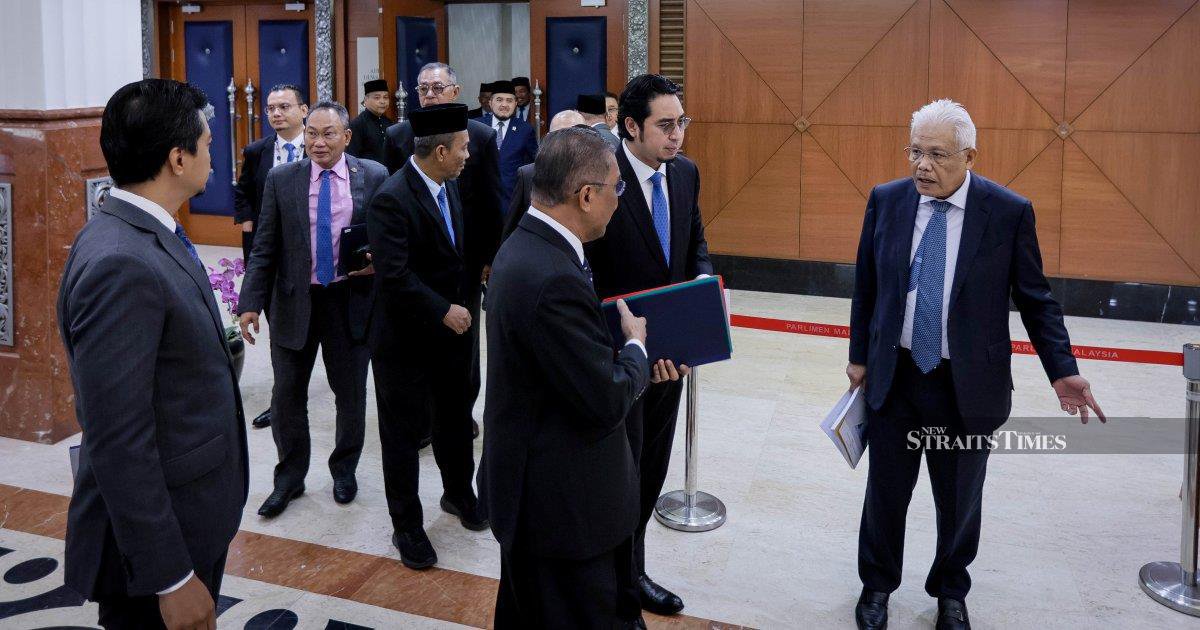
A fresh parliamentary walkout by opposition members, triggered by disputes over the Royal Commission of Inquiry findings into Tabung Haji, has once again illuminated a persistent fault line in Malaysian politics: the same legislative tactic draws sharply contrasting judgements depending on which coalition deploys it. What some portray as principled defiance in response to institutional failures, others dismiss as mere grandstanding designed to dominate headlines rather than advance substantive policy arguments.
The Tabung Haji controversy centres on serious governance questions affecting the pilgrimage fund's management and financial health—matters that touch the interests of millions of Malaysian Muslims who have saved through the scheme. Yet rather than concentrating parliamentary energy on examining the commission's findings and their implications for beneficiaries and policy reform, the legislative session descended into questions about the legitimacy of opposition members absenting themselves as a form of protest. This substitution of procedure for substance reveals how Malaysia's parliament has increasingly become a theatre where the performative aspects of dissent overshadow the actual policy debates.
The timing and nature of such walkouts matter considerably in understanding their strategic purpose. Opposition figures argue that departing from the chamber represents one of few remaining mechanisms through which numerically weaker factions can register objections against government actions they view as fundamentally unjust or procedurally flawed. When a single coalition controls overwhelming parliamentary numbers, traditional legislative tools—amendments, sustained debate, blocking motions—become largely ceremonial exercises. Walkouts, by this logic, provide tangible expression of dissent that cannot be ignored or voted away by a disciplined majority.
Yet the government perspective carries intuitive force as well. Lawmakers elected to represent constituencies, the argument runs, assume obligations to remain present for the business of the legislature. Absenting oneself, particularly in organised protest, treats the parliament as a platform for messaging rather than a venue for serious legislative work. When walkouts become routine responses to disagreement, they risk degrading parliamentary culture and signalling to constituents that their elected representatives regard the institution itself as insufficiently important to warrant consistent attendance.
What complicates any moral judgement is that both government and opposition have deployed walkouts strategically when circumstances suited them. Historical records of Malaysian parliament show instances where ruling coalition members absented themselves or disrupted proceedings when facing uncomfortable scrutiny. This reciprocal use of the same tactics undermines claims of principled consistency by either side. A tactic defended as legitimate protest when one uses it becomes portrayed as destructive theatre when deployed by opponents—a transparent double standard that erodes public confidence in parliamentary institutions.
The broader regional context matters here. Southeast Asian democracies routinely struggle with balancing majority rule against minority voice protections. Thailand, Indonesia, and the Philippines have all witnessed escalating parliamentary confrontations as increasingly polarised political blocs contest fundamental questions about governance legitimacy. Malaysia's own history—including the 2020 political transition and subsequent complex coalition dynamics—has stretched parliamentary norms and conventions. When formal rules prove insufficient to manage political tensions, legislators often resort to extra-procedural methods, of which walkouts represent a relatively restrained option compared to alternatives seen elsewhere in the region.
For Malaysian observers, the Tabung Haji RCI findings themselves warrant serious attention regardless of parliamentary theatre. The fund manages approximately RM90 billion in pilgrim savings and has faced persistent questions about investment performance, governance structures, and risk management. Whether opposition members staged an exit or remained present should prove secondary to substantive examination of the commission's recommendations and implementation timelines. Yet the walkout has dominated coverage and conversation, crowding out analysis of actual policy implications.
The underlying issue reflects a fundamental challenge facing democratic legislatures globally: how to accommodate legitimate dissent within institutional frameworks designed primarily for orderly decision-making. Parliamentary walkouts occupy an awkward middle ground—more disruptive than verbal opposition yet less revolutionary than extra-parliamentary action. They generate headlines and visible controversy while preserving the formal fiction that normal legislative business continues. This ambiguous status makes them perpetually contestable.
Looking forward, Malaysian parliament might benefit from clearer conventions governing when walkouts constitute legitimate protest versus unconstructive disruption. Such standards would need to command cross-coalition support—a significant challenge given mutual suspicion. Alternatively, parliament could strengthen committee systems and parliamentary procedures to provide opposition factions more substantive influence over legislative outcomes, potentially reducing pressure toward confrontational tactics. Without such reforms, walkouts will likely persist as both sides seek attention-commanding mechanisms within an institutionally constraining environment.
The deeper question posed by recurring parliamentary walkouts concerns representation itself. Do legislators better serve constituents through physical presence supporting compromised but functional institutions, or through conspicuous absence that signals fundamental institutional critique? Different democratic traditions answer differently. What remains constant is that when procedural debates overshadow policy substance, all Malaysians lose—regardless of their political alignments.

