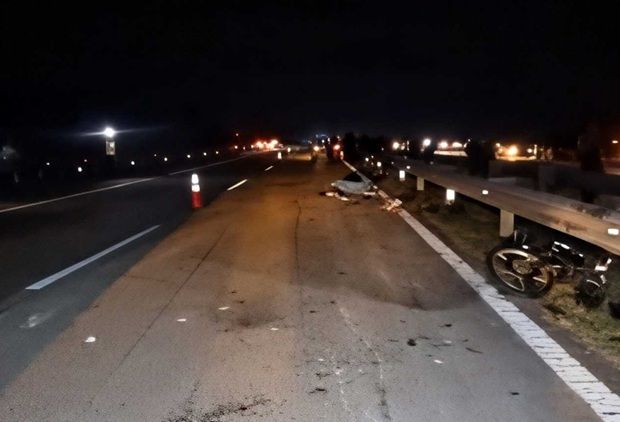
The East Coast Expressway claimed four lives in a devastating motorcycle accident shortly after midnight last Saturday, leaving wreckage scattered across the carriageway and thirteen others injured. While online commentators rushed to assign blame and debate the recklessness of dangerous riding, a quieter tragedy unfolded behind the headlines: eight children aged between one and thirteen suddenly lost their primary breadwinners, forcing their mothers into the harsh realities of single parenthood without warning or preparation.
The immediate aftermath of such disasters typically triggers predictable reactions. Social media erupts with judgement, opinion pieces dissect road safety, and regulatory bodies face pressure to act. Yet this focus on culpability, while understandable, often obscures a more fundamental reality that touches the heart of social cohesion. Four families now face the daunting challenge of rebuilding their lives with drastically diminished resources. Beyond the emotional devastation lies a concrete question: how will these children eat, be clothed, educated, and cared for in the years ahead?
The Social Security Organisation (PERKESO) exists precisely for these moments. Its purpose transcends the bureaucratic language of insurance schemes and benefit schedules. Social security embodies a societal commitment rooted in solidarity—the principle that those spared by misfortune have a collective responsibility to support those struck by it. This philosophy recognises that tragedy is indiscriminate and that protecting vulnerable dependents strengthens the entire social fabric. When a wage-earner's capacity to work is suddenly extinguished, the system responds not with charity but with contractual obligation backed by contributions made during healthier times.
For the three families whose breadwinners were killed, PERKESO has calculated survivors' pensions based on each man's contribution history. The family of Che Mohd Suffian Che Gani qualifies for RM2,207.63 monthly, while the family of Muhammad Hafiz Al Hakim Mazlan receives RM1,258.33 and the family of Mohd Aizat Husni receives RM708.33. These amounts are distributed according to prescribed apportionment formulas, with widows receiving RM1,325, RM755, and RM425 monthly respectively for life. When calculated across a thirty-year period, these pensions accumulate to RM477,000, RM271,800, and RM153,000 respectively—substantial sums that represent genuine protection against destitution.
Beyond the immediate pension payments, the eight children bereaved by the accident will benefit from monthly allocations totalling RM1,670. Over the fifteen years typically covered until they reach adulthood, this support amounts to RM300,600 in aggregate. Combined with the widows' lifetime pensions, PERKESO's commitment to these families exceeds RM1.2 million. Viewed against the modest weekly payroll deductions these men likely endured while employed, the mathematics of social security becomes strikingly clear: small contributions during employment transform into substantial, life-sustaining protection when catastrophe strikes.
This mathematical reality carries profound implications for Malaysian workers who may view social security contributions as mere bureaucratic impositions on their salaries. The true value of these deductions emerges only when circumstance demands it. A single traffic accident, industrial injury, or sudden illness can instantly transform a family's financial trajectory. The contributions paid over years of labour become a crucial safety net preventing entire households from collapsing into poverty. For children growing up without their fathers, for mothers forced into economic vulnerability, this system represents the difference between hardship and devastation.
Yet the accident near the Jabor interchange also highlighted recent evolution in Malaysia's social protection framework. Five of the thirteen injured victims qualified for benefits under the Lindung 24 Jam scheme, a programme that fundamentally expanded access to social security coverage. Before June 1, these same accident victims would likely have faced rejection from PERKESO due to various eligibility restrictions. The introduction of this new scheme represents recognition that traditional social security structures, while effective for formal sector workers, left gaps affecting vulnerable populations. Non-compliance with previous registration requirements or employment categorisation would have meant these injured workers received nothing.
The expansion of social security eligibility matters deeply across Southeast Asia, where informal employment dominates many economies. Malaysia's experience demonstrates that broadening access requires political will and budgetary commitment, yet the alternative—leaving entire segments of the workforce unprotected—carries unacceptable human costs. When injury or death befalls workers without coverage, families descend rapidly into poverty. Children's education suffers, elderly dependents face uncertainty, and the broader economy loses productive members unable to recover from shock.
Beyond the immediate families affected by this tragedy lies a broader consideration about social security literacy among Malaysian workers. Many contributors remain unaware of the protection their regular deductions provide, viewing the process as an abstract deduction from their salary. Educational campaigns highlighting specific scenarios—how a death benefits a family, how injury coverage prevents homelessness, how disability pensions preserve dignity—would likely increase understanding and support for stronger social security frameworks. When Malaysian workers understand that their contributions directly protect their own families and support their communities through shared risk, attitudes toward social security shift fundamentally.
The debate following the East Coast Expressway crash correctly identified negligence and dangerous riding as factors requiring legal accountability. Yet accountability for road behaviour should coexist with accountability for ensuring that victims and their families do not face complete destitution. A justice system that punishes reckless drivers while their victims' families face poverty represents an incomplete response to tragedy. PERKESO's structured support demonstrates that a functioning social security system allows communities to address both deterrence and compassion simultaneously.
For the eight children orphaned by the Saturday accident, the monthly flows of money from PERKESO represent more than statistical benefits. These payments buy milk, pay rent, fund education, and provide the basic security necessary for childhood development. The contributions their fathers made—often unthinkingly deducted from paychecks—now sustain their mothers and protect their futures. This concrete outcome reveals why social security deserves respect and why expanding coverage through initiatives like Lindung 24 Jam justifies serious investment. The system, at its best, embodies a society that refuses to abandon its members when circumstance demands it most.

