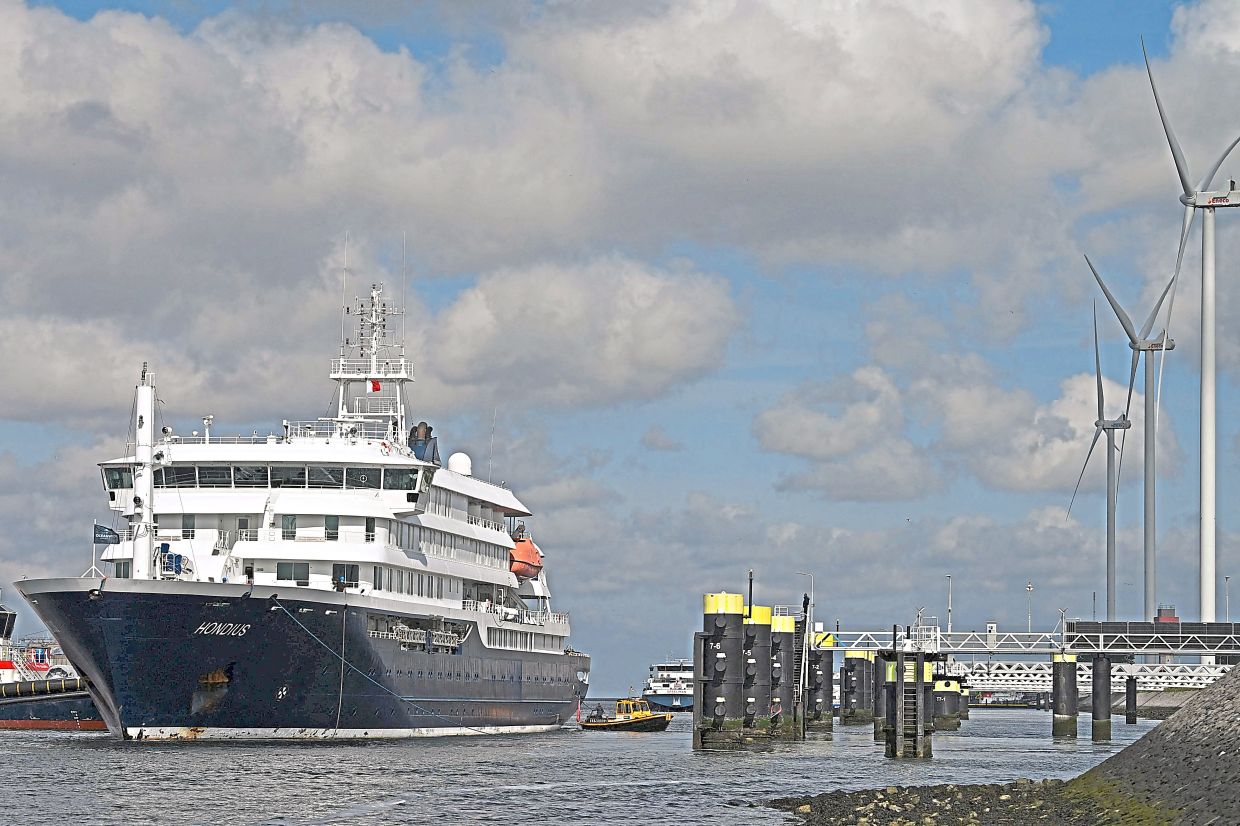
The World Health Organization has formally declared an end to a hantavirus outbreak linked to the MV Hondius, a Dutch-flagged polar exploration vessel, after the last quarantined individual completed their isolation period on July 2, 2026, and tested negative for the virus. The announcement marks the conclusion of an international health emergency that dominated headlines throughout the southern hemisphere's autumn and spring seasons, though questions about prevention and preparedness remain uppermost in the minds of epidemiologists and public health officials worldwide.
The outbreak resulted in 12 confirmed cases and one probable case among passengers and crew aboard the ship, with three deaths recorded during the crisis. The fatality rate underscores the severity of hantavirus infections, particularly the Andes strain responsible for this outbreak—the only known variant capable of spreading directly between humans rather than requiring rodent contact as a transmission vector. WHO Director-General Tedros Adhanom Ghebreyesus confirmed at a press briefing that no new cases had emerged since May 25, 2026, providing the evidence needed to declare the outbreak officially resolved.
The MV Hondius commenced its fateful voyage on April 1, 2026, departing from Ushuaia in southern Argentina with passengers bound for one of Earth's most isolated destinations—the remote South Atlantic islands including the renowned Tristan da Cunha. The ship's itinerary represented typical polar tourism, offering adventure-seeking travellers access to pristine ecosystems and rarely visited territories. However, the voyage took a dramatic turn when infections began surfacing among those aboard, prompting authorities to divert the vessel northward toward Spain's Canary Islands. The ship eventually docked in Rotterdam harbour in the Netherlands on May 18, 2026, where it underwent extensive sanitisation before passengers were evacuated.
The response to the outbreak demonstrated the complexity of managing infectious disease across international borders and jurisdictions. Health authorities in 33 countries and territories collectively identified and monitored more than 650 individuals who had direct or indirect contact with confirmed cases. This extraordinary coordination effort reflected the interconnected nature of modern travel and the speed with which pathogens can traverse continents through transport networks. Secondary cases were thankfully rare, suggesting that either the virus's human-to-human transmission capacity proved limited under natural conditions, or quarantine measures and public health interventions successfully interrupted transmission chains.
For the scientific community, however, the outbreak's official conclusion merely transitions the work from acute response to systematic investigation. Tedros emphasised that the WHO intends to sustain momentum on understanding hantavirus biology, epidemiology, and clinical manifestations through continued research initiatives. The organisation is coordinating a multinational study spanning 21 countries to examine how the disease progresses from infection through resolution or death, generating data that could ultimately lead to diagnostic improvements, therapeutic options, and vaccine development.
The absence of existing vaccines or specific treatments for hantavirus represents a critical vulnerability in global health security. Unlike viral threats such as influenza or coronavirus strains for which multiple countermeasures exist, hantavirus patients can only receive supportive care while their immune systems mount a defence. The Andes strain's capacity for human-to-human transmission distinguishes it from other hantavirus variants found across the Americas, Asia, and Europe, making it uniquely dangerous in contexts where infected individuals congregate in confined spaces—precisely the scenario that unfolded aboard the MV Hondius during its multi-week voyage.
The epidemiological investigation into this outbreak will likely examine how the initial infection occurred, whether rodent exposure at a port of call introduced the virus to the ship's population, and why certain individuals developed severe illness while others experienced milder symptoms or remained asymptomatic. Such understanding proves essential for designing preventive protocols that balance public health protection with the feasibility of maintaining polar tourism and scientific expeditions, both of which depend on access to remote regions where human-wildlife interaction is difficult to eliminate entirely.
For Southeast Asian readers, the incident carries particular resonance given the region's vulnerability to emerging infectious diseases and the prevalence of rodent populations in tropical and subtropical environments. While hantavirus has not been documented as a significant public health threat in Malaysia and neighbouring countries, the MV Hondius outbreak illustrates how rapidly zoonotic pathogens can spread in globalised travel networks and how quickly a single exposure event aboard a vessel can generate an international health crisis.
The experience underscores the importance of investment in surveillance infrastructure, rapid diagnostic capabilities, and regional cooperation mechanisms—precisely the capabilities that organisations like the ASEAN Secretariat and national disease control centres have prioritised in recent years. As climate change and environmental disruption alter the distribution of rodent populations and their viral reservoirs, understanding pathogen ecology and transmission becomes increasingly critical for countries throughout Asia-Pacific.
Looking forward, the WHO's continued engagement with hantavirus research signals a recognition that infectious disease threats demand sustained attention even after individual outbreaks conclude. The 21-country study and related research initiatives will generate knowledge applicable far beyond the Arctic and sub-Antarctic regions where polar tourism concentrates. Improved diagnostics could enable earlier identification of cases, potentially preventing situations where infected individuals unknowingly transmit virus to contacts across multiple continents. Enhanced therapeutics might reduce mortality rates among those who do contract infection, while vaccines could eventually provide protection for high-risk groups including researchers, expedition staff, and port workers in areas where hantavirus circulates in rodent populations.

