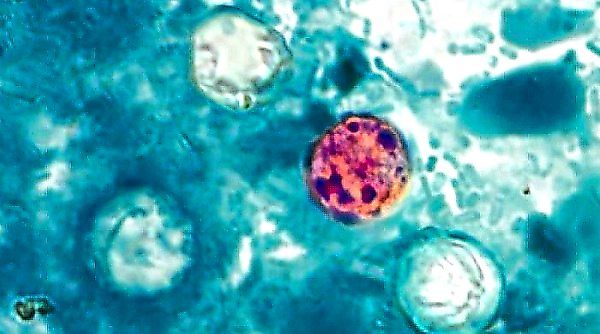
The cyclospora parasite has emerged as one of the most vexing challenges facing public health authorities investigating foodborne illness outbreaks. Unlike bacteria such as Salmonella or E. coli, which trigger symptoms within days and respond to standard laboratory cultivation techniques, cyclospora presents a uniquely complex puzzle that has hampered efforts to trace contamination through the food supply chain and protect consumers across affected regions.
The current multistate outbreak affecting Michigan, Indiana, Kentucky, Ohio and West Virginia has brought this challenge into sharp focus. Public health officials traced a significant cluster of cases to shredded iceberg lettuce supplied by Taylor Farms' Mexican operations to Taco Bell restaurants, yet this investigation revealed the fundamental limitations that make cyclospora investigations so demanding. The FDA's testing at the US-Mexican border initially detected cyclospora in Taylor Farms' products, suggesting a breakthrough in the investigation, but subsequent quality-control verification determined the result was a false positive—a common occurrence with this particular parasite.
The scientific obstacle at the heart of this challenge stems from cyclospora's biological nature. As a parasite rather than a bacterium, it cannot be cultured or grown in laboratory settings, eliminating the conventional method that pathologists use to generate sufficient genetic material for analysis. Bacterial pathogens can be cultivated in controlled environments, producing enough DNA to sequence their complete genomes and create a distinctive genetic fingerprint that epidemiologists can match to contaminated food sources. With cyclospora, scientists must instead extract genetic material directly from clinical or environmental samples and create synthetic copies of its DNA through amplification techniques—a process that frequently produces false positives and requires constant verification through quality-control checks.
The temporal dimension of cyclospora infection compounds these technical difficulties substantially. While common foodborne pathogens produce recognizable symptoms within two or three days, allowing people to recall their recent meals with reasonable accuracy, cyclosporiasis can take up to two weeks to manifest. By the time patients experience symptoms and seek medical attention, the fresh produce responsible for their infection has likely already cycled through distribution networks and disappeared from store shelves and restaurant inventories. This extended incubation window severely constrains the traditional epidemiological approach of interviewing patients about their dietary consumption and tracing purchases backward to source.
Instead of the precise pathogen fingerprinting that advances in genomic sequencing have enabled for bacterial outbreaks, public health authorities investigating cyclospora must rely heavily on patient interviews and recall, supplemented by supply chain documentation and limited laboratory analysis. Epidemiologists gather detailed information from infected individuals about everything they consumed, the venues where they ate, and the specific dates of consumption. FDA investigators then cross-reference this information with supplier records and distribution data to identify potentially contaminated products. In the current outbreak, this methodology pointed conclusively toward shredded lettuce from a specific Taylor Farms facility in central Mexico, prompting the company to issue a voluntary recall of all iceberg lettuce products sourced from that region.
Despite the investigation's apparent success in identifying the likely source, significant uncertainties persist. Taco Bell accounts for approximately 60 percent of the multistate outbreak cases, according to former FDA Commissioner Scott Gottlieb, meaning roughly 40 percent remain unexplained and potentially connected to separate contamination events. The CDC continues investigating what may represent additional, possibly unrelated outbreaks, acknowledging that cyclospora's detection limitations prevent definitive confirmation of whether these cases stem from common sources or distinct incidents. Gottlieb emphasized that without whole genome sequencing capabilities—the gold standard for bacterial pathogen fingerprinting—the FDA lacks the tools necessary to isolate specific strains of cyclospora to particular outbreaks or growers with scientific certainty.
The FDA's acting deputy commissioner for food, Donald Prater, acknowledged during the briefing that cyclospora detection in food samples presents extraordinary technical challenges even when employing the most sophisticated methods available. The amplification and synthetic DNA copying processes that substitute for direct culturing remain inherently prone to false results, as demonstrated by the Taylor Farms testing. This vulnerability to false positives and false negatives means that investigators cannot confidently eliminate suspect products or confirm contamination solely through laboratory testing—they must instead construct circumstantial cases based on epidemiological patterns and supply chain analysis.
The CDC's recent guidance urging physicians to test patients for cyclospora, while intended to ensure proper antibiotic treatment and generate more complete outbreak data, may paradoxically complicate the epidemiological picture. University of Minnesota food safety expert Craig Hedberg notes that because fresh produce moves rapidly through distribution channels and spoils relatively quickly, the contaminated lettuce responsible for the current outbreak has almost certainly already exited the supply system. Nevertheless, the heightened publicity surrounding the outbreak and the CDC's testing recommendation will likely prompt many more people to seek cyclospora testing. Hedberg cautions that this surge in testing may artificially inflate reported case numbers, potentially creating the misleading impression that the outbreak is continuing to expand when in reality the contamination source has already been neutralized through the recall process.
For consumers and public health officials in Malaysia and across Southeast Asia, this outbreak illuminates the vulnerability of integrated food supply chains that source fresh produce internationally. The region's growing reliance on imported lettuce and leafy vegetables from North America and Mexico means cyclospora contamination poses a potential risk to regional consumers and food service operators. The difficulty in rapidly identifying and isolating contaminated products before they enter distribution networks demonstrates why robust food safety protocols and effective real-time communication between trading partners becomes increasingly critical as supply chains grow more complex and geographically dispersed.
The cyclospora investigation also underscores the limits of current food safety science and the necessity for continued investment in diagnostic innovation. While genomic sequencing has revolutionized bacterial outbreak investigation, parasitic pathogens like cyclospora remain largely outside the reach of these advanced tools. The public health community must either develop new laboratory techniques capable of generating genomic data from parasitic organisms or strengthen epidemiological and supply chain investigation methods to compensate for technological gaps. Until such advances materialize, cyclospora outbreaks will continue to frustrate investigators and undermine the swift, precise response that modern consumers expect from food safety authorities.

