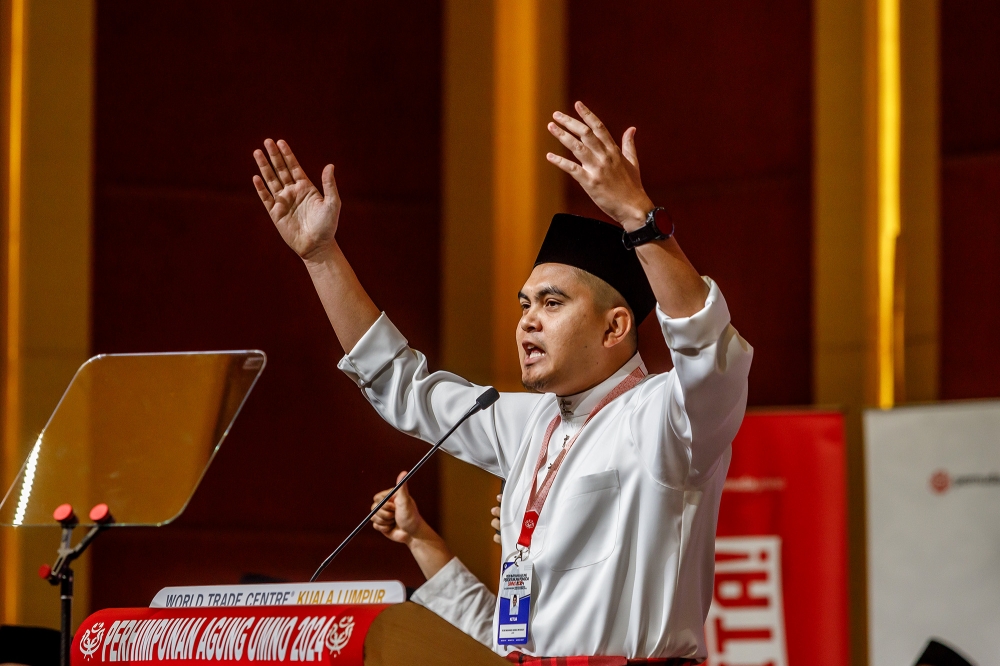
Umno Youth chief Datuk Dr Akmal Saleh has escalated internal coalition friction by challenging Pakatan Harapan counterparts to apply consistent principles regarding government participation and electoral arrangements. The statement represents a significant rhetorical escalation within Malaysia's fractious governing coalition, exposing deeper tensions about which parties bear responsibility for navigating complex alliance politics.
The remarks underscore mounting frustration within Umno—the dominant component of Barisan Nasional—over what party leaders characterise as asymmetrical pressure from their larger coalition partner. Akmal Saleh's intervention suggests Umno views itself as shouldering disproportionate blame for coalition tensions despite contributing substantially to the current government's parliamentary majority. This perception of unfair treatment has become increasingly vocal across Umno's leadership hierarchy.
The underlying dispute involves fundamental disagreements about how electoral alliances should be structured heading towards the next general election. Barisan Nasional has historically maintained distinct electoral machinery and candidate selection processes, reflecting its origins as a coalition of separate entities. Pakatan Harapan, by contrast, has positioned itself as a more integrated political force with coordinated strategies. These divergent organisational philosophies create perpetual friction when parties attempt collaborative governance.
Umno Youth's public challenge serves a dual strategic purpose. Internally, it rallies party members frustrated by what they perceive as Pakatan Harapan imposing conditions without reciprocal concessions. Externally, it shifts political narrative by questioning whether coalition partners face uniform accountability standards. This framing resonates with broader Malaysian anxieties about power-sharing arrangements and whether larger entities within coalitions exploit structural advantages over smaller partners.
For Malaysian voters and regional observers, this dispute illustrates persistent instability within the government coalition. The inability of major coalition components to settle operational questions through confidential negotiations—forcing issues into public domain—signals deeper governance challenges. When politicians resort to media statements rather than backroom discussions, it typically indicates negotiations have fractured or trust has eroded significantly.
The timing of these remarks carries particular significance given Malaysia's evolving electoral calendar. Speculation about when the next general election might occur intensifies pressure on coalition members to clarify arrangements well in advance. Barisan Nasional and Pakatan Harapan must demonstrate functioning partnership mechanisms to voters, yet persistent public disagreements undermine confidence in their ability to govern coherently. Each escalation of coalition rhetoric potentially costs both entities electoral support.
Historically, Barisan Nasional operated as Malaysia's unquestioned governing force for decades, with component parties accepting hierarchical arrangements. The transition to coalition governance with Pakatan Harapan required significant organisational adjustments. Umno leaders, particularly younger figures like Akmal Saleh, represent generational cohorts who experienced this transition and harbour resentments about revised power dynamics. Their willingness to publicly challenge Pakatan Harapan reflects this generational frustration.
Pakatan Harapan Youth leaders face pressure to respond substantively to Akmal Saleh's challenge. Dismissing the concern risks appearing dismissive of legitimate coalition management questions. Engaging directly risks further publicising internal disputes. This communicative bind illustrates how coalition tensions escalate when formal dispute resolution mechanisms either don't exist or have failed to contain disagreements.
The broader Southeast Asian context matters considerably. Regional observers monitor Malaysian coalition stability as an indicator of democratic governance capacity. Multiple coalition governments across Southeast Asia have fractured acrimoniously, creating governance vacuums and policy uncertainty. Malaysia's ability to maintain functioning coalitions—however fraught—demonstrates institutional maturity compared to neighbours where coalitions have collapsed entirely. Yet persistent public bickering threatens this reputation.
For Malaysian business communities and international investors, coalition stability directly impacts policy predictability and regulatory consistency. When coalition partners publicly dispute governance arrangements, it creates uncertainty about which party actually controls particular policy domains. This ambiguity discourages investment and complicates business planning across sectors dependent on long-term government policy certainty.
The electoral alliance question also involves philosophical differences about political representation. Barisan Nasional traditionally emphasises community-level electoral competition allowing diverse regional interests representation. Pakatan Harapan's integrated model prioritises unified party discipline and consistent national messaging. Reconciling these competing visions within a functioning coalition requires constant negotiation and compromise, explaining why this remains perpetually contentious.
Moving forward, coalition leaders require confidential mechanisms for resolving such disputes without exposing internal tensions publicly. Umno Youth's challenge to Pakatan Harapan carries legitimate substantive points about equitable burden-sharing within multi-party coalitions. However, the public format of this challenge suggests these mechanisms either don't exist or have become ineffective. Until coalition partners establish reliable confidential dispute resolution processes, expect continued public sparring that ultimately weakens both entities' governing credibility.

