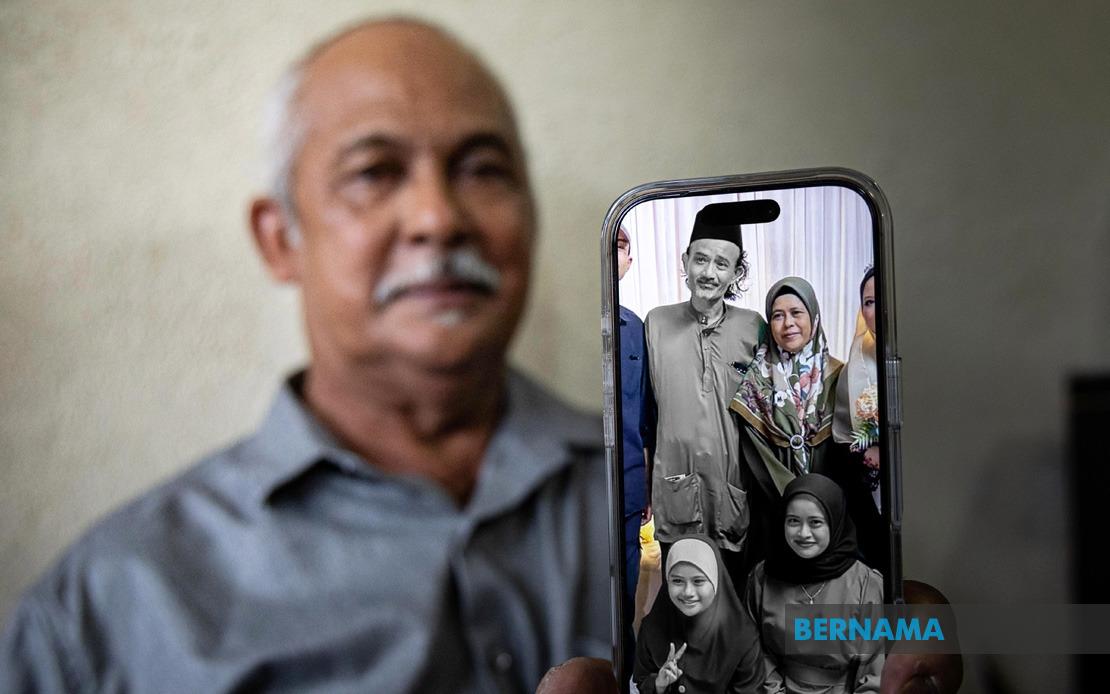
The sole survivor of a catastrophic traffic accident in Kuala Lumpur that claimed three family members remains hospitalised with significant cognitive and physical injuries. Norhayati Razali, aged 55, is currently under care at Kuala Lumpur Hospital following the collision involving a Malaysian Immigration Department (JIM) truck on Jalan Sultan Ismail on 19 August. Her condition has shown incremental improvement as medical staff work to address both her bodily trauma and the neurological damage sustained in the crash.
While Norhayati has graduated from the Intensive Care Unit to a standard ward—a positive indicator of her medical trajectory—her recovery remains complicated by memory dysfunction. Her brother, Mohd Nadzri Razali, explained that despite regaining consciousness and being shown the bodies of her deceased family members, she appears unable to retain this information consistently. The family explained the tragedy to her, yet within a day she was asking where her loved ones were located, suggesting the traumatic news had not been retained in her memory.
Beyond the cognitive challenges, Norhayati sustained extensive physical injuries requiring ongoing hospitalisation. Her trauma included head injuries along with damage to her hands, waist, knees, and legs—a pattern typical of victims caught between vehicles in high-impact collisions. The range and severity of these injuries, combined with neurological impact, means her recovery timeline remains uncertain. Medical professionals have not yet determined whether she can be safely transferred to a facility closer to her home, such as a hospital in Ipoh or Teluk Intan, which would ease the family's burden in providing care and support.
The family's capacity to maintain her care is itself strained by practical constraints. Mohd Nadzri, unable to drive to Kuala Lumpur due to unfamiliarity with the capital's roads, has been unable to visit his sister since the accident. The reliance on others for transportation underscores how such tragedies ripple through families, disrupting routines and creating logistical challenges alongside the emotional devastation. He expressed hope of visiting this weekend with assistance, though such visits themselves pose emotional complications given Norhayati's inability to reliably remember her losses.
The accident itself unfolded as a consequence of traffic violation and regulatory failure. The JIM Black Maria truck, an official duty vehicle, was en route to Chow Kit in Kuala Lumpur for an illegal immigrant operation when it proceeded through a red traffic light with its beacon and siren activated. The truck collided with a Proton Saga car whose driver had legally entered the intersection on a green light. The impact proved catastrophic: the truck lost control, veered across the intersection, and struck multiple pedestrians before striking an Inokom Matrix vehicle, transforming what might have been a manageable vehicle-to-vehicle accident into a mass casualty event involving vulnerable road users.
Three members of one family—Norhayati's husband and their two children—were killed at the scene. Their deaths represent not merely traffic statistics but a complete family fragmentation for those left behind. The loss is particularly acute given that Norhayati, the family's apparent link to survival and recovery, now struggles to process what has occurred. Her condition raises questions about the psychological torment of surviving when immediate family has perished, compounded by the neurological inability to consistently process grief.
The family's focus has now turned toward accountability and transparency in the investigation. Mohd Nadzri explicitly called for a fair and comprehensive inquiry, noting that security camera footage at the traffic light intersection could provide definitive evidence regarding fault and the sequence of events. This appeal for justice reflects a broader concern in Malaysia regarding official vehicles and the immunity or leniency sometimes afforded to government drivers involved in accidents. The use of emergency equipment—the beacon and siren—while travelling against a traffic signal raises specific questions about whether such privileges were justified and whether the driver exercised appropriate caution.
For Malaysian readers and policymakers, this incident exemplifies ongoing road safety vulnerabilities despite Malaysia's repeated calls for improved traffic discipline. The JIM truck was operating under official capacity, raising institutional accountability questions about whether proper training, protocols, and oversight mechanisms exist to prevent such catastrophes. Government vehicles operating with activated emergency equipment must navigate traffic with heightened caution rather than assuming blanket right-of-way, particularly in busy urban intersections where pedestrians congregate.
Norhayati's neurological struggles also highlight the long-term care demands created by such accidents. Her memory loss, while potentially temporary given ongoing neurological recovery, requires specialist assessment and rehabilitation services that stretch beyond typical hospital admission. The uncertainty regarding her future placement—whether she remains in Kuala Lumpur or transfers to a regional facility—suggests gaps in coordinated care planning for trauma survivors requiring extended treatment.
The family's desire for transparency in the investigation reflects broader public expectations in Malaysia for accountability when official vehicles cause civilian deaths. The availability of traffic camera footage, traffic light sequencing data, and vehicle inspection records should provide an objective factual foundation for determining how responsibility is apportioned. Beyond the immediate legal implications, such investigations shape public understanding of whether government agencies are held to equivalent standards as ordinary citizens when traffic violations result in fatalities.
As Norhayati's recovery continues, her case remains emblematic of how single moments of traffic violation create cascading consequences—death for the innocent, permanent disability for survivors, and a family unit fractured across the living and deceased. Her memory struggles compound the tragedy, creating a situation where she must relearn her loss repeatedly, each time confronting anew the devastating transformation of her family structure.

