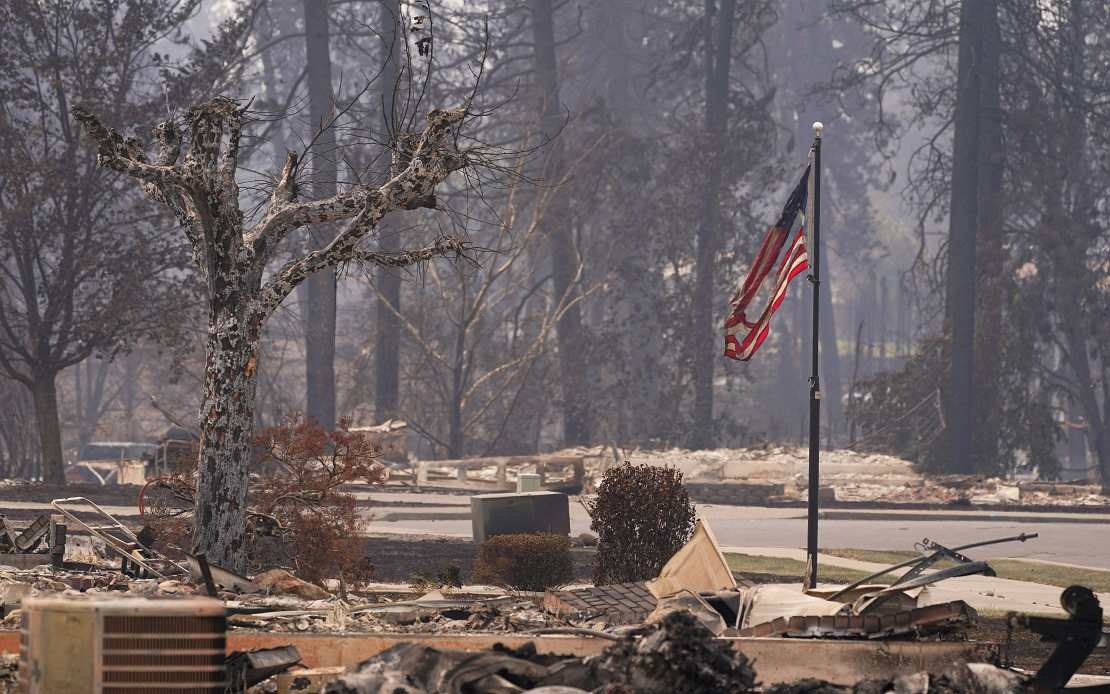
Catastrophic wildfires sweeping through Washington state have forced the displacement of more than 65,000 people from their homes, marking one of the region's most significant evacuation events in recent years. The American Red Cross confirmed the staggering scale of the exodus on Monday, as multiple fire fronts continue to advance across the landscape, consuming vast swathes of residential and forested terrain.
The fires have already claimed substantial destruction. Initial surveys indicate that more than 700 homes have been consumed by the flames, with the majority located within Spokane County, a region in the state's eastern interior. The speed and intensity of the fires have caught many residents off guard, with entire neighbourhoods reduced to ashes within hours as firefighting efforts struggle to contain the advancing infernos.
Authorities have made significant headway in investigating the origins of at least one of the blazes. Spokane County Sheriff John Nowels announced at a news conference that investigators have apprehended a suspect on first-degree arson charges. Aaron F. Farinacci, a 37-year-old, was arrested on Monday afternoon and is presently detained on a $1 million bond. Authorities believe Farinacci bears responsibility for triggering the Old Trails Fire, one of several active blazes terrorizing the region.
The Old Trails Fire represents just one component of a larger conflagration engulfing eastern Washington. Data from InciWeb, an interagency fire information system, reveals that fires near Spokane and Stevens counties have torched 8,026 acres (3,248 hectares) since Saturday alone. Crucially, these particular fires remain completely uncontained, meaning firefighting efforts have yet to establish meaningful control over their spread. However, more favourable weather conditions in recent days have enabled crews to make incremental progress along various fire lines, offering some hope that the situation may gradually stabilize.
Other parts of the state face even more dire circumstances. The Sinlahekin fire has ballooned to a catastrophic 85,000 acres (34,398 hectares) since a lightning strike ignited it on July 26. This massive blaze has mobilized more than 820 firefighting personnel in an intensive effort to contain its relentless advance, yet it too remains at zero containment. Hundreds of kilometres away, the Little Giant Fire has scorched 51,298 acres (20,759 hectares) in the Okanogan-Wenatchee National Forest northwest of Leavenworth, creating a separate crisis zone within the state's fire emergency.
The scale of displacement represents a genuine humanitarian challenge. Washington Governor Bob Ferguson has overseen efforts to account for every individual who has requested assistance, with authorities confirming contact with nearly all such cases. However, Ferguson noted that officials remain intent on reaching 14 additional people to verify their wellbeing. The governor emphasized that these individuals are not formally classified as missing, but authorities wish to establish direct contact to ensure no one has been left behind in affected areas.
Despite the catastrophic nature of the disasters unfolding, tragedy has been partially averted. Ferguson reported that no deaths have been confirmed so far, a fortunate outcome given the scale of the emergency and the speed with which evacuation orders were implemented. This positive development reflects the efficacy of early warning systems and the responsiveness of local emergency services, though the absence of fatalities does not diminish the immense personal and economic costs borne by displaced residents.
For Malaysian readers, these events underscore the vulnerability of developed nations to large-scale natural disasters and the importance of disaster preparedness infrastructure. The wildfire crisis in Washington, triggered by both natural causes such as lightning and, in this case, deliberate arson, reflects challenges that transcend borders. Southeast Asia, with its own susceptibility to seasonal forest fires—particularly in Indonesia and Malaysia—can draw lessons from how American authorities mobilize evacuation systems and coordinate multi-agency responses. The speed with which 65,000 people were evacuated demonstrates the logistical complexity of managing mass population movements during environmental crises, a scenario increasingly relevant to the region as climate patterns shift and fire seasons intensify.

