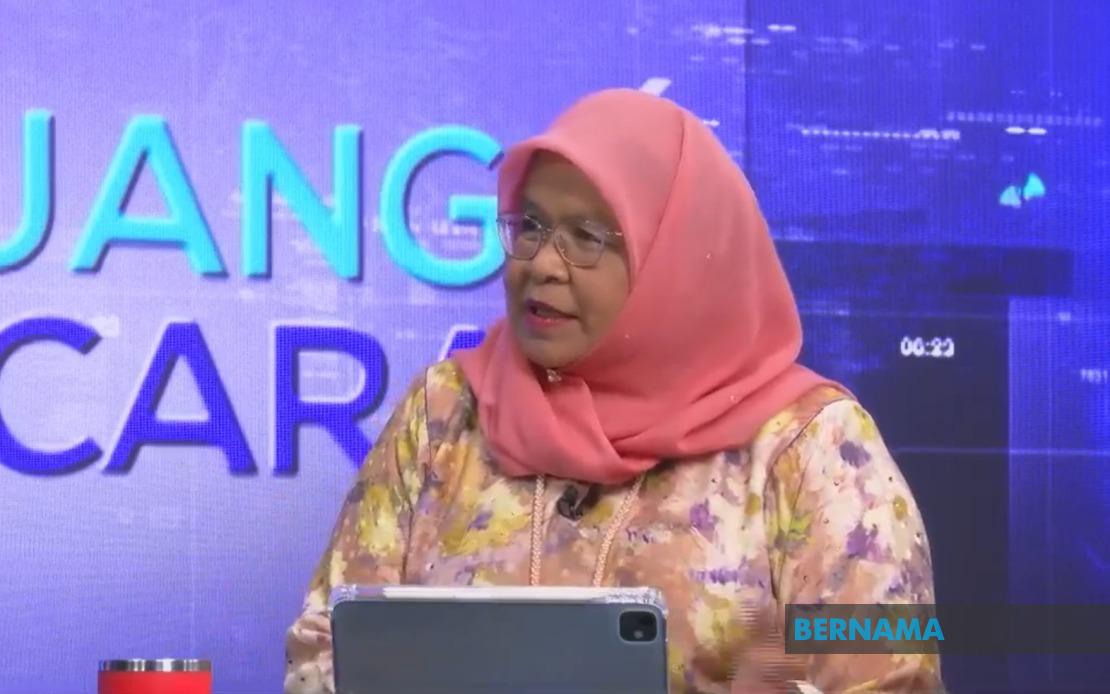
Advancing women into leadership positions requires more than symbolic gestures—it demands a comprehensive ecosystem of support systems, targeted training programmes, and genuine institutional trust in female capabilities, according to Datuk Seri Dr Maimunah Mohd Sharif, the Government's Sustainable Urban Development advisor and former mayor of Kuala Lumpur. Her remarks underscore a critical gap between female representation in education and their presence in senior positions across Malaysia's public and private sectors.
Maimunah emphasised that women occupying decision-making roles is essential for ensuring that policy frameworks and governmental actions genuinely reflect women's needs and perspectives. When women are absent from leadership tables, entire dimensions of lived experience and practical knowledge remain unconsidered in the policymaking process. This structural exclusion perpetuates cycles where decisions affecting women's lives are made predominantly by men, potentially overlooking contextual factors that women in those positions would naturally bring to discussions.
The statistical reality presents a sobering picture of Malaysia's progress on gender inclusion. While women now represent 56.4 per cent of total participation in higher education according to 2025 data, this educational parity has not translated into proportional representation in management echelons. Only 27 per cent of management positions are held by women, revealing a substantial leakage between the educational pipeline and executive ranks. This pattern suggests that barriers exist not in women's access to learning but in institutional pathways that convert educational credentials into leadership appointments.
Parliamentary and Cabinet representation shows similarly modest figures. Women constitute just 13.5 per cent of Members of Parliament and 16.1 per cent of Cabinet positions, indicating that Malaysia's highest decision-making bodies remain substantially male-dominated. These numbers place Malaysia behind several regional peers in gender equity indices and suggest considerable room for progress if Malaysia aims to leverage its full talent pool in governance.
Maimunah's call was notably pragmatic rather than ideological. She advocated for qualified women to step into available opportunities when they possess demonstrable capability and ability, framing the issue as fundamentally meritocratic. Her comment that achieving even 50 per cent female representation would constitute meaningful progress reflects the current distance between present reality and genuine parity. Importantly, she urged women themselves to actively seize opportunities when presented and to invest continuously in knowledge acquisition, placing responsibility both on institutions to create pathways and on women to prepare themselves.
From the private financial sector, Datuk Mona Suraya Kamarudin, non-executive independent director of Nomura Asset Management, reinforced that career advancement for women requires deliberate investment in training and leadership development frameworks. Her sector provides a revealing case study: women possess strong technical competencies and substantive field experience, yet concentration at mid-management levels suggests systematic barriers prevent their elevation to C-suite and board positions. Finance is theoretically gender-blind—managing money produces measurable results regardless of the manager's gender—yet women remain underrepresented in senior financial leadership roles globally and within Malaysia.
Kamarudin observed that the financial sector's merit-based evaluation system, in principle, should disadvantage neither men nor women if technical skill determines advancement. Yet the persistent gap between women's technical capabilities and their senior representation indicates that formal meritocracy may mask informal gatekeeping mechanisms. Promotion decisions influenced by networking patterns, mentorship availability, sponsorship culture, or unconscious bias can preserve gender imbalances even within ostensibly objective performance frameworks.
Family dynamics emerged as a significant enabling or constraining factor in women's professional progression. Kamarudin highlighted that adequate family support systems materially enhance women's capacity to discharge professional responsibilities effectively while managing concurrent domestic commitments. This observation points to a reality often overlooked in corporate diversity initiatives: individual female advancement occurs not in isolation but within household ecosystems. Where spouses, extended family, or domestic arrangements facilitate rather than impede career dedication, women's professional trajectories improve substantially. Conversely, women facing unsupportive or traditional family structures face compounded obstacles that no workplace initiative can fully overcome.
For Malaysia's economy and governance, the underutilisation of female talent represents both a persistent inefficiency and an untapped asset. Research consistently demonstrates that organisations with balanced gender leadership demonstrate improved decision-making quality, enhanced innovation, and stronger financial performance. From a developmental perspective, women's participation in decision-making directly correlates with policy responsiveness to education, healthcare, family support, and social protection—sectors where women's insights prove invaluable.
The path forward requires action across multiple levels. Educational institutions must track whether female graduates access management pipelines at rates proportional to their numbers. Corporations and government agencies must implement transparent succession planning, mentorship programmes, and sponsorship initiatives that prevent capable women from plateauing at mid-levels. Family-friendly workplace policies—flexible arrangements, parental leave for both parents, childcare support—require normalisation rather than remaining exceptional benefits. Political parties must actively recruit and groom female candidates for parliamentary roles, recognising that women comprise half the electorate and deserve proportional representation in the bodies that govern them.
Maimunah and Kamarudin's interventions matter because they come from women who have successfully navigated these systems and now hold influence. Their testimony that women possess requisite capabilities, combined with their acknowledgement that systemic barriers persist, moves the conversation beyond whether women should lead toward how institutions should be reformed to actualise that principle. For Malaysia positioning itself as a modern Southeast Asian economy, gender parity in decision-making is no longer merely an equity question but an imperative of rational resource deployment.

