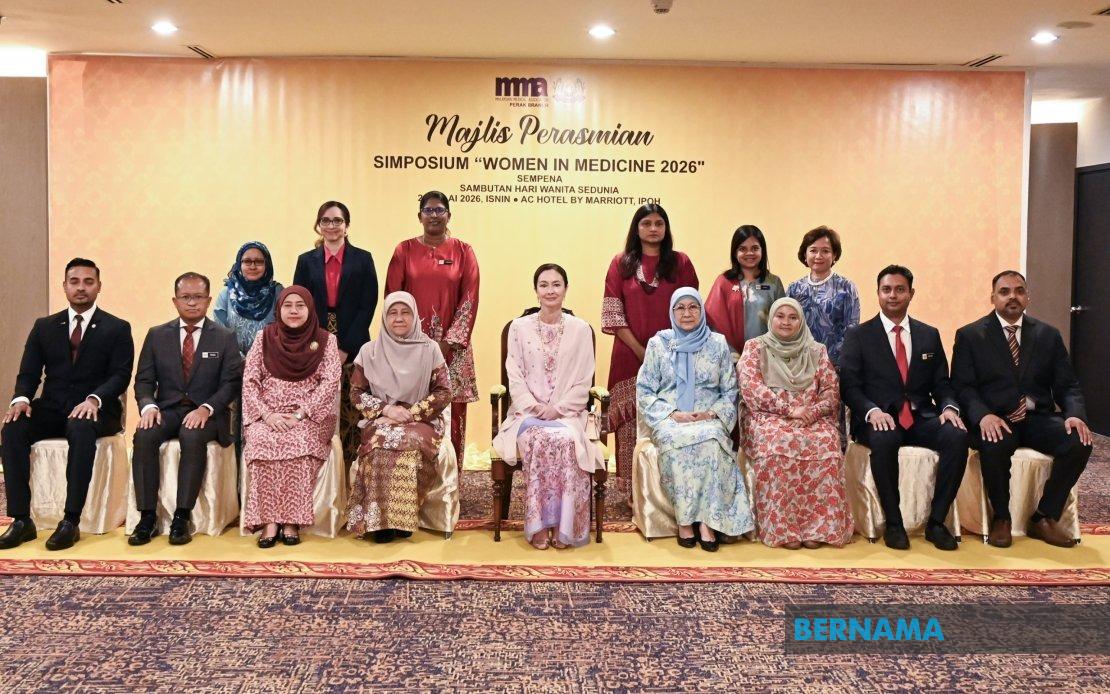
Healthcare leaders in Perak have made a compelling case for expanding women's representation in medical decision-making, framing gender diversity as essential to tackling the complex challenges facing Malaysia's health system today. Speaking at the Women in Medicine 2026 Symposium in Ipoh, Dr Monesh Pillai, chairman of the Perak Malaysian Medical Association, underscored how women's leadership introduces broader perspectives, deeper empathy and approaches centred on patient welfare—qualities that the profession desperately needs as it navigates unprecedented transformation.
The Malaysian healthcare landscape faces a converging set of pressures that demand fresh thinking and innovative solutions. Mental health disorders are increasingly prevalent, non-communicable diseases continue their upward trajectory, and the nation's ageing population is reshaping demand for services. Simultaneously, digital technologies and artificial intelligence are revolutionising clinical practice and hospital administration. These interconnected challenges cannot be adequately addressed through conventional wisdom alone; they require the kind of forward-looking leadership that Dr Pillai argues women are well-positioned to provide. The implicit argument resonates beyond Perak: as Southeast Asia's healthcare systems grapple with similar pressures, Malaysia's approach to fostering female leadership could serve as a regional blueprint.
Dr Pillai's assertion that women must occupy not merely seats at decision-making tables but actual leadership roles reflects growing recognition that tokenism undermines healthcare improvement. The distinction matters significantly for Malaysia's health sector, where women constitute a substantial portion of the medical workforce yet remain underrepresented in senior administrative and policy-making positions. By emphasising leadership rather than mere participation, the Perak MMA is articulating a vision where women actively shape the nation's healthcare trajectory, rather than offering input on predetermined agendas. This framing has implications for how Malaysian medical institutions structure career progression, mentorship programmes, and promotion pathways.
The symposium, which drew patronage from the Raja Permaisuri of Perak Tuanku Zara Salim, functioned as both celebration and call to action. The attendance of prominent figures including the wife of the Perak Menteri Besar and senior health ministry officials demonstrated institutional commitment to the event's message. This level of official endorsement signals that gender equity in healthcare is moving beyond abstract principle into practical policy consideration within Perak's health administration. For a state that often serves as a testing ground for healthcare innovations in Malaysia, this positioning could influence how other state health departments approach leadership development.
Dr John Emmanuel, chairing the symposium's organising committee, articulated the deeper rationale underpinning the emphasis on women's empowerment. He framed gender equity not as a moral imperative alone but as a functional necessity for building healthcare systems that are fairer, more inclusive, and genuinely responsive to patient needs. This utilitarian argument—that diverse leadership improves outcomes—has gained empirical support in international healthcare literature, lending credibility to Malaysia's push for female representation. The connection between inclusive decision-making and improved care quality provides a powerful counterargument to those who might view gender equity initiatives as peripheral to core healthcare functions.
This year's International Women's Day theme, 'For All Women and Girls: Rights. Equality. Empowerment.', served as the symposium's organising principle, yet the Perak MMA reframed empowerment beyond its common usage. Rather than simply creating opportunities for women, true empowerment requires establishing the conditions for women to lead authentically, contribute meaningfully, and actualise their professional potential. In Malaysia's context, where cultural factors sometimes constrain women's professional advancement despite formal legal equality, this distinction carries particular weight. Healthcare institutions adopting this broader conception of empowerment may need to address structural barriers, bias in promotion decisions, and work-life integration challenges that disproportionately affect female practitioners.
The symposium showcased the breadth of women's contributions across the healthcare sector. Dr Emmanuel's remarks deliberately moved beyond the conventional image of the female doctor to encompass women functioning as administrators, researchers, educators, nurses, pharmacists, allied health professionals, and patient advocates. This inclusive vision reflects healthcare's evolution into a genuinely multidisciplinary enterprise where clinical expertise represents only one component of effective delivery. For Malaysian healthcare, recognising and elevating women across these diverse roles acknowledges that system-level improvements depend on female leadership across all professional categories, not merely among physicians. The recognition also speaks to retention challenges the sector faces, particularly among women in mid-career positions who may feel limited pathways for advancement.
The symposium programme featured presentations from prominent healthcare figures whose work transcends institutional boundaries. Datuk Dr Adeeba Kamarulzaman, as president and pro vice-chancellor of Monash University Malaysia, brought international perspectives on how women advance healthcare policy at the global level, delivering insights into the mechanisms through which clinical expertise translates into systemic change. Her presentation, 'From Clinic to Global Policy: Women Leading the Change in Healthcare', implicitly modelled the kind of career trajectory that ambitious female practitioners in Malaysia might aspire toward. Dr Sangeetha Siniah's presentation on allergy and immune health in women and children addressed a substantive clinical domain while exemplifying female expertise in specialised medical fields where women remain underrepresented.
For Malaysia's broader healthcare ecosystem, the Perak MMA's positioning carries significance that extends beyond the state's borders. As the largest and most institutionalised association of physicians in the country, the MMA's advocacy for women's leadership influences discourse across the national health system. Perak's initiative may catalyse similar conversations within other state medical associations and within the Health Ministry's federal structures. The symposium format—combining high-profile patronage, clinical expertise, policy discussion, and explicit focus on women's empowerment—provides a replicable model for other professional bodies seeking to advance gender equity in their sectors.
The timing of this emphasis on women's healthcare leadership coincides with Malaysia's broader efforts to enhance women's workforce participation and economic contribution. Healthcare represents a sector where female participation is already substantial, making it a logical venue for demonstrating how gender-inclusive leadership benefits both the profession and the communities it serves. Success in healthcare could establish precedents for other male-dominated or hierarchical sectors still grappling with gender equity challenges. Conversely, failure to translate symposium rhetoric into institutional change would underscore the persistence of structural barriers that rhetoric alone cannot overcome.
Looking forward, the real measure of this symposium's impact will appear not in immediate policy announcements but in sustained institutional change. Whether Malaysian medical schools enhance mentorship for female students, whether hospital administrators create leadership development programmes specifically designed for women, whether promotion criteria explicitly value diverse perspectives—these practical implementations will determine whether the Perak MMA's vision of female leadership transforms from aspiration into reality. The healthcare system's response to current challenges will ultimately hinge on whether institutions genuinely embrace the innovation and empathy that diverse leadership promises or whether symbolic gestures substitute for substantive change. For Malaysia's health sector to successfully navigate the complex terrain ahead, converting the symposium's insights into embedded practice appears essential.

