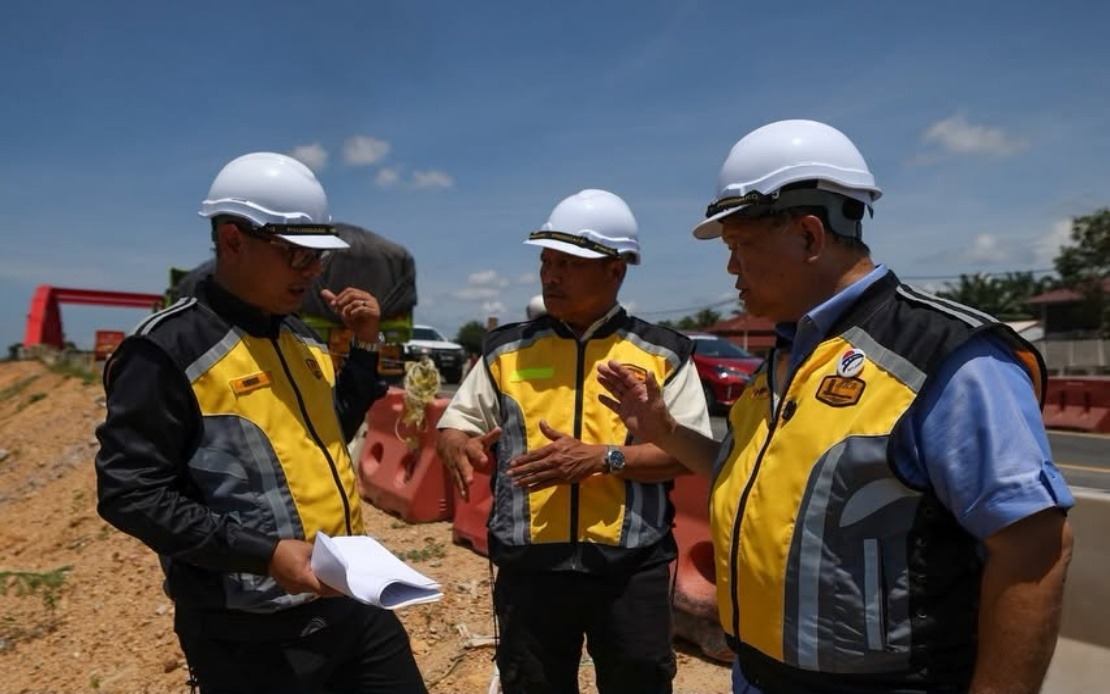
Works Minister Datuk Seri Alexander Nanta Linggi has issued a firm directive to accelerate construction on the Sungai Durian Bridge Replacement Project in Kuala Krai following a site visit that revealed the infrastructure initiative continues to lag behind its revised timeline, notwithstanding six previous extensions granted to the contractor. The unannounced inspection allowed Nanta to evaluate conditions firsthand and communicate his expectations regarding the project's future execution.
The Kuala Krai bridge project has encountered significant obstacles that have contributed to its protracted timeline. Among the principal technical challenges identified are complications arising from borepile installation work, which has been obstructed by underground utility infrastructure at the location. Additionally, the temporary structural framework required to support the steel bridge installation has presented unforeseen engineering difficulties that required problem-solving and coordination between multiple parties.
Despite these complications, the Works Minister has made clear that further postponements are unacceptable. In communications issued following his inspection, Nanta emphasized that the extended delays reflect inadequate project management and execution standards that cannot be permitted to continue. The public, he noted, has demonstrated considerable patience as this essential bridge replacement has extended far beyond its original completion date.
To address the ongoing schedule slippage, Nanta has instructed the contractor to deploy significantly greater resources to the construction site. This escalation in workforce and equipment allocation is intended to accelerate progress across all remaining phases of construction. The contractor has been explicitly directed to resolve all outstanding technical obstacles without delay and to work collaboratively with the Public Works Department to ensure these issues do not become recurring impediments.
The involvement of the Public Works Department in oversight represents a significant level of ministerial engagement with the project. By coordinating directly with this governmental body, the Ministry of Works is establishing additional layers of monitoring and accountability to ensure compliance with the newly emphasized timeline. This approach signals that the government intends to treat further delays as management failures rather than inevitable complications.
For residents and businesses in the Kuala Krai region, the Sungai Durian Bridge replacement carries considerable importance to local infrastructure connectivity and economic development. The protracted nature of the project has likely imposed costs on the community through continued reliance on alternative routes and any associated disruptions to normal transportation patterns. The ministerial intervention suggests a recognition that local stakeholders have legitimate expectations for project completion.
The situation reflects broader challenges that Malaysia's infrastructure development sector frequently encounters. Complex engineering projects involving utility coordination, temporary structural support, and environmental considerations regularly exceed initial timelines. However, the accountability mechanisms now being applied to this contract represent a more assertive governmental approach to managing such complications. By personally visiting sites and issuing direct instructions, senior officials are attempting to ensure that technical obstacles do not become excuses for indefinite delays.
The six previous extensions of time granted to the contractor indicate that project timelines have been substantially revised multiple times. This raises questions about the adequacy of initial planning and feasibility assessments that preceded contract commencement. Each extension represents a failure to meet commitments to the public and additional costs to the government and affected communities. The Works Minister's current stance suggests a determination to prevent the project from entering a cycle of perpetual postponement.
For Southeast Asian infrastructure observers, the Sungai Durian Bridge project exemplifies challenges common throughout the region where complex infrastructure must navigate underground utility networks and challenging engineering conditions. The ministerial response demonstrates one approach to breaking project stagnation: direct intervention, reallocation of resources, and explicit accountability warnings to contractors. The effectiveness of this strategy will be evident in whether the bridge actually progresses toward completion in the revised timeframe or whether additional complications continue to emerge.
The Works Minister's emphasis on accountability to the public reflects growing pressure across Malaysia for timely completion of announced infrastructure projects. Political credibility increasingly depends on demonstrated delivery of promised infrastructure improvements. The forceful tone adopted by Nanta indicates both ministerial frustration with the contractor's performance and an understanding that further delays could damage public confidence in government project management capabilities.
Moving forward, the integration of enhanced contractor resources, intensified Public Works Department oversight, and ministerial accountability messaging should create meaningful pressure toward schedule compliance. However, the underlying technical issues involving utility coordination and structural engineering remain unresolved and could continue generating delays unless properly managed. The success or failure of this intervention will provide instructive lessons for other infrastructure projects facing similar challenges across the region.

