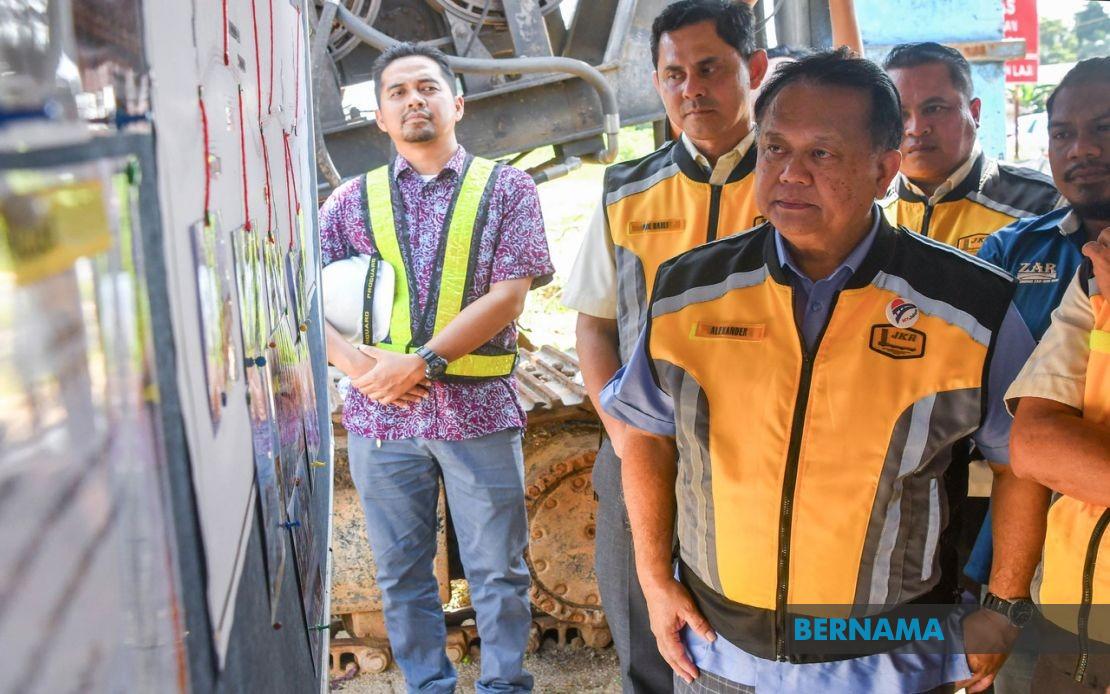
The Works Ministry has placed 50 infrastructure projects on high alert as part of a systematic effort to restore momentum to Malaysia's development agenda and prevent further financial leakage. Works Minister Datuk Seri Alexander Nanta Linggi disclosed the figure during a site visit to the FT209 and FT131 road upgrading initiative near Kota Bharu, emphasizing that the scale of oversight reflects both the challenges facing construction delivery and the ministry's commitment to rigorous project governance. The identification of these flagged undertakings represents approximately six percent of the ministry's total portfolio of 865 projects, though the proportion varies significantly by state, with Kelantan recording only seven affected schemes among its 104 allocations.
Delays plaguing Malaysia's infrastructure sector stem from a complex interplay of operational and environmental factors that frequently emerge despite meticulous planning. Contractors grappling with cash flow difficulties and internal management failures constitute a primary constraint, while land acquisition bottlenecks—particularly when compensation disputes arise—routinely derail timelines. Utility companies' reluctance to quickly relocate existing services such as water, electricity, and telecommunications infrastructure adds another temporal layer. Perhaps most challenging are unanticipated subsurface conditions, where geological surprises or unmarked underground obstacles discovered only during excavation necessitate redesign work and schedule adjustments. These multifaceted obstacles explain why project delays remain endemic across Southeast Asia's construction landscape.
The ministry's response framework demonstrates a graduated approach to remediation rather than blunt contract termination. Weekly progress reviews conducted following Cabinet sessions allow senior officials to diagnose performance deterioration before cascading project failure occurs. Nanta emphasized that terminating contracts prematurely and appointing replacement contractors often inflates total project costs beyond initial budgets, making contract extension a financially defensible option when substantial progress has already materialized. The threshold he identified—termination avoidance when approximately 85 to 90 percent of work is complete—reflects pragmatic cost-benefit calculation familiar to construction industry professionals throughout the region.
The deputy minister has assumed direct responsibility for nationwide sick project supervision, creating a dedicated command structure for recovery efforts. This institutional redesign signals that project rescue has become a cabinet-level priority rather than a routine administrative function delegated to junior officials. For schemes demonstrating persistent underperformance despite intervention attempts, the ministry retains authority to remove contractors or void contracts entirely, though such decisions proceed cautiously given potential litigation exposure. Malaysia's construction disputes frequently generate protracted legal proceedings that further delay completion and absorb financial reserves, creating institutional incentives for negotiated extensions rather than confrontational contract termination.
The FT209 and FT131 road project exemplifies both the scale of contemporary Malaysian infrastructure ambition and the practical complications undermining timely delivery. This RM191 million undertaking, currently progressing at 71.61 percent physical completion, represents a six-kilometre corridor designed to alleviate persistent bottlenecks along the Federal Road network serving Kelantan's eastern districts. The route from Kubang Kerian through Sabak toward Pengkalan Chepa experiences chronic traffic congestion that constrains economic activity and increases commuting burden for thousands of daily users. Scheduled completion in September next year would deliver relief after years of transportation frustration for the region's residents and commercial operators.
The land acquisition dimension of this project underscores infrastructure development's hidden costs. Assembling 300 separate property parcels required expenditure exceeding RM200 million—substantially elevating total project economics beyond the core construction contract value. Negotiations with individual landowners, particularly when market valuations diverge sharply from government acquisition offers, generate protracted delays that ripple through implementation schedules. This component of development costs frequently receives insufficient emphasis in public discussions focused primarily on construction timelines, yet acquisition challenges routinely consume months or years of the project cycle.
Environmental complications emerging from construction activity itself demanded ministerial intervention after Pengkalan Chepa Member of Parliament Datuk Dr Ahmad Marzuk Shaary raised flooding complaints from adjacent residents. The construction footprint and earthworks associated with the road project altered drainage patterns in surrounding areas, creating waterlogging during heavy rainfall. Rather than addressing such issues post-completion, Nanta instructed the contractor to immediately construct a temporary 40-metre drainage channel to mitigate immediate hardship while the project progresses toward final delivery. This responsive approach demonstrates how infrastructure development impacts extend beyond intended beneficiaries to affect neighboring communities.
Malaysia's infrastructure governance environment has evolved considerably as project complexity and cost escalation have exposed inadequacies in traditional oversight mechanisms. The Works Ministry's commitment to weekly reviews, dedicated deputy ministerial supervision, and graduated intervention strategies reflects lessons learned from previous construction failures across the region. However, systemic challenges persist: contractor financial health remains difficult to predict with precision; geological surprises continue despite improved survey technology; and bureaucratic processes around utility relocation still lack the coordination mechanisms necessary for seamless integration.
For Malaysian policy-makers and regional observers tracking infrastructure performance, the disclosure of 50 stalled projects illuminates broader structural issues affecting development delivery. The ministry's transparent acknowledgment of implementation difficulties, combined with articulated recovery mechanisms, suggests institutional maturation relative to earlier periods when project underperformance remained largely concealed. Nevertheless, the continued prominence of contractor-related failures points toward potential procurement reform opportunities, including enhanced pre-qualification mechanisms to assess financial stability and management capability. Similarly, the recurring utility relocation bottleneck suggests necessity for regulatory coordination mechanisms that streamline service provider participation in infrastructure projects and establish binding timelines for network modifications.
The FT209 and FT131 project's trajectory toward September 2025 completion will serve as a bellwether for Works Ministry recovery strategies. If the undertaking achieves timely delivery despite the flooding complications and preceding delays, it would validate the escalated oversight approach and justify continued resource allocation toward sick project rehabilitation. Conversely, further slippage would suggest that current governance mechanisms remain insufficient and that more fundamental reforms—potentially including contractor selection methodology or contract structure innovations—merit consideration. As Malaysia progresses toward Vision 2050 infrastructure targets requiring sustained capital investment and technical execution excellence, the ministry's success in restoring delivery discipline will substantially influence national economic trajectory and public confidence in government project management capacity.

