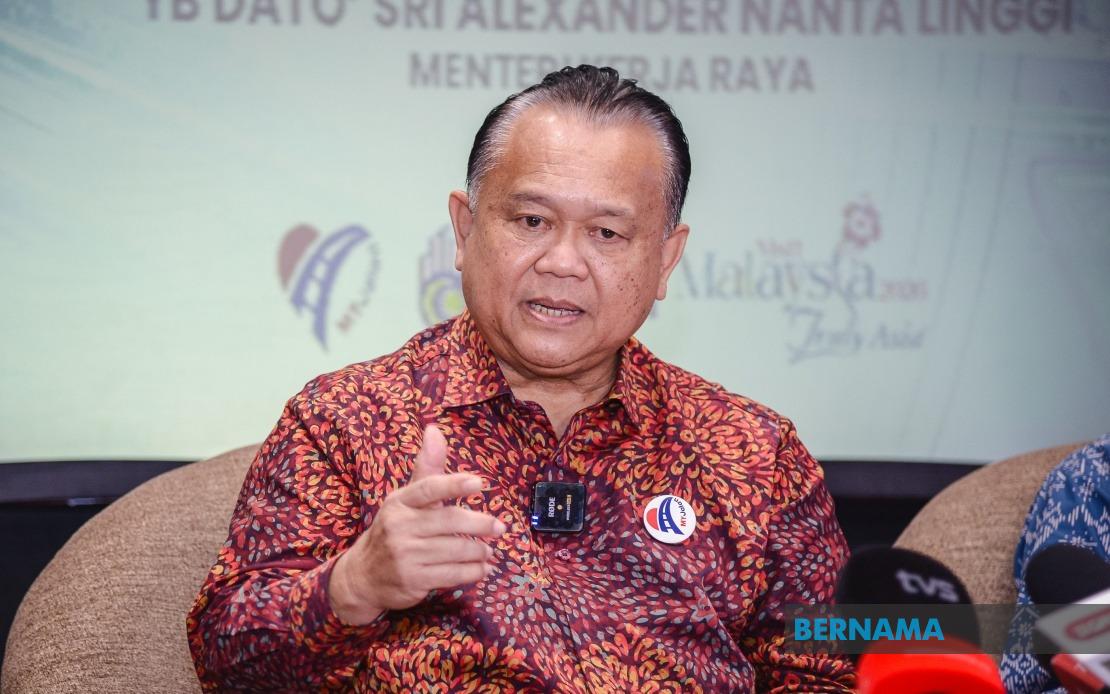
Malaysia's construction sector is positioning itself for significant transformation under Budget 2027, with the Works Ministry having collected 30 strategic wishlists that reflect industry priorities ranging from infrastructure strengthening to digital modernisation. Minister Datuk Seri Alexander Nanta Linggi unveiled this comprehensive feedback mechanism at an industry dialogue in Putrajaya, signalling the government's intention to move beyond traditional spending metrics towards measurable impact-driven outcomes that align with the MADANI Economy framework.
The ministry has distilled industry input into five interconnected transformation priorities that represent a fundamental shift in how Malaysia approaches infrastructure development. These encompass reinforcing the road network and delivering high-impact projects, advancing sustainable development aligned with national energy transition objectives, accelerating digitalisation through Building Information Modelling and artificial intelligence applications, strengthening local contractors across all tiers, and enhancing road safety through the MYJalan initiative. Rather than treating these as discrete policy pillars, Nanta emphasised their integration into a cohesive vision for planning, constructing, managing and maintaining national infrastructure.
A notable departure from conventional budget-setting involves the ministry's reorientation from measuring expenditure volumes to evaluating tangible outcomes per ringgit deployed. This philosophical shift carries implications for how construction companies operate and compete. Nanta stressed that local firms must evolve beyond price-based competition by leveraging Building Information Modelling, artificial intelligence, green technologies and the Industrialised Building System to enhance productivity and quality. The message to the industry is unambiguous: competitiveness must be driven by innovation, technological sophistication and value creation rather than cutting corners, enabling Malaysian enterprises to ascend the value chain and strengthen export competitiveness.
The breadth of feedback collected underscores deep engagement with industry stakeholders. Beyond the 30 strategic wishlists, the ministry has received 117 proposals on budget and sector issues since early August, with 87 originating directly from industry participants. This extensive consultation reveals industry concerns spanning governance and contract administration, workforce development and inclusivity, and persistent challenges around operating expenses, material sourcing and logistics inefficiencies. Additionally, construction players have advocated for expedited adoption of sustainability and environmental, social and governance standards, alongside increased utilisation of domestic materials that can stimulate local supply chains.
The minister identified a critical dimension often overlooked in infrastructure planning: the heterogeneity within the contractor ecosystem. Not all construction firms, consulting enterprises or workers operate from equivalent competitive positions. Nanta acknowledged that smaller contractors face disproportionate obstacles related to cash flow management, skills acquisition, technology access, regulatory approval timelines, utility coordination and road maintenance responsibilities. His assertion that building stronger foundational support systems would enable broader industry participation reflects recognition that inclusive development strengthens the entire sector's resilience and productivity potential.
Specific operational challenges highlighted by industry participants include expense management across operations, materials procurement and supply chain logistics. These pain points are particularly acute for smaller enterprises lacking economies of scale. The feedback also underscores demand for streamlined approval processes that reduce project timelines and administrative burdens, a factor that directly affects competitiveness, particularly for firms bidding against international competitors. Access to emerging technologies represents another critical constraint, as digitalisation requires substantial capital investment that smaller players struggle to finance independently.
Nanta's framing of budgetary limitations as catalysts for creative prioritisation rather than grounds for ambition reduction signals strategic intent beyond typical fiscal constraints. He contended that the government and industry must pursue innovation in resource allocation, project structuring and financing mechanisms to maximise output from available funds. This perspective acknowledges Malaysia's fiscal realities while rejecting defeatism about development aspirations, positioning strategic planning as the mechanism through which constrained resources generate outsized impact.
The previous budget cycle illustrated the scale of investment in this sector. Budget 2026 allocated RM10.692 billion to the Works Ministry, representing a 3.3 percent increase year-on-year, with RM9.607 billion directed towards development expenditure for new infrastructure projects and continuations of existing initiatives. These figures provide context for understanding the ministry's commitment to sustained infrastructure investment despite broader fiscal pressures facing the Malaysian government.
The construction sector's engagement with budget formulation reflects its importance to Malaysia's economic growth trajectory. Infrastructure quality directly influences competitiveness across sectors, from manufacturing to services, making construction productivity improvements consequential for broader economic performance. Enhanced digital adoption through Building Information Modelling and artificial intelligence can reduce project delays, minimise cost overruns and improve asset quality—outcomes that benefit not only construction firms but the entire economy dependent on reliable, efficient infrastructure.
The emphasis on local contractor empowerment across all capability tiers carries strategic significance for employment and skills development. As construction becomes more technology-intensive, ensuring that Malaysian firms and workers acquire relevant competencies becomes essential for maintaining industry health and preventing over-reliance on foreign expertise. The ministry's recognition that inclusive capability-building strengthens overall sector performance reflects sophisticated understanding of industrial policy.
Green technology and sustainability integration into construction practices addresses both environmental imperatives and emerging market opportunities. As global supply chains increasingly impose environmental standards on production, Malaysian construction firms that pioneer sustainable methods position themselves advantageously for international contracts and partnerships. The government's support for this transition through budget allocation demonstrates alignment with long-term competitiveness objectives rather than short-term cost minimisation.
Budget 2027, scheduled for parliamentary presentation on October 9, will reveal how extensively the ministry incorporates collected feedback into actual allocations and policy provisions. The gap between industry wishlists and implemented measures will indicate the government's genuine commitment to sector transformation versus symbolic engagement. For Malaysian construction companies, technology providers and workers, the coming budget represents a pivotal moment determining whether infrastructure development shifts from volume-driven growth toward sustainable, technology-enhanced value creation that positions the sector competitively within the regional and global economy.

