The 2026 FIFA World Cup has turned 16 North American cities into showcases of global football culture, with photographers embedded across every training camp and match documenting how these host communities are experiencing one of sport's defining events. From the passionate football neighbourhoods of Mexico City to the subdued streets of Vancouver, the tournament is revealing how deeply the beautiful game resonates across different urban landscapes and immigrant communities throughout the continent.
Mexico's capital has emerged as a particularly vibrant epicentre of World Cup fever, with photographer Raquel Cunha observing how football has woven itself into the very fabric of daily life beyond the famous Estadio Azteca. While the historic venue has anchored the tournament experience with its storied pedigree—having hosted two World Cup finals—neighbourhoods throughout the city have organised themselves around the sport, adapting public spaces to accommodate informal pitches and community gatherings. This grassroots enthusiasm reflects Mexico's deep-rooted football culture, where the sport transcends the professional realm to become embedded in neighbourhood identity and social connection.
In Guadalajara, the western Mexican city carries its own World Cup mythology. Local residents still carry memories of Pelé's 1970 performance there, and this year's unveiling of a statue honouring the Brazilian legend has reinforced the city's place in football history. Photographer Ivan Arias documented a particularly striking phenomenon: the formation of genuine friendships between Mexican and Colombian supporters who initially gathered as rival fans. These relationships evolved into shared attendance at matches and celebrations, suggesting that the tournament creates spaces where national identity and sporting passion coexist with cosmopolitan goodwill. Such cross-border fan solidarity demonstrates how football can temporarily transcend nationalist boundaries, particularly in culturally adjacent communities.
Monterrey showcases a distinctly Mexican approach to football consumption, where the sport integrates seamlessly into social rituals. Photographer Daniel Becerril noted how locals gather in backyards for matches paired with traditional barbecue and informal socialising, or congregate in neighbourhood bars where the game provides a focal point for community gathering. This pattern reveals how football in Mexican cities functions not merely as entertainment but as infrastructure for social bonding and neighbourhood cohesion.
Florida's Miami presents a markedly different integration pattern. The city's substantial Latin American population means the World Cup arrival felt less like an extraordinary event and more like an intensification of existing cultural practices. Photographer Amanda Perobelli observed that despite the challenging heat and humidity that exhausts those spending extended hours outdoors, visiting supporters have adapted readily to local conditions. Miami's World Cup experience reflects a community where Latin American football culture already saturates daily life, making the tournament feel like a natural extension of established social rhythms rather than an imported spectacle.
Texas cities have impressed photographers with the sheer magnitude of their World Cup response. Phil Noble remarked that everything operates at expanded scale—from barbecue portions to highway infrastructure to the enthusiastic welcome extended to visiting supporters. Mexican-shirted fans have become ubiquitous throughout Texas venues, and notably, local supporters often champion visiting nations when Mexico isn't competing, suggesting a generous sporting spirit. Hannah McKay expanded on this observation by noting how two Argentina matches drew packed crowds, with one memorable occasion featuring Lionel Messi breaking the men's World Cup scoring record in an atmosphere she described as incredible. The stadium's sheer size and the distances between venues have reinforced the impression of Texan abundance and scale.
Atlanta's experience demonstrates how non-traditional football infrastructure can still generate compelling atmosphere. Despite the stadium's unconventional retractable roof and recessed seating arrangement—departures from traditional football design—photographer Claudia Greco documented a palpable energy throughout the city. Fan zones remained consistently crowded, restaurants displaying matches on televisions reported booming business, and the broader commercial ecosystem responded enthusiastically to World Cup demand. This suggests that atmosphere derives less from stadium architecture than from community engagement and the opportunities sports create for social gathering.
Los Angeles presented photographer Daniel Cole with a unique case study in how major sporting events can alter urban social patterns. The sprawling, car-dependent character of Los Angeles typically keeps residents isolated within vehicles; Cole observed that the World Cup has catalysed more communal street presence and public gathering. The city's diverse diasporas—including communities from Iran, South Korea and Mexico—used the tournament as an opportunity for collective celebration of their countries of origin, creating visible expressions of cultural identity throughout urban spaces. This pattern highlights how international sporting events can temporarily reshape even fundamentally dispersed urban geographies.
San Francisco's World Cup experience similarly revealed how the tournament creates space for immigrant communities to celebrate heritage in ways that feel particularly significant given recent shifts in American migration policy. Photographer Carlos Barria documented how diasporas embraced their ancestral cultures—displaying flags, preparing traditional foods, speaking heritage languages—while simultaneously introducing American audiences to cultural practices they might not otherwise encounter. Barria interpreted this exchange as central to football's deeper meaning, suggesting the sport functions as a vehicle for cross-cultural understanding that transcends competitive outcomes.
Kansas City, straddling the Kansas-Missouri border, has demonstrated how football naturally integrates into communities with established traditions across baseball and American football. Photographer Kai Pfaffenbach found that soccer found ready acceptance alongside these established sports, with the city maintaining a universally positive atmosphere. Rather than competing for attention, the sports coexist, and Kansas City residents have embraced the World Cup as another opportunity for communal gathering and celebration, reflecting a regional sporting culture expansive enough to accommodate multiple athletic traditions.
Philadelphia presented a contrasting experience to photographer Siphiwe Sibeko, who noted the tournament's relative invisibility outside immediate stadium neighbourhoods on match days. Drawing on experience from South African football contexts where tournament fever thoroughly dominates public discourse and atmosphere, Sibeko observed that Philadelphia's World Cup presence remains more geographically and temporally concentrated. This regional difference suggests that American cities vary significantly in how thoroughly they absorb international football events into civic consciousness, with some embracing the tournament as city-defining phenomenon while others treat it as discrete sporting entertainment.
New York has delivered the theatrical World Cup experience that characterises the city's approach to major events. Dylan Martinez documented Norwegian supporters performing their traditional Viking row, Latin American fans conducting pre-match banderazos in Times Square, and the concurrent New York Knicks NBA championship victory—the franchise's first in over five decades. The simultaneous occurrence of these major sporting moments reinforced New York's reputation as the perpetually active city, where multiple celebrations proceed in parallel without diminishing individual events.
Boston's World Cup experience carries particular significance for photographer Brian Snyder, who covered the city during the last American World Cup hosting in 1994. Snyder observed markedly greater fan enthusiasm this time, with diverse communities—including Boston's well-documented Scottish supporters alongside Haitian, Moroccan and Cape Verdean populations—visibly engaging with the tournament. This generational shift suggests growing American attachment to football, particularly among immigrant communities for whom the sport represents cultural continuity.
Toronto provided photographer Bernadett Szabo with an unexpected encounter when a falcon flew inches from her face near the stadium. This incident revealed that a family of falcons inhabits the venue, introducing an element of wildlife dimension to the tournament experience that transcends typical sports narratives. Vancouver, by contrast, struck photographer Agustin Marcarian as relatively subdued in its World Cup engagement compared to other host cities. Coming from Buenos Aires, where football dominates public consciousness, Marcarian found himself actively searching for visible tournament markers throughout the Pacific coast city, suggesting variable levels of football integration across Canadian host communities.
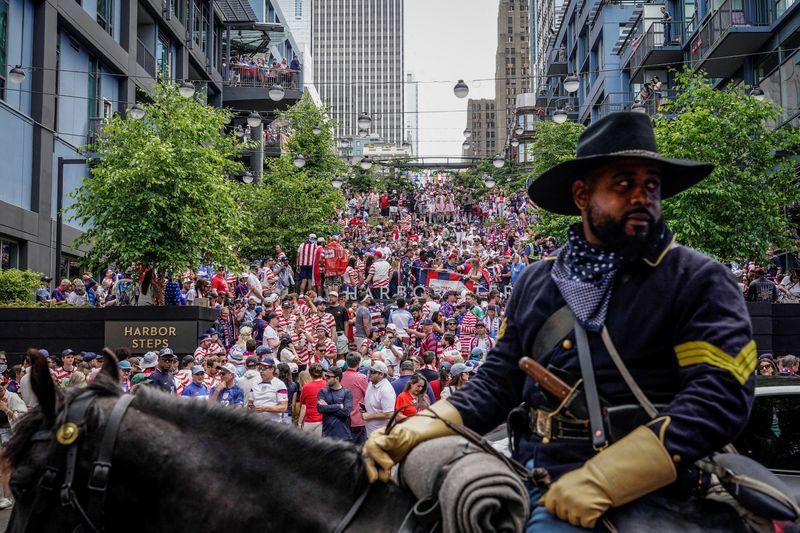
Seattle has provided photographer Albert Gea with a festive street-level experience, where crowds dressed in red, white and blue for American matches and readily patronised numerous concession stands. Gea interpreted this comprehensive entertainment approach as reflecting American sporting culture's emphasis on spectacle and experience rather than football itself. The 16-city World Cup experience reveals a continent where football intersects with existing cultural patterns, immigrant identities, urban geography and regional sporting traditions in remarkably varied ways.

