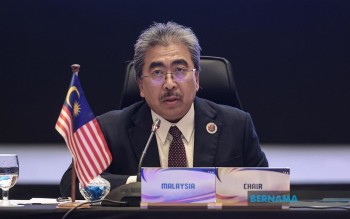
The World Trade Organization faces an urgent need to reinvent itself for an era defined by geopolitical tension and strategic competition rather than the post-Cold War consensus on free trade, according to Malaysia's Investment, Trade and Industry Minister Datuk Seri Johari Abdul Ghani. Speaking at the 39th Asia-Pacific Roundtable in Kuala Lumpur, Johari outlined how the multilateral trading system that shaped the past three decades no longer aligns with the priorities occupying policymakers across the globe, raising fundamental questions about the institution's capacity to remain a central pillar of international economic governance.
When the WTO was established, its founding principles reflected a particular historical moment. The end of the Cold War had created space for nations to prioritise economic integration, and there existed widespread conviction that dismantling tariff walls and facilitating cross-border commerce would deliver prosperity while also reducing the likelihood of conflict. That architecture delivered significant gains in trade volumes and living standards, particularly benefiting developing nations integrated into global supply chains. However, the geopolitical landscape has fundamentally shifted, and the assumptions underpinning the WTO's regulatory framework no longer command universal acceptance among member states.
Today's policy environment operates according to markedly different logic. National governments increasingly view economic policy through the lens of resilience rather than mere efficiency gains. The semiconductor shortage highlighted during the Covid-19 pandemic, persistent vulnerabilities in pharmaceutical supply chains, and competition for technological dominance have collectively reoriented how capitals approach trade negotiations. Strategic autonomy—the ability to sustain critical industries and technologies without dependence on potentially adversarial suppliers—has become a paramount concern. Supply chain security, once a peripheral issue in trade discussions, now occupies centre stage in major policy deliberations.
According to Johari, this reordering of priorities represents more than a temporary adjustment. The debate has fundamentally shifted from the historic question of how quickly borders should open to a more intricate calculus involving which capabilities warrant protection for national security reasons. Countries across the developed and developing world are erecting defensive mechanisms around semiconductors, rare earth elements, battery technology, and artificial intelligence infrastructure. These moves reflect a sober recognition that competitive advantage in key sectors carries strategic weight extending far beyond commercial advantage. The WTO's current dispute resolution mechanisms and rule sets were designed to combat protectionism rooted in narrow commercial interest, not the sophisticated strategic competition that characterises current practice.
The challenge facing the institution is profound. Unless the WTO evolves to acknowledge these new realities and develop frameworks that permit legitimate strategic protection while still preventing thinly disguised protectionism, it will gradually cede relevance to bilateral arrangements, regional groupings, and informal diplomatic channels. This creates a particular dilemma for Malaysia and other ASEAN nations heavily reliant on predictable, rules-based trade architecture. A weakened WTO serves no one, as alternative trading arrangements tend to reflect power asymmetries more starkly than multilateral institutions.
Yet paradoxically, the era of strategic competition underscores why credible multilateral rules have arguably become more rather than less essential. When countries compete intensely for technological dominance and access to critical resources, the absence of binding frameworks increases misunderstanding and escalation risk. Disputes over trade practices can easily transmute into broader geopolitical confrontation if no institutional mechanism exists to manage them. The WTO, despite its limitations, provides a forum where grievances can be aired and disputes arbitrated according to agreed procedures rather than settled through unilateral economic coercion or military posturing.
Johari emphasised that Malaysia remains committed to the multilateral trading system, but this commitment cannot be unconditional or passive. Member states must actively push for institutional evolution. The system's legitimacy depends on its perceived fairness and relevance, qualities that atrophy when rules fail to reflect the economic concerns of constituent members. Southeast Asian nations, which have benefited enormously from rules-based trade, have particular interest in ensuring the system adapts rather than fragments.
Addressing discriminatory trade practices represents another dimension of necessary reform. Increasingly, countries employ nominally health or environmental regulations as concealed protectionist measures. Others manipulate currency rates or subsidise state-owned enterprises in ways that undermine genuine competition. The WTO requires sharpened tools to identify and counter such practices while respecting legitimate policy space. Current mechanisms prove insufficient, contributing to the sense among developing nations that the rulebook inadequately protects their interests.
The Asia-Pacific Roundtable, where Johari delivered these remarks, provides an apt venue for this discussion. The conference, organised by the Institute of Strategic and International Studies Malaysia and themed "Accelerating Agency and Action," convenes the region's policymakers, military strategists, academics, and business leaders to grapple with the intersecting challenges of geopolitics, economics, and security. For Southeast Asia in particular, questions about the WTO's future carry acute significance. The region's prosperity has historically depended on its position as a competitive manufacturing hub and logistics nexus within global value chains. Preserving these advantages requires functioning multilateral institutions that prevent larger powers from imposing arbitrary restrictions.
The minister's intervention signals Malaysian awareness that waiting passively for WTO reform is insufficient. Member states must collectively push for modernisation, a process requiring difficult negotiations and genuine compromise. Some nations will resist reforms that constrain their ability to employ strategic industrial policy; others will demand guarantees that environmental and labour standards receive equal priority with commercial liberalisation. Threading these competing demands represents the central challenge facing the institution.
Ultimately, Johari's message reflects a mature assessment that the WTO's founding mission—liberalising trade—remains valid but incomplete. The institution must expand its mandate to encompass legitimate strategic concerns while preventing that expansion from providing cover for old-fashioned protectionism. This demands institutional creativity and political will from member states, particularly larger powers that shape the direction of negotiations. For Malaysia and Southeast Asia, advocating forcefully for this evolution represents not disloyalty to free trade principles but rather their intelligent application to contemporary circumstances.

