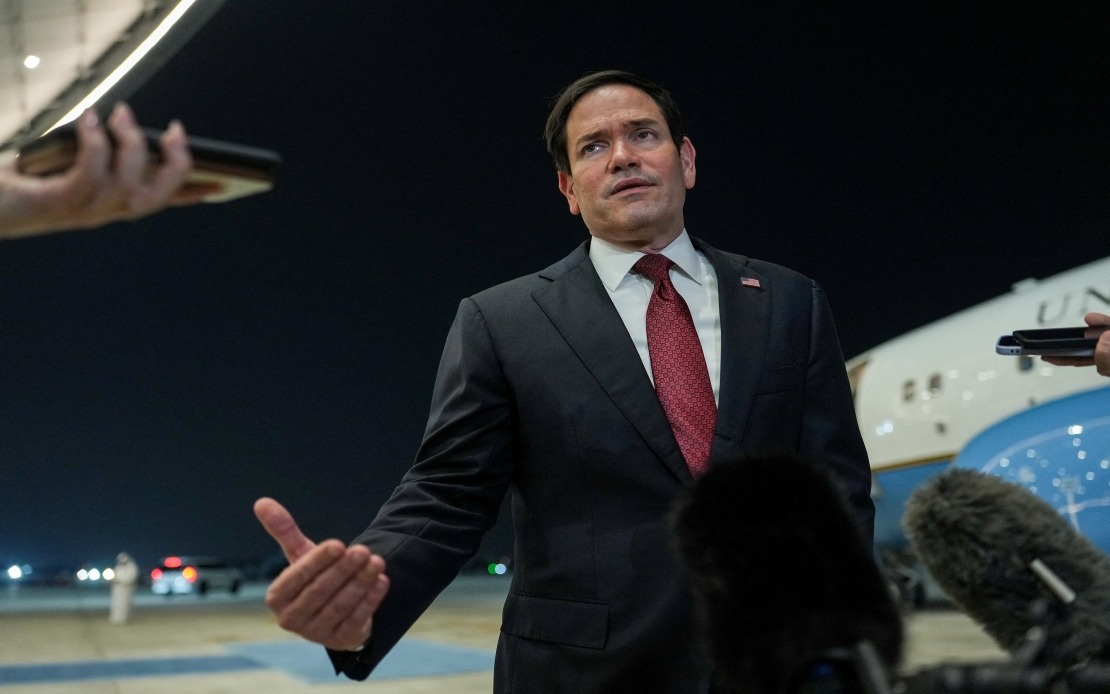
Preparations for Chinese President Xi Jinping's forthcoming state visit to the United States are advancing without disruption, according to US Secretary of State Marco Rubio, who downplayed concerns that recent diplomatic friction might derail the high-profile engagement. Speaking to journalists at Joint Base Andrews before departing for a regional forum, Rubio indicated that the September visit remains firmly scheduled and that Chinese officials continue mobilising preparation teams to ensure the visit proceeds smoothly. This statement carries particular significance given the tense geopolitical environment surrounding US-China relations, with both nations facing mounting disagreements on trade, technology, and electoral integrity.
The planned gathering, provisionally set for September 24 at the White House, represents a reciprocal diplomatic arrangement following President Donald Trump's May visit to Beijing, where he formally extended the invitation to Xi. Rubio's public confirmation signals that despite rhetorical salvos and policy disputes, the two governments remain committed to maintaining the institutional frameworks that allow their leaders to communicate directly at the highest level. For Southeast Asia, which has long sought to balance relationships with both superpowers, such high-level engagement between Washington and Beijing offers a crucial window for regional stability, even as underlying tensions persist.
The diplomatic confirmation comes amid heightened strain in bilateral relations. Trump publicly accused China on Thursday of interfering in the 2020 US presidential election, an allegation that Beijing swiftly rejected as unfounded. These accusations represent a significant escalation in rhetoric, particularly given their timing just weeks before the proposed presidential summit. However, Rubio's remarks suggest that the US administration views such disagreements as manageable within the framework of constructive dialogue rather than insurmountable obstacles to engagement. This calibrated approach reflects a pragmatic understanding that complete agreement between Washington and Beijing on all issues remains unrealistic, yet functional diplomatic channels remain essential.
China's Foreign Ministry echoed the US position, confirming that both governments remain in active communication regarding the September meeting. This parallel messaging from Beijing underscores that despite public tensions, both sides maintain sufficient political will to pursue the engagement. The synchronisation of statements from Washington and Beijing—rather than contradictory signals—suggests that the underlying institutional machinery for managing superpower relations, though strained, has not fractured. For Malaysia and other ASEAN member states navigating the complex landscape of great power competition, such continuity in US-China high-level diplomacy provides a degree of predictability.
Rubio articulated a nuanced position reflecting the Biden administration's broader strategic approach to China policy: acknowledging that disagreements between major powers are inherent, yet insisting that both nations bear a shared responsibility to maintain dialogue mechanisms and preserve stable relations. This framing is particularly relevant for the Southeast Asian context, where smaller nations often find themselves pressured to choose sides in US-China disputes. By emphasising mutual responsibility for maintaining channels of communication, Rubio provides diplomatic cover for regional states seeking to engage constructively with both superpowers without appearing to take partisan stances. The secretary of state's comments effectively communicate that engagement and disagreement need not be mutually exclusive.
The timing of Rubio's announcement merits careful attention, as it coincided with his departure to Manila for a meeting of ASEAN foreign ministers, scheduled to commence on Tuesday. This convergence of events creates an immediate diplomatic opportunity, as Chinese Foreign Minister Wang Yi is confirmed to attend the same gathering. The presence of both US and Chinese foreign ministers at a regional forum provides a preliminary testing ground for the diplomatic temperature ahead of the presidential summit. Such multilateral settings often allow for discrete bilateral conversations on the margins, offering a venue for the two powers to address any outstanding concerns or procedural matters related to the September visit without formal bilateral negotiations.
The significance of Xi's potential White House visit extends beyond ceremonial protocol. A successful state visit, characterised by substantive discussions rather than acrimonious exchanges, could set a constructive tone for the remainder of the year and establish parameters for managing ongoing disputes. For ASEAN members, particularly those economically dependent on trade with both the US and China, a stabilisation of US-China relations at the leadership level reduces the likelihood of regional polarisation and coercive pressure to align exclusively with either power. Vietnam, Malaysia, and other middle-power nations in Southeast Asia have long emphasised their preference for a multipolar regional order, and US-China dialogue at the highest level, even amid disagreements, facilitates this vision.
The mechanisms ensuring the visit's continuation despite recent tensions deserve scrutiny. Chinese preparation teams continuing their work signals institutional commitment at lower bureaucratic levels to execute the logistics of a state visit, regardless of temporary political turbulence. This separation between high-level acrimony and working-level professionalism reflects a recognition in both governments that severing institutional connections would impose costs exceeding the benefits of protest or confrontation. The continued operational planning for September demonstrates that both Washington and Beijing compartmentalise their disputes, protecting diplomatic engagement from the fallout of particular controversies. For regional observers, this compartmentalisation suggests a baseline commitment to maintaining a managed relationship.
Rubio's confidence that "they won't be coming" should Xi Jinping fail to appear carries implicit weight in diplomatic communication. By explicitly stating that he has no reason to believe China will cancel, the secretary of state raises the political cost for Beijing to withdraw. Such public commitments function as soft pressure, making cancellation more damaging to China's international standing should it occur. Conversely, Rubio's public support for the visit may also signal to domestic critics within the Trump administration—those opposing engagement with Beijing—that high-level diplomacy remains the administration's preferred approach to managing US-China relations. The statement thus operates simultaneously on multiple audiences: reassuring China, signalling commitment to regional allies, and shaping domestic political perceptions.
Looking ahead, the September encounter between Trump and Xi represents a critical juncture for superpower relations and, by extension, regional stability in Asia-Pacific. While disagreements on election interference, trade practices, and technology governance will likely feature prominently in any discussions, the mere occurrence of the meeting reaffirms both nations' commitment to dialogue over confrontation. For Malaysia and Southeast Asia more broadly, such top-level engagement remains preferable to escalatory cycles that might force uncomfortable choices about alignment. The challenge facing ASEAN capitals is leveraging these moments of superpower engagement to advance their own interests in maintaining strategic autonomy and regional peace.

