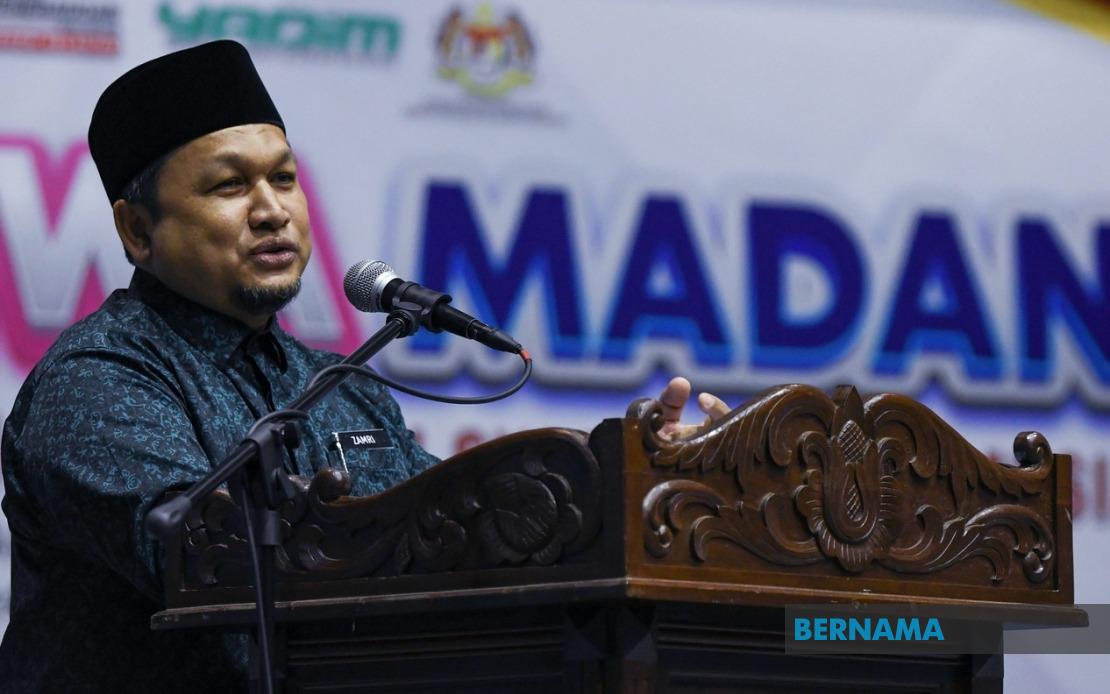
Malaysia's leading Islamic foundation has thrown its weight behind a government initiative to establish clearer accreditation standards for religious figures operating on digital platforms and social media. The move reflects growing concerns about the quality and authenticity of Islamic teachings spreading across the internet, where anyone can claim religious authority without formal credentials or substantive training.
Zamri Zainal Abidin, chief executive of Yayasan Dakwah Islamiah Malaysia (YADIM), described the accreditation framework as a sensible safeguard rather than a restriction on legitimate religious activities. Speaking in a statement released from Putrajaya, he stressed that the initiative aims to protect the credibility of Islamic instruction and ensure that religious references circulating in digital spaces rest on solid theological foundations. In an era when social media has become the primary medium through which millions seek spiritual guidance, maintaining standards becomes increasingly critical.
The proposal, announced earlier by the Minister in the Prime Minister's Department (Religious Affairs) Dr Zulkifli Hasan, addresses a fundamental challenge in the modern information landscape. Without verification mechanisms, individuals lacking proper Islamic training can establish themselves as preachers or ustaz, potentially misleading followers and distorting authentic religious teachings. This phenomenon poses particular risks for young people who increasingly turn to social media rather than traditional mosque-based learning for religious instruction.
Zamri highlighted the consequences of allowing unqualified individuals to position themselves as religious authorities. He warned that unchecked proliferation of inaccurate religious messages erodes public confidence in established religious institutions and undermines the credibility of legitimate Islamic scholars and organizations. The risk extends beyond misinformation; it creates opportunities for bad actors to exploit public trust for personal gain or to advance theological positions that deviate from mainstream Islamic scholarship.
YADIM's endorsement carries particular weight given its status as the government's official dakwah agency operating under the Prime Minister's Department. The foundation has long recognized the importance of professional standards in religious education and has already implemented accreditation practices within its own programmes. The organization trains preachers, including participants in its Daie Muda initiative, and coordinates credential verification through the Federal Territories Mufti Department as a mark of quality assurance.
The accreditation framework represents a practical response to the challenge of maintaining religious oversight in decentralized digital environments where traditional hierarchies and institutional gatekeeping have lost effectiveness. By establishing clearer standards and verification processes, the government and YADIM seek to preserve the integrity of Islamic teachings while still permitting genuine scholars and committed religious educators to reach wider audiences through modern communication channels.
From a Southeast Asian perspective, Malaysia's approach offers a template for other predominantly Muslim nations grappling with similar challenges. The region faces comparable pressures as internet penetration increases and younger generations consume religious content primarily through digital platforms rather than traditional educational structures. Countries like Indonesia and Brunei have observed similar patterns of unqualified individuals claiming religious authority online, sometimes promoting heterodox or problematic interpretations of Islamic principles.
The proposal also reflects practical realities facing religious authorities across Malaysia. The Federal Territories, Selangor, Penang, and other states have increasingly struggled to monitor and verify the credentials of online preachers who operate across state boundaries and reach audiences nationally and internationally. An accreditation system would provide clearer benchmarks for distinguishing between qualified religious educators and self-appointed speakers lacking proper training or supervision.
Zamri emphasized that YADIM stands ready to serve as a strategic partner in implementing the framework, drawing on its existing experience with credentialing and its network of trained religious educators. This positioning suggests that the initiative will likely involve multiple stakeholders rather than a centralized government bureaucracy making unilateral determinations about who can speak on religious matters online. Collaborative approaches involving established Islamic institutions, mufti offices, and educational bodies may prove more effective and more acceptable to the broader Muslim community.
The timing of the initiative reflects awareness that digital religious discourse has grown substantially faster than institutional capacity to monitor it. Major platforms including Facebook, TikTok, YouTube, and Instagram host thousands of Malaysian and regional Islamic content creators, many with followings numbering in the hundreds of thousands or millions. Without any systematic verification mechanism, distinguishing credible teachers from fraudsters or promoters of fringe ideas becomes increasingly difficult for ordinary viewers.
Implementing an accreditation framework will require careful balancing of competing interests. Religious freedom advocates may raise concerns about government or institutional bodies determining who qualifies as a legitimate preacher, particularly in a diverse society where different Islamic schools and interpretations coexist. The framework will need to accommodate legitimate theological pluralism while still maintaining basic standards regarding foundational Islamic knowledge, ethical conduct, and fidelity to recognized scholarly traditions.
Zamri's statement suggests that YADIM views the accreditation proposal as complementary to rather than competitive with existing Islamic institutions and educational bodies. By formalizing standards that respected organizations like YADIM already apply internally, the framework aims to raise baseline expectations across the digital religious discourse landscape while avoiding the appearance of imposing narrow ideological positions. The success of this initiative will likely depend on its acceptance by both established religious authorities and the broader Muslim public, particularly younger Malaysians who consume religious content online.

