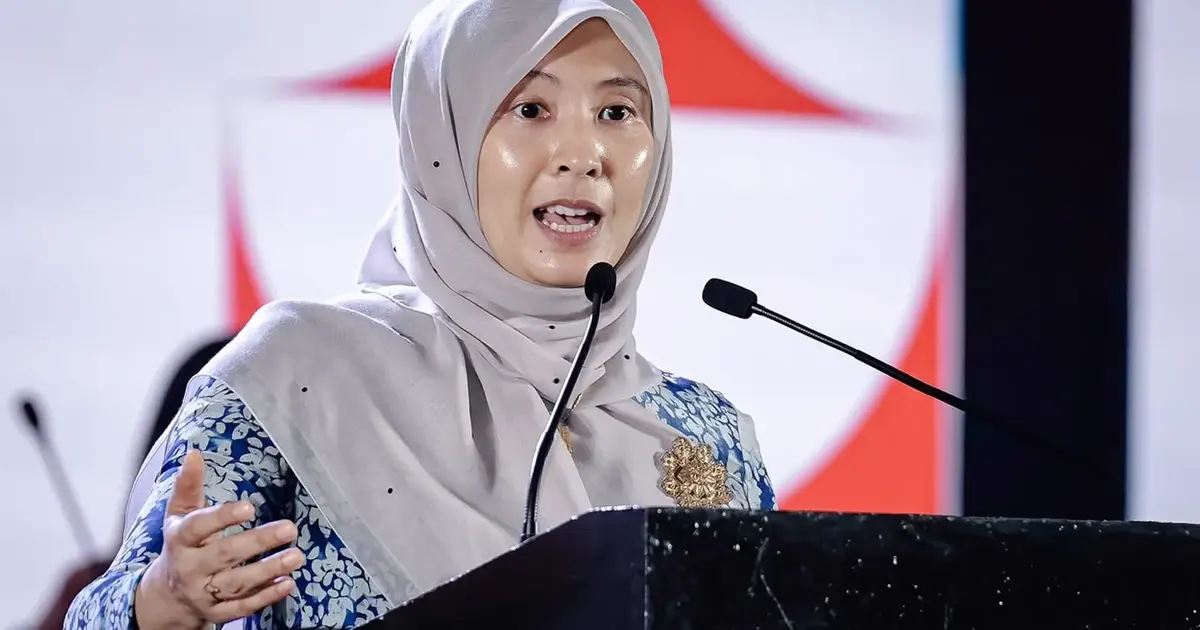
Nurul Izzah Anwar has adopted a measured stance towards the growing chorus of detractors commenting on her recent political fortunes, asserting that satisfying every observer remains an impossible task. The PKR politician's remarks come amid heightened scrutiny following several high-profile developments that have drawn scrutiny from party members and political observers tracking her trajectory within the party structure.
The daughter of PKR president Anwar Ibrahim has faced considerable pressure since her unsuccessful bid during the 2023 general election, an outcome that marked a significant departure from her previous electoral successes. Her standing within the party apparatus has further come under examination following her temporary step back from her position as PKR deputy president, a development that some quarters interpreted as a retreat from active leadership during a critical period for the party.
In her response to accumulated criticism, Nurul Izzah adopted a philosophical perspective, acknowledging the inherent challenge of maintaining universal approval across diverse political constituencies. This stance reflects a broader reality within Malaysian politics, where family connections and dynastic positioning often intersect with merit-based expectations, creating complex dynamics within party structures that can breed internal tension and external commentary.
The timing of her withdrawal from the deputy president role occurred against the backdrop of internal party restructuring and positioning ahead of various electoral contests. Political analysts have noted that such absences from high-profile positions frequently signal either strategic recalibration or management of immediate political challenges. Within PKR's factional landscape, where various interest groups compete for influence and resources, such moves carry significant symbolic weight beyond their immediate operational implications.
Her GE15 defeat represented a notable setback for a figure long positioned within the party's upper echelons. Previously, Nurul Izzah had managed to retain parliamentary representation through successive elections, making this particular loss a watershed moment in her political career. The defeat prompted conversations within PKR about generational transitions, the sustainability of internal hierarchies, and whether traditional power structures remain tenable in an increasingly volatile electoral environment.
Critics from multiple quarters have raised questions about her capacity to deliver electoral returns and maintain grassroots support, concerns that transcend typical inter-party rivalry and reflect genuine anxieties about party performance in key constituencies. Some observers have suggested that her extended absence from the deputy president role during a formative period for party strategy represented a missed opportunity for hands-on leadership and policy advocacy.
Yet Nurul Izzah's dismissal of criticism carries important nuance within Malaysian political discourse. Her perspective acknowledges that political careers rarely follow linear trajectories and that individual setbacks do not necessarily define long-term viability or future contributions. This framing also implicitly recognises the gendered dimensions of political scrutiny, whereby female politicians often encounter heightened expectations and more personalised criticism than male counterparts facing similar circumstances.
Within PKR's broader organisational framework, the deputy president position carries significance beyond administrative function, serving as a springboard for policy influence and succession planning. Her temporary withdrawal necessarily reshaped internal dynamics and may have implications for how the party structures its leadership opportunities moving forward. Whether this represents a strategic pause or a more fundamental reassessment of her political positioning within the party remains subject to interpretation.
The backdrop to her recent challenges includes PKR's evolving internal politics as it navigates its role within the broader Pakatan Harapan coalition and engages with changing voter preferences across Malaysia's diverse political landscape. The party has experienced considerable flux regarding leadership stability and strategic direction, making individual member transitions particularly consequential for broader organisational trajectories.
For Malaysian political observers, Nurul Izzah's response encapsulates a broader conversation about accountability, privilege, and the expectations placed upon political figures. Her family background provides undeniable advantages in navigating party structures and maintaining political viability, yet also subjects her to distinct scrutiny precisely because such advantages are visible and documented. The balance between acknowledging legitimate criticism and maintaining resilience through setbacks remains a perpetual challenge for public figures operating within intensely personalised political environments.
Moving forward, the trajectory of Nurul Izzah's political career will likely serve as a barometer for PKR's approach to renewal and leadership development. Whether she can rebuild electoral credibility and navigate internal party dynamics while operating under sustained public scrutiny will provide important signals about her future role within Malaysian politics and PKR's institutional evolution. Her current stance of philosophical acceptance, while politically expedient, ultimately postpones rather than resolves underlying questions about her political viability and strategic importance to her party.

