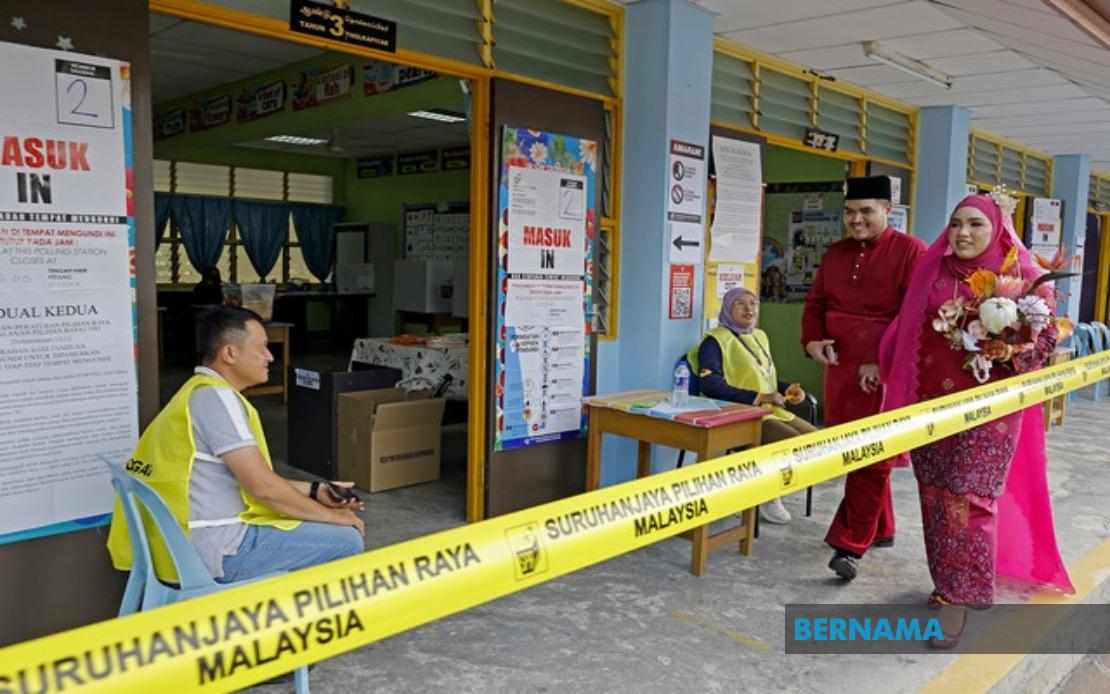
A young bride made an unexpected civic statement on her wedding day by casting her ballot in full traditional bridal regalia at a polling station in Labu, Negeri Sembilan. The striking image of Noor Farzana Masnoor, 26, dressed in an ornate red wedding ensemble as she participated in the state election has captured attention as a symbol of generational engagement with Malaysia's democratic institutions. Accompanied by her newly-wedded husband, Luqman Adam Sudirman, 27, Noor Farzana voted at Sekolah Jenis Kebangsaan Tamil (SJKT) Ladang Kubang in the Labu constituency, seamlessly blending two significant life milestones into a single memorable day.
The couple's decision to prioritize voting despite the demands and celebrations surrounding their wedding underscores a broader narrative about how younger Malaysians perceive their civic obligations. Rather than viewing the electoral process as a bureaucratic chore, the pair consciously integrated it into their most important personal occasion, suggesting that democratic participation holds genuine significance for Generation Z. The marketing officer's choice to retain her full bridal attire while fulfilling her voting duty speaks to the deliberate nature of this civic act—neither an afterthought nor a reluctant obligation, but a valued component of their life together.
Noor Farzana's reflections on the experience reveal a thoughtful perspective on citizenship that extends beyond mere ballot-casting. She emphasized that as young Malaysians, both she and her husband recognize voting as a responsibility that cannot be taken for granted, noting that electoral opportunities arrive infrequently in the national calendar. This articulation of voting as a "trust placed upon us" demonstrates an understanding of democratic participation that transcends the transactional—the couple views their choice of representatives as a consequential decision affecting community welfare rather than a perfunctory civic ritual. Their engagement with the electoral process reflects a conscious rejection of political apathy that sometimes characterizes younger cohorts in democracies worldwide.
The symbolic value of this incident extends beyond the individual narrative. In Malaysia's increasingly competitive electoral landscape, stories of Gen Z participation carry particular weight as political observers seek to understand how younger voters are engaging with state and national politics. The Negeri Sembilan election, held amid broader discussions about administrative and developmental priorities in the state, provided the backdrop for this intergenerational statement. The couple's framing of their voting experience as something memorable and meaningful—not merely as separate from but actually intertwined with their wedding celebration—suggests how younger Malaysians are redefining what it means to be politically conscious citizens.
Their emphasis on young people valuing "both their rights and responsibilities as citizens" offers a counternarrative to perceptions of youth political disengagement. Rather than positioning voting as a burden imposed by older generations, Noor Farzana and Luqman Adam present it as an intrinsic component of their identity as responsible Malaysians. This framing may resonate with other members of their demographic who similarly grapple with balancing personal aspirations and milestones with broader civic commitments. The couple's hope that their story serves as "a reminder that young people value both their rights and responsibilities" indicates an awareness of wider generational skepticism about youth political participation and a desire to counteract that narrative through lived example.
From a broader Malaysian political perspective, this incident illuminates evolving attitudes toward electoral participation among younger demographics. The Negeri Sembilan election itself has implications for state governance and resource allocation, making each vote—including those cast by newly-married couples on their wedding day—part of the broader democratic fabric. The story's viral potential and media attention underscore how personal narratives of civic engagement can amplify messages about the importance of democratic participation in ways that conventional voter education campaigns sometimes cannot achieve.
The couple's thoughtfulness in explaining their motivations demonstrates media literacy and an understanding of how personal stories can carry political meaning. Their articulation of voting as something meaningful, rather than obligatory, presents a sophisticated counter to narratives of generational apathy toward democratic institutions. By integrating their electoral participation into the fabric of their most important personal celebration, they model a form of civic engagement where democracy is not peripheral to private life but potentially intertwined with it.
For Malaysian electoral observers, the Labu constituency incident offers glimpses into how younger voters conceptualize their role in democratic processes. Negeri Sembilan's electoral outcomes depend on aggregating millions of such individual decisions, and stories that illustrate genuine commitment to voting—even from voters simultaneously navigating major life transitions—contribute to understanding generational political behavior. The state's development trajectory and policy priorities will ultimately be shaped by elected representatives chosen by voters like Noor Farzana and Luqman Adam, making their participation, however symbolically captured, substantively consequential.
The narrative of the bride-voter also speaks to inclusivity within Malaysia's democratic institutions. The smoothness with which a polling officer accommodated a voter in traditional bridal attire suggests practical acceptance of diverse voters in varying circumstances and presentations. Democratic systems function effectively when they remain accessible and accommodating to citizens regardless of personal circumstances or presentation, and this incident quietly affirms that accessibility in action rather than merely in principle.
Moving forward, the broader implications of such stories merit consideration. As Malaysia's political landscape evolves and states hold regular elections, the participation patterns of younger demographics will significantly influence electoral outcomes and policy priorities. Stories of generational engagement—authentic and meaningful rather than performative—may contribute to sustaining democratic health and ensuring that younger Malaysians see themselves as active participants in national and state governance rather than mere subjects of political processes shaped by older voters.

