The first Minister's Cup debate competition, staged alongside the 7th International Sustainable Energy Summit (ISES) 2026 in Kuala Lumpur, has created an arena for university students to engage substantively with one of Malaysia's most pressing policy questions: how to balance renewable energy exports with domestic electricity security. The debate brought together 20 participants from local institutions to consider whether Malaysia should broaden its renewable energy-based electricity exports to neighbouring countries while simultaneously ensuring sufficient supply for its own population—a tension that increasingly defines energy strategy across Southeast Asia.
The competition's central motion encapsulates a genuine policy dilemma facing Malaysian authorities. As the country pursues its energy transition objectives, questions around export potential become inseparable from domestic grid stability and economic development needs. The debate format allowed participants to explore competing interests: the revenue and regional influence that come from exporting renewable capacity, weighed against the risks of prioritising foreign markets over local consumers and industries that depend on reliable, affordable power. This type of public deliberation over energy trade-offs remains relatively uncommon in Malaysia, making the platform particularly valuable for informed policy discourse.
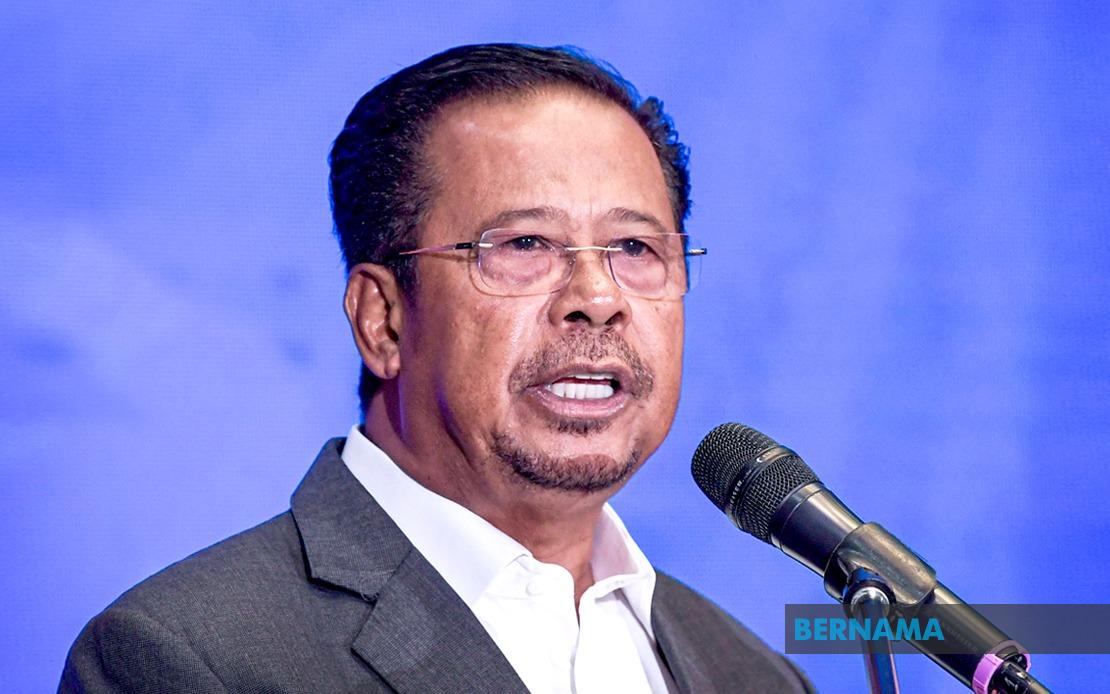
Deputy Minister of Energy Transition and Water Transformation Datuk Seri Abdul Rahman Mohamad presided over the awards ceremony, presenting the championship trophy to the Government team and recognising Muhammad Uwais Mohd Hazril Munir @ Umar, a 20-year-old Universiti Malaya law student, as Best Debater. The involvement of senior government officials underscored the administration's commitment to elevating energy literacy beyond technical and bureaucratic circles into mainstream public conversation. Tan Sri Dr Wan Ahmad Dahlan Abdul Aziz, who serves as Chief Secretary to the Government and chairs the Sustainable Energy Development Authority Malaysia (SEDA), also attended, signalling institutional backing for youth engagement in energy policy formation.
The Minister's Cup Debate functions as the centrepiece of MELP 2026, the Malaysia Energy Literacy Programme's flagship initiative designed to cultivate early understanding of energy systems among younger Malaysians. MELP itself represents a structured national effort to distribute reliable, peer-reviewed information about how energy is produced, distributed, and consumed—knowledge gaps that persist across Malaysia's population despite the country's status as a major energy producer. By situating debate within this broader literacy framework, organisers aim to move beyond simple awareness-raising toward developing critical thinking capacities around energy choices.
Izzad Zalman Abdul Kader, SEDA's Strategic Communications director, articulated the underlying rationale: debates serve as vehicles for deepening public comprehension of complex policy terrain while simultaneously empowering young people to interrogate government decisions rather than passively accept them. This pedagogical approach acknowledges that energy policy affects every household and business in Malaysia, yet remains poorly understood by most citizens. When young debaters can articulate substantive arguments about renewable exports versus domestic supply, they model the kind of informed citizenship that sustainable energy transitions ultimately require.
The choice of motion itself reflects contemporary energy geopolitics in Southeast Asia. Malaysia possesses significant renewable energy potential, particularly in solar and hydroelectric capacity, while neighbouring countries including Singapore, Thailand, and Indonesia face their own supply constraints and clean energy targets. Regional electricity trading arrangements remain underdeveloped compared to other parts of Asia, creating potential opportunities for countries willing to develop cross-border transmission infrastructure. However, Malaysia's own energy security concerns—particularly as it phases down coal and nuclear remains politically contentious—argue for domestic-first prioritisation. The debate captured this genuine policy tension authentically.
Muhammad Uwais Mohd Hazril Munir @ Umar's reflection on debate as a tool for accessibility proves instructive. Complex technical subjects like renewable energy generation, grid management, and export economics can mystify general audiences, yet they directly influence cost-of-living pressures, industrial competitiveness, and climate commitments. By presenting competing arguments in public formats, debate demystifies policy while modelling respectful disagreement over substantive matters. This contrasts sharply with public discourse that often reduces energy questions to simplistic slogans or abandons the topic to technical experts and government announcements.
Afiq Athmar Mohamed, a 21-year-old business and economics student from Universiti Malaya, emphasised how multi-institutional collaboration—involving ministries, government agencies, and media—has reinvigorated debate culture within Malaysia. This observation points to a broader institutional gap: Malaysia has strong debate traditions in schools and universities, yet structured policy debate rarely extends into public life or shapes how ordinary citizens engage with government decisions. By deliberately connecting student debaters to energy policy conversations, organisers create pathways for young voices to influence how their country approaches energy futures.
The programme's attention to generational awareness-raising extends beyond renewable energy philosophy toward practical recognition that energy supply crises manifest differently across age cohorts. Older generations may remember Malaysia's relative energy abundance and cheap electricity; younger Malaysians increasingly confront discussions of scarcity, rising costs, and climate imperatives. Building consensus around energy transitions requires acknowledging these generational perspectives. Debate competitions that include diverse age participation, as well as competitions targeting specifically younger demographics, serve this bridging function.
The transition from fossil fuels toward renewable energy represents Malaysia's most significant energy infrastructure undertaking since the rapid electrification of the 1970s and 1980s. Unlike that earlier transition, which proceeded largely through government investment and top-down implementation, the renewable transition requires sustained public understanding and acceptance. Citizens will vote on energy issues, work within industries affected by transition, and make household consumption decisions influenced by energy prices and availability. Competitions like the Minister's Cup debate acknowledge this democratic dimension implicitly by treating students not as passive recipients of energy policy but as future decision-makers capable of shaping that policy.
Looking forward, the success of this inaugural competition suggests scope for expanding debate to cover other energy dimensions: hydrogen development, energy storage technology, grid modernisation, or the social impacts of coal plant closures. Each topic involves genuine trade-offs between competing values—economic development, environmental protection, energy security, equity—that deserve public deliberation. By establishing debate as a legitimate platform for energy policy discussion, Malaysia creates institutional space for the kind of informed citizenship that sustainable transitions ultimately demand from democratic societies.

