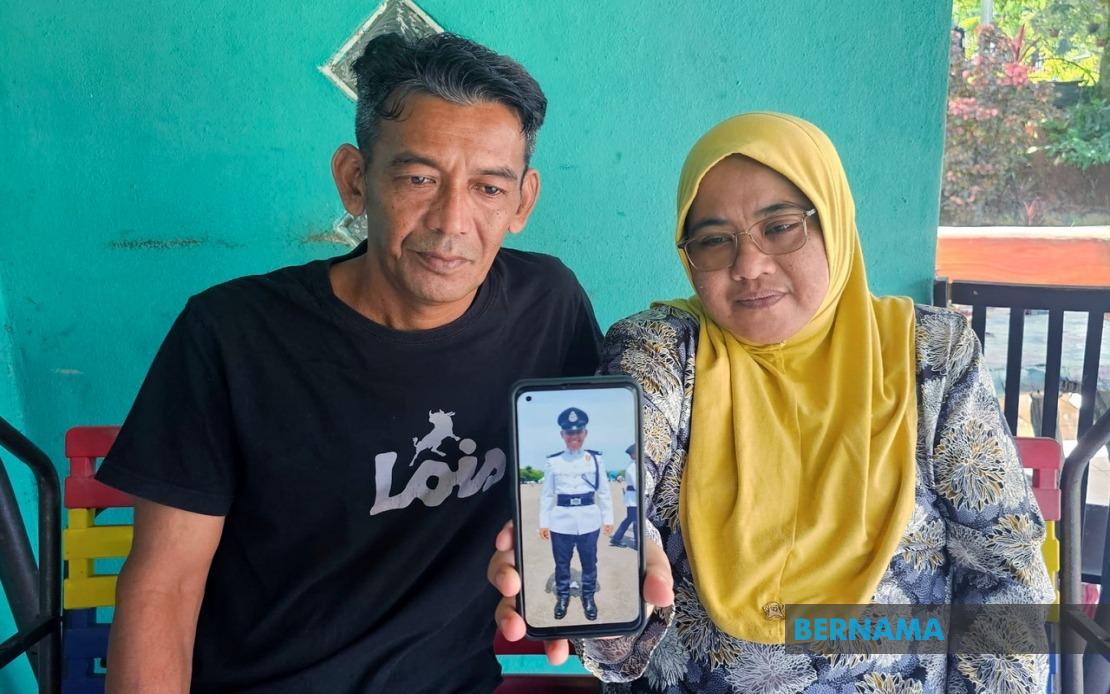
The joy of reunion turned to profound tragedy when the parents of Constable Muhammad Raimi Ismarubee learned that their son would not be coming home as planned. The 26-year-old officer, posted to the Weston Police Station in Beaufort, Sabah, had expressed his intention to take leave later in August, a return his family in Dungun, Terengganu eagerly awaited. Instead, his parents received the devastating news that he had died in a workplace electrocution incident, shattering months of anticipation built around a family gathering.
Ismarubee Ismail, 51, and his wife Nor Azila Zakaria, 46, recounted how their son had informed them in June of his desire to take leave pending affordable airfare. The timing seemed perfect—their youngest child was approaching examination season, and the family looked forward to having their second son home. The contrast between the mundane logistics of booking flights and the sudden loss underscores the unpredictability of workplace tragedy. Ismarubee described learning of his son's death through a phone call from a friend at 6 pm, a stark shift from the positive news Muhammad Raimi had shared via WhatsApp just four hours earlier regarding a successful drug operation.
Muhammad Raimi had begun his police career in September 2024, just months before his fatal accident. His most recent home leave was in January, making the anticipated August visit particularly meaningful for a family that saw their son infrequently due to the distance between Terengganu and Sabah. His father, who works as a labourer, emphasized the young constable's commitment to family despite his geographical separation. The officer had established himself as a financial pillar to his household, sending money home regularly and purchasing necessities for his siblings' education, including a laptop.
Nor Azila revealed that her son harbored plans extending beyond his immediate duties. He intended to become engaged to a woman from Sabah in the coming year, with marriage to follow after his youngest sibling completed the Sijil Pelajaran Malaysia examinations. His motivation for delaying these personal milestones reflected his values—he wanted to ensure his family's obligations were met before pursuing his own life changes. The mother described him as a dutiful son whose generosity toward his siblings demonstrated a maturity unusual in someone barely past his mid-twenties, suggesting he had internalized significant responsibility within the family structure.
The fatal incident occurred while Muhammad Raimi and two colleagues were engaged in a routine task outside the police station. They were handling a metal pole employed for harvesting coconuts when the electrocution occurred. Alongside Muhammad Raimi, Corporal Chiu Teck Siong, 40, and Lance Corporal Mohamad Nur Hafiz Ibrahim, 29, all perished in what authorities believe was an electrical contact mishap. The proximity of the Weston Police Station to Sekolah Kebangsaan Weston raises questions about workplace safety protocols in government facilities, particularly regarding the handling of equipment near electrical hazards.
The three fatalities represent a significant loss to the Weston Police Station's operations and to their respective families. The incident highlights the hidden occupational hazards facing law enforcement personnel, who are typically perceived as facing dangers associated with their public safety duties rather than routine maintenance tasks. The fact that three officers died simultaneously in a workplace accident suggests systemic safety concerns that may warrant broader review across police facilities in Sabah and the region.
For Muhammad Raimi's family in Felda Kerteh 2, the immediate priority became arranging his funeral and burial. His remains were transported home by the Royal Malaysian Police, with interment scheduled at the Felda Kerteh 2 Muslim Cemetery. The funeral arrangements provided some structure to the family's grief, allowing the community to gather and support them during the crisis. His passing represents not only the loss of a son but also the severance of financial support upon which his younger siblings had come to depend.
The timing of this tragedy carries additional poignancy given that it interrupted what should have been a period of professional development and personal growth. Muhammad Raimi had been building his career, establishing his identity as a police officer, and planning his future with a prospective partner. The sudden termination of these trajectories underscores the randomness of workplace accidents and the manner in which a single moment can erase years of anticipation and planning. His parents had envisioned welcoming him home, celebrating his professional achievements, and witnessing the next chapters of his life unfold.
This incident raises critical questions about occupational safety culture within the Royal Malaysian Police and government agencies more broadly. The electrocution of three officers during what appears to be a straightforward maintenance task suggests that either equipment was faulty, proper safety procedures were not followed, or adequate training in handling electrical hazards was absent. For Malaysian families with relatives in essential services, the case serves as a reminder that workplace safety protections extend beyond visible occupational hazards to encompass routine tasks that may involve unrecognized electrical risks.
The loss resonates across Terengganu's working-class communities, particularly in Felda settlements where families depend on members working across Malaysia. Muhammad Raimi's story—of a young man from humble beginnings serving his nation while supporting his family—represents countless others in similar circumstances. His death underscores the need for rigorous safety audits and training protocols in government facilities, ensuring that no family experiences the shock that befell the Ismarubee household when routine duty became tragedy.

