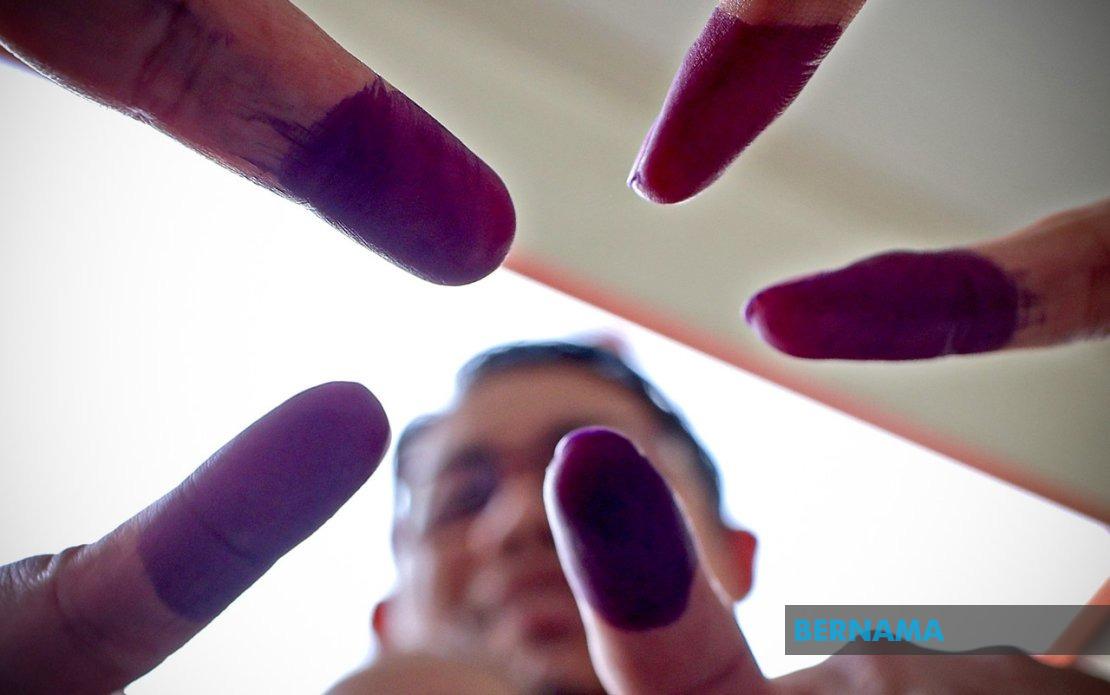
The 16th Johor state election on July 11 may ultimately be decided not by traditional party machinery but by voters who have yet to form strong political allegiances, according to political analysts tracking the implications of recent electoral reforms. The surge in young and first-time voters following the introduction of Undi18 and automatic voter registration has fundamentally altered the dynamics of competitive races across the state, potentially elevating fence-sitters into the role of kingmakers in constituencies where victory margins are expected to be narrow.
Statistics from the Election Commission reveal the magnitude of this demographic shift. More than 1.29 million registered voters in Johor are below age 40, comprising three distinct cohorts that collectively represent a formidable electoral force. The breakdown includes 587,888 voters aged 30 to 39, 544,657 aged 21 to 29, and 165,386 aged between 18 and 20. These figures underscore a generational inflection point in Malaysian electoral politics, where youth representation has grown sufficiently large to influence outcomes in tight contests where traditional vote banks no longer guarantee victory.
Associate Professor Dr Mohd Yusri Ibrahim, research chief at the Ilham Centre, highlights why this cohort presents such a pivotal challenge and opportunity for political parties. First-time voters have become numerically significant across virtually every constituency in Johor, yet they remain largely unaligned with established political ideologies or party structures. In marginal seats where contests are decided by hundreds or even tens of votes, the voting preferences of this unanchored group could prove decisive. Their independence from party loyalty means campaigns cannot rely on inherited family voting patterns or long-standing partisan identity to secure their support.
Dr Mohammad Tawfik Yaakub, a senior lecturer in political science at Universiti Malaya, characterises voters aged 18 to 39 as the election's most influential bloc. This group demonstrates fundamentally different criteria for candidate evaluation compared to older generations. Rather than assessing politicians primarily through party affiliation or communal identity, younger voters increasingly evaluate candidates based on demonstrated performance, personal credibility, and tangible problem-solving ability. This shift reflects a broader reorientation of electoral behaviour away from traditional identity politics towards pragmatic governance considerations.
The geographical divide between urban and rural constituencies adds another layer of complexity to campaign strategies. Urban voters, particularly younger ones, remain more exposed to national political narratives and social media discourse, making digital platforms essential for reaching them. Conversely, rural voters continue to be shaped substantially by grassroots networks and the personal relationships candidates cultivate within their communities. Parties must therefore develop bifurcated campaign approaches that do not rely exclusively on either digital or traditional mobilisation methods.
Dr Yusri emphasises that successful campaign strategies must now accommodate diverse voter demographics through tailored messaging. Social media serves as the primary vehicle for engaging urban youth, while face-to-face engagement and ground-level activism remain indispensable for persuading older rural voters. This dual-track approach represents a significant departure from campaigns that historically prioritised mass rallies and neighbourhood canvassing as their primary tools. The ability to integrate effective digital messaging with robust grassroots mobilisation will likely distinguish winners from losers in closely contested seats.
Young fence-sitters, according to analysts, increasingly look beyond ideological positioning and party labels when making voting decisions. Instead, they respond more readily to realistic policy proposals, candidates they perceive as credible, and practical solutions addressing their immediate concerns. Economic anxieties loom particularly large in this calculation. Rising living costs, housing affordability, employment prospects, and wage stagnation resonate more powerfully with younger voters than abstract political slogans or historical party narratives.
Dr Tawfik cautions against overestimating the power of social media in converting online sentiment into electoral victory. Digital platforms can generate political momentum and raise candidate visibility, but grassroots machinery ultimately converts that online engagement into actual votes cast. Parties that cultivate strong social media presence while neglecting ground-level organisation frequently underperform relative to their online visibility. Conversely, those that combine digital sophistication with traditional community networks maximise their electoral reach and effectiveness.
The receptiveness of Johor voters to new political faces represents another emerging trend that younger voters have amplified. Age alone, however, remains insufficient to overcome voter scepticism. Candidates must demonstrate credibility and capability alongside their youth appeal. Voters across all age groups increasingly scrutinise track records, competence, and ability to deliver on promises. A candidate's biography matters less than their demonstrated capacity to understand and solve problems affecting their constituency.
Three factors will ultimately shape the election outcome, according to Dr Tawfik's analysis. First, voter turnout rates across different demographic groups will establish the baseline turnout against which results are measured. Second, the actual voting behaviour of fence-sitters—whether they lean towards incumbents or challengers—will determine competition in marginal seats. Third, political parties' capacity to convince voters they possess credible solutions to bread-and-butter concerns such as wages, prices, housing and employment will prove decisive. Economic messaging may ultimately supersede traditional political appeals in determining which parties gain voter support.
This electoral dynamic mirrors broader patterns emerging across Southeast Asia, where younger voters increasingly detach from inherited partisan identities and demand performance-based governance. Malaysia's experience with Undi18 and automatic voter registration thus carries implications extending beyond Johor. Other states conducting elections in coming years will encounter similarly large cohorts of young, ideologically unaligned voters. The Johor election effectively functions as a testing ground for understanding how established political parties can adapt their strategies to engage voters prioritising pragmatism over party loyalty, and how new political entrants might exploit the traditional machinery's weakness in reaching younger demographics.
Early voting is scheduled for July 7, with the main polling day on July 11. The electoral mathematics suggest that in constituencies with narrow margins, the composition and voting behaviour of young and first-time voters may ultimately prove more consequential than the size of any party's traditional support base. This generational rebalancing of electoral influence represents a significant shift in how Malaysian politics will be contested and contested in elections to come.

