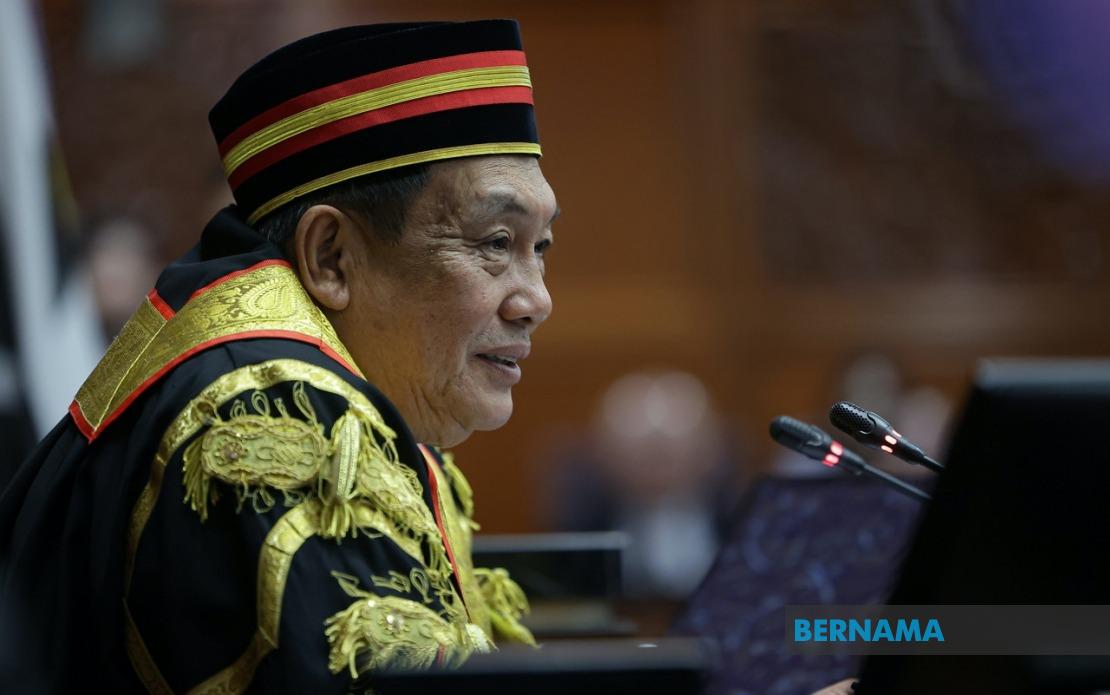
Dewan Negara President Datuk Awang Bemee Awang Ali Basah has positioned Malaysia's Youth Parliament as far more than a ceremonial institution, describing it instead as an essential training ground where the nation's emerging generation learns the practical and philosophical underpinnings of democratic governance. Speaking at Universiti Malaysia Terengganu during the "Tranung Mari! From Campus to Parliament: Youth Voices Shaping Malaysia's Future" programme, Awang Bemee articulated a vision of youth participation that extends beyond token representation to substantive engagement with the democratic process itself.
The Senate president characterised the Youth Parliament as a transformative space where young Malaysians encounter the full spectrum of democratic experience. Rather than merely observing how Parliament functions, participants engage directly with debate, articulate positions, absorb criticism, and confront the reality that collective decisions sometimes contradict individual preferences. This immersion in democratic practice, Awang Bemee suggested, fundamentally shapes character development and prepares youth for leadership responsibilities that demand both conviction and humility. He stressed that effective leadership transcends oratorical ability to encompass listening skills, problem-solving capacity, and an understanding that positions of influence carry corresponding obligations to those affected by decisions made in their name.
The Parliament Malaysia roadshow programme, of which the UMT event formed a part, represents a deliberate institutional effort to narrow the distance between Malaysia's legislative apparatus and the university environment where critical thinking and political engagement naturally flourish. By bringing parliamentary engagement to campuses rather than expecting students to navigate Parliament House, organisers acknowledge that access and familiarity function as essential preconditions for meaningful youth participation. The initiative recognises that disengagement often stems not from apathy but from practical barriers and perceived irrelevance to student life.
Awang Bemee articulated three foundational pillars for youth empowerment that collectively sketch a comprehensive democratic vision. The first pillar emphasises openness and inclusive democracy, positioning diverse voices as strengthening rather than fragmenting national cohesion. Malaysia's religious, racial and cultural plurality, he argued, constitutes an asset when accompanied by genuine respect for differing perspectives rather than mere tolerance. This framing carries particular resonance in a Southeast Asian context where identity-based tensions periodically surface, suggesting that youth can serve as bridge-builders across communal lines through grounded democratic practice.
The second pillar extends beyond conventional educational metrics to encompass competencies increasingly vital for navigating twenty-first century challenges. Awang Bemee identified critical thinking, digital literacy, artificial intelligence comprehension, creative problem-solving, entrepreneurial capacity and civic consciousness as essential components of meaningful education. Notably, he argued that technological advancement requires accompaniment by robust values frameworks ensuring young people deploy emerging tools responsibly. This integration of skills development with values formation reflects growing recognition that technical capability divorced from ethical moorings creates more problems than it solves.
The Senate president specifically highlighted the Blue Economy as an emerging opportunity field for youth engagement and innovation, encompassing aquaculture, marine fisheries, coastal tourism, renewable ocean energy and maritime infrastructure. This reference to sectoral opportunity demonstrates how youth participation platforms can simultaneously address governance principles and concrete economic futures, making democratic engagement tangible rather than abstract. For Malaysian youth particularly, Blue Economy development offers pathways combining environmental stewardship with economic advancement in a region where marine resources remain critical to prosperity.
The third pillar addresses perhaps the most immediate challenge confronting young people immersed in digital environments: reconciling freedom of expression with responsible communication. Awang Bemee acknowledged that democratic societies necessarily protect speech rights while asserting that such protection does not extend to deliberately false, defamatory or inciteful content. His formulation—verify before sharing, scrutinise before believing, understand before judging, consider consequences before acting—attempts to translate abstract principles into practical digital citizenship guidance applicable to social media environments where youth congregate.
The forum component featured Parliament Malaysia's chief administrator Datuk Dr Ahmad Husaini Abdul Rahman engaging directly with student questions and perspectives. This direct access to senior legislative management distinguishes the roadshow from conventional educational programming, signalling that Parliament regards youth input sufficiently seriously to warrant engagement from its administrative leadership. Student participation in such forums creates accountability pressures on institutional leadership while simultaneously building student confidence that their perspectives receive genuine consideration rather than performative acknowledgment.
Awang Bemee's intervention reflects broader Commonwealth parliamentary tradition emphasising legislative education and democratic participation as ongoing rather than episodic activities. His framing of Youth Parliament as distinctly preparatory—a school rather than merely a venue—establishes learning outcomes and developmental trajectories rather than treating youth engagement as an end in itself. This distinction matters substantially because it positions young people as developing agents rather than demographic categories requiring management.
The Senate president expressed confidence that Malaysian youth could emerge as nation-builders capable of uniting divided communities, identifying solutions to shared problems and advancing collective welfare. This optimism, grounded in institutional engagement rather than abstract generational rhetoric, suggests that creating spaces for genuine youth participation might address contemporary democratic deficits. For a Southeast Asian region frequently concerned about youth disconnection from institutions and democratic processes, Malaysia's Youth Parliament roadshow demonstrates one approach to rebuilding institutional legitimacy through accessibility and substantive engagement.
The initiative ultimately reflects an institutional understanding that democracy requires active maintenance and conscious cultivation among emerging generations. Without deliberate efforts to introduce young people to democratic practice, expose them to parliamentary procedures, and create forums for their participation, democratic systems gradually lose the engaged citizenry essential to their functioning. Malaysia's Senate president has articulated this challenge directly, positioning youth parliamentary engagement not as peripheral institutional activity but as central to democratic sustainability and national development.

