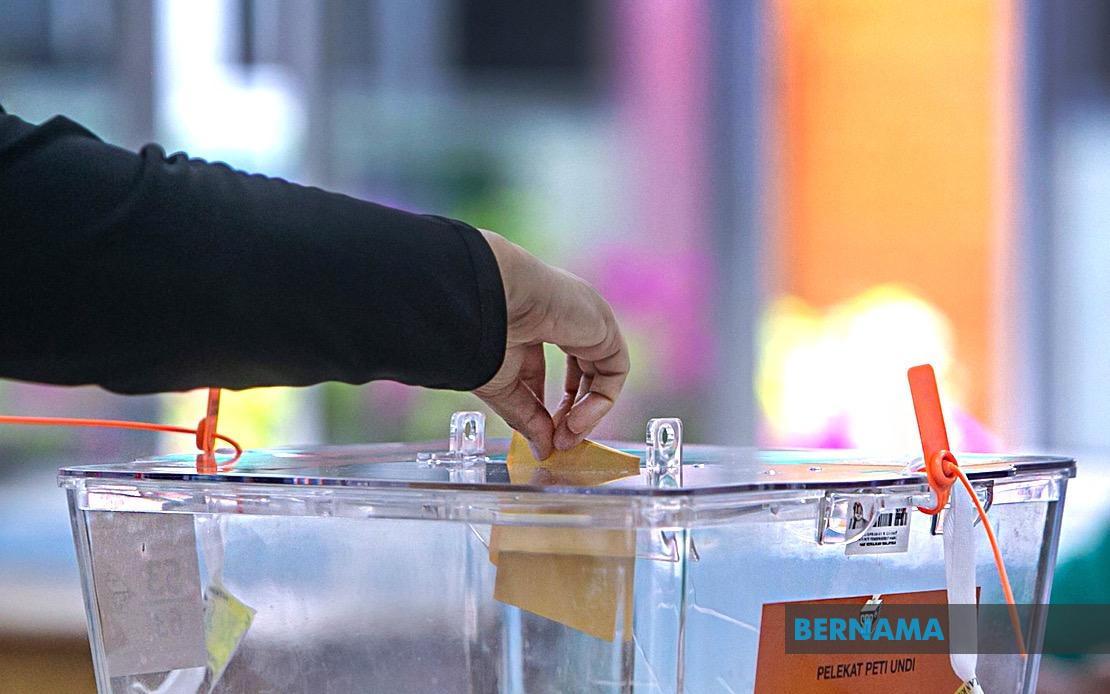
The Ministry of Youth and Sports has issued a directive requiring all Youth and Sports Skills Training Institutions across Malaysia to consider granting special leave to students eligible to vote in upcoming general elections, state elections, or by-elections. The policy acknowledges the tension between institutional training schedules and citizens' electoral responsibilities, seeking to eliminate the burden on young voters to choose between their educational commitments and democratic participation.
The Youth Skills Development Division has circulated formal notification letters to all institution directors outlining the framework for implementing this special leave arrangement. The measure recognises that voting is a fundamental civic duty and that ILKBS students should not face practical obstacles when exercising their constitutional right to participate in elections at any level of government.
Official statements from the ministry emphasise that electoral participation represents more than a mere procedural step—each vote constitutes a voice shaping the nation's trajectory. By removing barriers that might discourage youth engagement, the ministry aims to foster a generation actively invested in democratic processes and national development. This approach aligns with broader efforts to increase voter turnout among younger demographics, a segment that historically demonstrates lower participation rates in Malaysian elections.
The application process for special leave requires students to submit requests to their respective institution management, with approval resting with individual ILKBS directors. Decisions will account for several practical factors, including the distance between the training facility and the student's designated polling centre, reasonable travel time required to reach the voting location, and the capacity to reschedule or coordinate training activities without significant disruption to learning objectives.
Management of attendance and institutional scheduling remains a priority concern. By requiring advance applications and coordinated planning, institutions can better maintain systematic records while ensuring minimal operational disruption. The framework balances student welfare and safety with institutional needs, preventing ad-hoc absences while permitting legitimate electoral participation.
The ministry has also mandated that all ILKBS facilities proactively inform eligible student voters about this opportunity well in advance of any scheduled elections. Early notification enables students to plan applications systematically and arrange transportation to their polling areas without last-minute complications. This forward-planning approach reduces logistical challenges and demonstrates institutional commitment to facilitating civic engagement.
For Malaysian readers, this policy reflects broader questions about youth participation in democracy. Skills training institutions serve students from diverse socioeconomic backgrounds, many of whom may face genuine obstacles to voting if training schedules clash with election days. By removing institutional barriers, the government acknowledges that real-world constraints—not apathy—often prevent younger voters from participating. The directive effectively recognises that democratic legitimacy depends on broad-based participation across age groups.
The timing and scope of this initiative carry particular significance in Malaysia's electoral landscape. With state elections possible at various times throughout the year and the national general election cycle extending beyond the standard five-year boundary, ILKBS students may encounter multiple opportunities to vote while enrolled. Institutionalising the special leave framework ensures consistency across facilities rather than leaving decisions to individual director discretion, which could create inequities.
From a Southeast Asian perspective, Malaysia's approach distinguishes itself by explicitly valuing youth electoral engagement through institutional policy. Neighbouring nations employ varying strategies to encourage young voter participation, from lowering voting age thresholds to enhancing voter education campaigns. This Malaysian initiative operates at the intersection of institutional policy and civic responsibility, suggesting that removing practical barriers may yield measurable increases in youth turnout.
The policy also reflects recognition that skills training participants represent a specific demographic—young people pursuing vocational advancement rather than traditional academic pathways. Ensuring their electoral inclusion strengthens the representativeness of democratic outcomes and prevents the systematic undercount of voices from this segment of society. Government investment in skills development carries implicit obligations to support these students' development as engaged citizens.
Institutionally, ILKBS directors now possess clear guidance while retaining necessary flexibility to assess individual applications based on local circumstances. This balances central policy direction with operational realities across geographically dispersed facilities serving different student populations. The approval mechanism prevents potential abuse while respecting institutional autonomy.
Looking forward, the policy's effectiveness will depend on how thoroughly institutions implement the framework and how readily students access information about their eligibility. Complementary efforts—such as targeted voter education or coordination with election commissions to facilitate polling station locations accessible to training facilities—could amplify impact. The directive signals government intent to dismantle electoral participation obstacles for young people, an important symbolic gesture regardless of measurable turnout changes.
Ultimately, this initiative demonstrates that supporting democratic participation need not conflict with institutional functions. By designing systems that accommodate electoral responsibilities, Malaysia's Youth and Sports Ministry acknowledges that citizenship development forms part of its mandate beyond skills training alone.

