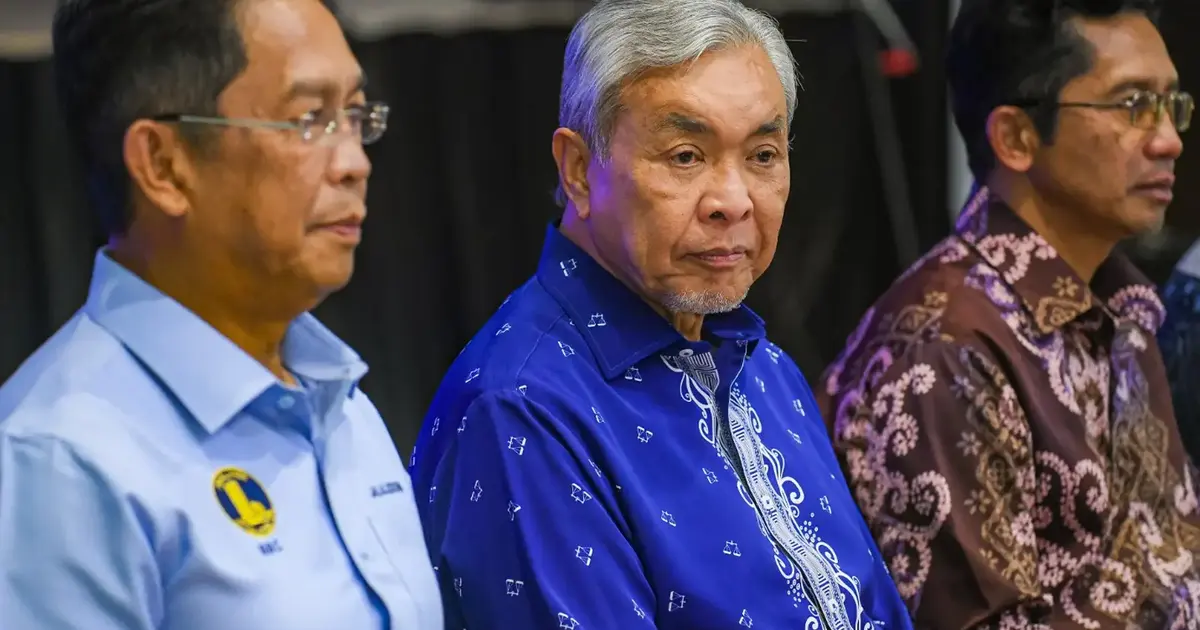
Barisan Nasional chairman Zahid Hamidi has pressed for an immediate investigation into claims that voters in Negeri Sembilan were offered money in exchange for their electoral support, marking a significant escalation in accusations that have long plagued Malaysian politics. The senior BN figure emphasised that the coalition has already taken formal action by submitting police reports complete with witness accounts and corroborating evidence, signalling the seriousness with which the party views the allegations.
Vote-buying remains one of the most persistent challenges to the integrity of Malaysia's electoral system, despite repeated pledges by successive governments to strengthen enforcement mechanisms. The practice, whereby voters receive monetary incentives or material benefits in return for supporting specific candidates or parties, undermines the fundamental principle that elections should reflect the genuine preferences of the electorate. Negeri Sembilan, a state with significant political competition and historically tight contests, has frequently been mentioned in discussions about electoral malpractices, making it a focal point for scrutiny from both BN and opposition observers.
Zahid's public call for authorities to act represents a strategic move by BN to demonstrate its commitment to electoral cleanliness and to preempt criticism that the coalition itself might be implicated in such activities. By framing the issue as one requiring external investigation through police channels, BN positions itself as supporting accountability and transparency in the electoral process. The submission of witness statements alongside the police reports suggests that the coalition has compiled what it believes to be credible testimony from individuals with direct knowledge of vote-buying transactions.
The enforcement of anti-electoral-fraud provisions in Malaysia falls primarily under the purview of the Election Commission and the police, though prosecutions are rare relative to the scale of allegations that emerge periodically. Political analysts note that vote-buying is notoriously difficult to prove in court, as it typically occurs in informal settings and often involves individuals reluctant to testify openly due to fear of reprisal or social stigma. Nevertheless, high-profile investigations can serve as deterrents and demonstrate official commitment to maintaining electoral standards.
Negeri Sembilan has experienced significant political flux in recent years, with shifts in state government control and evolving support bases among voters. The state's diverse demographic composition and varied economic interests create conditions where targeted vote-buying campaigns might be considered strategically worthwhile by unscrupulous operatives from any political party or faction. The state's proximity to the federal capital and its role as a swing state in national political calculations have periodically drawn increased attention from political operatives and observers alike.
The involvement of witness statements in Zahid's complaint suggests that evidence gathering has moved beyond mere allegation into the realm of documented testimony that authorities can potentially follow up through investigation. Effective prosecution of vote-buying cases typically requires tracing financial transactions, identifying individuals who distributed money or benefits, and securing cooperation from witnesses willing to provide testimony that can withstand cross-examination. The quality and specificity of witness accounts submitted alongside police reports will likely determine whether authorities can advance beyond the initial complaint stage.
For Malaysian voters and civil society organisations focused on electoral integrity, such allegations and the response to them carry broader implications for confidence in the democratic process. When vote-buying accusations emerge regularly and enforcement appears inconsistent, public faith in the fairness and legitimacy of electoral outcomes may erode. This concern affects both government legitimacy and the electorate's willingness to participate actively in future elections, potentially creating incentives for parties to resort to even more aggressive electoral tactics to compensate for declining voter engagement.
The timing of Zahid's public statement about the police reports and witness evidence reflects ongoing tensions within Malaysian politics over electoral practices. Opposition parties have periodically accused BN components of vote-buying, whilst BN has likewise pointed fingers at opposition-held states and territories. These mutual accusations, whether substantiated or not, perpetuate a climate of suspicion that benefits no one and undermines collective efforts to elevate electoral standards across the political spectrum.
Moving forward, the response by authorities to this particular complaint will signal whether enforcement mechanisms can deliver results that satisfy public expectations for accountability. If investigations proceed swiftly and transparently, with charges filed and convictions obtained where evidence supports such action, it could serve as a catalyst for broader improvements in electoral discipline. Conversely, if complaints languish without visible progress, it may reinforce perceptions that vote-buying remains an acceptable cost of doing political business in Malaysia, regardless of which party benefits from such practices.

