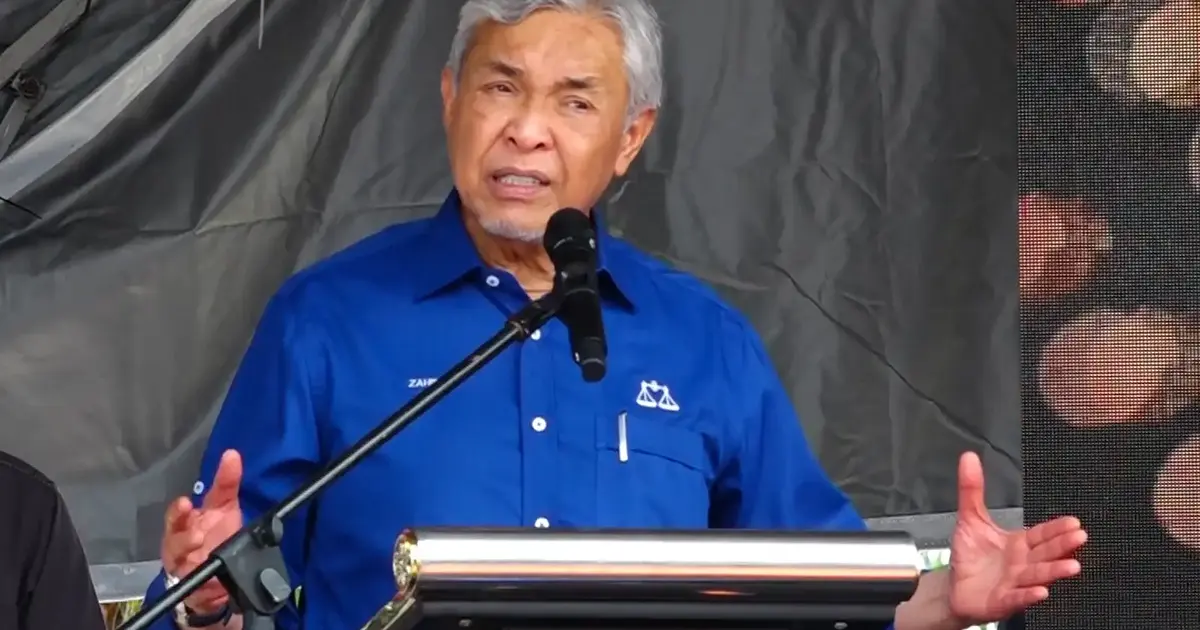
Umno President Zahid Hamidi has signalled that the party's organisational apparatus should disregard any future observations from former party leader Puad Zarkashi concerning Barisan Nasional candidates contesting in Johor's electoral campaign. The directive underscores mounting tensions within Umno's upper echelons as the coalition prepares for state-level polling in Malaysia's southern stronghold.
Puad Zarkashi, who previously held significant influence within Umno's hierarchy, has emerged as a critical voice during the election period. His public commentary on the party's selection of candidates and electoral strategy has drawn the displeasure of current party leadership. Rather than engage directly with these criticisms, Zahid appears intent on marginalising Puad's influence by instructing the machinery to treat his remarks as immaterial to party operations.
The tension between Zahid and Puad reflects broader factional dynamics within Umno, Malaysia's largest Malay-majority political organisation. Such internal disagreements, particularly when they become public, can create complications for campaign coherence and voter messaging. By essentially dismissing Puad's voice, Zahid is attempting to present a unified front while simultaneously diminishing a rival's credibility within party circles.
For Malaysian observers, this episode illustrates the complex interplay between party discipline and individual expression that characterises Umno's internal culture. Senior figures maintain considerable status within the organisation even after stepping down from formal leadership positions, yet current office-holders jealously guard their prerogatives. Zahid's approach represents a calculated effort to maintain his authority whilst avoiding the appearance of heavy-handedness that direct censure might entail.
The Johor state election carries significant weight for Barisan Nasional's broader political fortunes. As a traditional BN stronghold, poor performance in Johor would signal deeper electoral vulnerabilities ahead of any future general election. Accordingly, party leadership views coherence and message discipline as critical during this campaign cycle. Any narrative of internal division risks providing ammunition to opposition parties seeking to exploit dissatisfaction within the coalition.
Puad's decision to commentate publicly on candidate selection and strategy choices suggests he either retains sufficient standing to demand a hearing or deliberately seeks to demonstrate that independence. His criticisms, whatever their specific content, implicitly challenge Zahid's decisions regarding campaign direction and personnel. By instructing the party machinery to disregard these observations, Zahid essentially declares that Puad lacks the authority to influence current decision-making processes.
This episode also illuminates generational and factional fault lines within Umno. Puad represents an earlier era of party leadership, whilst Zahid embodies the current generation holding organisational control. Such successions rarely occur smoothly, and former leaders frequently harbour views about party direction that diverge from their successors' approaches. The clash between continuity and change remains a persistent challenge for long-established political parties navigating electoral competition and internal succession dynamics.
From a Southeast Asian perspective, Umno's internal management of dissent reflects patterns common across region's dominant political parties. Malaysia's political establishment has historically absorbed factional tensions within parties rather than allowing them to fragment into open schism. Zahid's strategy of marginalisation rather than confrontation follows this established playbook of managing disagreement whilst preserving overall institutional coherence.
The practical implication for Umno's campaign operations is that party officials are now explicitly discouraged from responding to or amplifying Puad's remarks. This creates a communication challenge for mid-tier party functionaries who must maintain message discipline whilst ignoring commentary from someone still widely recognised as a significant Umno figure. Such directives can paradoxically draw attention to the very criticisms they seek to suppress if not carefully managed.
Looking ahead, this intervention may prove merely a temporary pause rather than a genuine resolution of underlying factional tensions. Puad's willingness to speak publicly despite Zahid's admonition suggests he views the issue as sufficiently important to warrant continued engagement regardless of the party leadership's preferences. Whether he continues vocalising criticism will indicate whether Zahid's authority remains unchallenged or whether Umno faces an extended period of managed internal discord alongside its electoral campaign.
For Malaysian voters evaluating Barisan Nasional's fitness for office, such internal divisions warrant scrutiny. They raise questions about whether coalition parties can effectively govern when leadership teams harbour significant disagreements about strategy and direction. Whilst internal debate reflects democratic engagement, public manifestation of these disputes during election campaigns may undermine voter confidence in the coalition's readiness to address state governance challenges.

