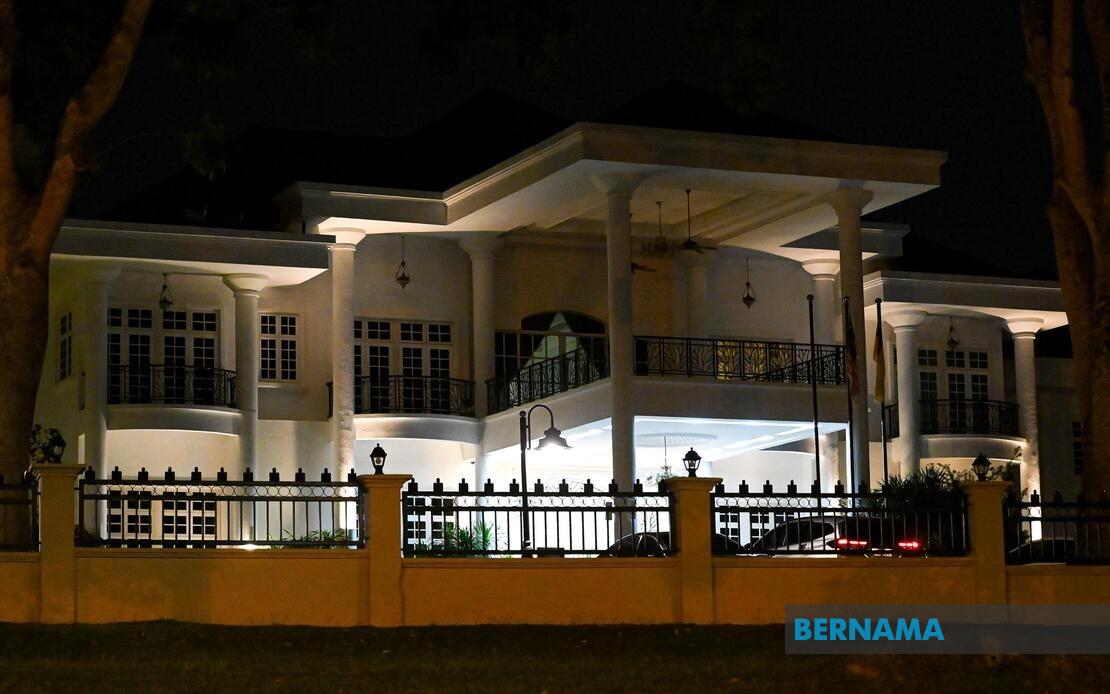
Barisan Nasional chairman Datuk Seri Dr Ahmad Zahid Hamidi arrived at Istana Hinggap in Seremban on Thursday evening, leading what appears to be a significant political engagement with Negeri Sembilan's palace hierarchy. The visit, which took place around 10 pm, is widely understood to involve an audience with Negeri Sembilan Yang Dipertuan Besar Tuanku Muhriz Tuanku Munawir, signalling a formal political transition following the state's recent electoral contest.
The delegation's composition underscored the cross-coalition nature of the political arrangement emerging from the 16th Negeri Sembilan state election. More than ten vehicles conveyed BN and Perikatan Nasional leaders to the palace grounds, with Negeri Sembilan BN chairman Datuk Seri Mohamad Hasan prominently included in the contingent. This coordinated arrival of multiple parties to meet the ruler represents a critical juncture in translating electoral outcomes into formal governmental authority and ministerial appointments.
The election results delivered an emphatic mandate to the coalition. According to Ahmad Zahid's assessment of the unofficial tallies, Barisan Nasional secured 18 of the 36 State Legislative Assembly seats, while Perikatan Nasional claimed seven seats, combining for a commanding 25-seat supermajority. This two-thirds threshold holds particular significance in Malaysian state politics, granting the ruling coalition substantially amplified legislative powers including enhanced capacity to amend state constitutional provisions and pass legislation without negotiation with opposition members.
The pathway to this delegation's palace visit reflects constitutional conventions governing Malaysian federalism. Upon conclusion of state elections, the incoming coalition typically seeks formal audience with the respective ruler to seek consent for government formation and confirmation of ministerial selections. In Negeri Sembilan's context, this represents an essential procedural step establishing the legitimacy of the new administration before public announcements of the state cabinet composition.
For Malaysian and Southeast Asian observers, the BN-PN collaboration in Negeri Sembilan carries broader implications for federal politics. The partnership demonstrates continued viability of inter-coalition arrangements at state level, even amid ongoing negotiations and shifts in national political dynamics. Negeri Sembilan's electoral outcome provides a template for how multiple centre-right political organisations can consolidate against opposition forces through formal electoral pacts and post-election government formation structures.
The timing of this palace visit also merits examination within the context of Zahid's leadership of BN. As chairman navigating a coalition encompassing Umno, MCA, MIC, and PBB, his presence leading the Negeri Sembilan delegation underscores his positioning as the principal federal liaison between BN and state-level implementation. This visible engagement in immediate post-election processes signals to both party machinery and public observers that Zahid remains actively invested in consolidating coalitional gains across Malaysia's state governments.
From a governance perspective, the swift movement toward formal audience with the ruler reflects Malaysia's constitutional requirements for expedited government formation. Unlike Westminster systems where caretaker administrations may continue for extended periods, Malaysian practice typically necessitates fairly prompt transition to substantive governance structures. This delegation's composition and timing suggest administrative machinery is positioned to announce the new state executive within days rather than weeks of the election result.
The two-thirds majority achieved through BN-PN cooperation carries implications for Negeri Sembilan's policy trajectory over the ensuing term. Such a parliamentary supermajority historically enables state governments to pursue substantive legislative agendas around budgetary appropriations, land law modifications, and local development projects with minimal obstruction. For residents and investors examining Negeri Sembilan's governance environment, this strong mandate potentially facilitates more predictable long-term planning and implementation of infrastructure initiatives.
The specific involvement of Mohamad Hasan within the delegation warrants consideration regarding state-level leadership structures. As Negeri Sembilan BN chairman, his presence alongside Zahid suggests coordinated federal-state level decision-making regarding ministerial appointments and policy prioritisation. This hierarchical engagement pattern reflects established BN operational procedures whereby state leadership operates within parameters established by federal party leadership structures.
Looking toward subsequent political developments, this palace delegation represents a gateway to broader administrative and legislative operations. The formal acknowledgement and acceptance by Tuanku Muhriz Tuanku Munawir of the incoming administration provides constitutional foundation for the coalition's governing authority. Subsequent announcements regarding state cabinet compositions, portfolio allocations between BN and PN partners, and priority legislative items will flow from this foundational palace audience and blessing.
For Malaysian political economy observers, the election result and ensuing palace protocols also signal continuity in governance orientations. The BN-PN coalition configuration in Negeri Sembilan aligns with federal-level political alignments, potentially facilitating smoother coordination on issues spanning federal and state jurisdictions including taxation, infrastructure development, and economic planning initiatives affecting the state's manufacturing and services sectors.
The palace visit ultimately represents more than ceremonial theatre. It constitutes a pivotal constitutional moment through which electoral mandates are formally translated into legitimate governmental authority. As Ahmad Zahid's delegation met with Negeri Sembilan's ruler, the practical structures through which the state will be administered over the coming years were being formally established and sanctioned through protocols dating back generations within Malaysia's constitutional monarchy framework.

