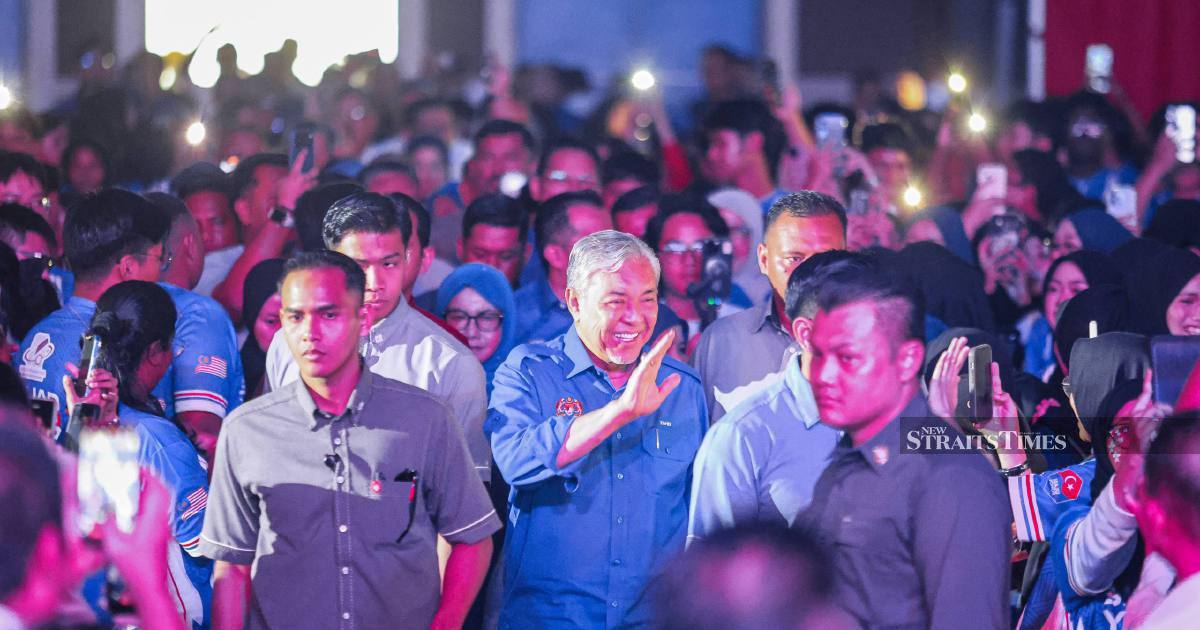
Barisan Nasional's campaign for the Johor state election on July 11 is placing significant emphasis on retaining youth backing for caretaker menteri besar Datuk Onn Hafiz Ghazi, signalling that the ruling coalition views younger voters as crucial to its prospects in the crucial southern state. The coalition's strategy reflects broader recognition that generational support—particularly from first-time and younger voters—will determine the outcome of what is shaping up to be a highly competitive electoral contest in Malaysia's second-largest economy by gross domestic product.
Onn Hafiz, who has led Johor since 2022 following the collapse of the previous administration, has become the focal point of BN's electoral messaging. His appointment as caretaker menteri besar places him in a commanding position to influence state institutions and public perception during the critical pre-election period. BN's decision to centre its campaign narrative around his tenure and vision underscores confidence in his personal popularity and administrative record, though it also represents a calculated bet that continuity in leadership will resonate more strongly than calls for change.
The appeal to young voters carries particular significance in Johor, where demographic patterns mirror national trends showing youth comprising an expanding share of the electorate. Younger voters typically exhibit different priorities from older generations—including concerns about employment prospects, housing affordability, digital infrastructure, and environmental sustainability. BN's targeting of this demographic suggests the party machinery believes Onn Hafiz's governance approach addresses these concerns better than opposition alternatives, or at minimum, that the coalition can persuade youths that development momentum under current leadership should not be disrupted.
Onn Hafiz's ascent within Johor politics has been meteoric. His earlier career trajectory and consolidation of support within UMNO and BN more broadly positioned him favourably when the previous menteri besar's administration unravelled. Over the past two years, he has had opportunity to implement policies and deliver visible projects that can be presented to voters as evidence of effective stewardship. The state's economic significance—encompassing major manufacturing hubs, port operations, and agricultural regions—means that governance performance carries tangible consequences for livelihoods across multiple sectors.
The July 11 election itself represents a pivotal moment for BN at the state level. Johor's electoral outcome will reverberate beyond the state's boundaries, influencing perceptions of the coalition's strength nationally and affecting internal party dynamics. A convincing victory would strengthen Onn Hafiz's position within UMNO hierarchy and validate BN's broader governance model, while a disappointing result could trigger leadership questions and embolden opposition forces ahead of the next general election, which must occur by 2025.
Opposition parties will undoubtedly present contrasting visions for Johor's future, likely emphasising themes of reform, anti-corruption measures, and alternative economic models. The competition for youth support will not be one-sided; younger voters in urban areas may be responsive to opposition messaging around transparency and institutional accountability, while those in rural constituencies might value different considerations around agricultural support or infrastructure investment. BN's outreach thus requires sophisticated segmentation and messaging tailored to diverse youth interests across Johor's varied constituencies.
The caretaker administration status introduces nuances into the campaign dynamic. Onn Hafiz retains substantial executive authority during the caretaker period, which can be leveraged to demonstrate competence through timely announcements or project completions, though electoral codes governing caretaker conduct impose certain constraints on political activities. Balancing these requirements while maintaining campaign momentum presents both opportunity and risk for BN's messaging.
Johor's political culture has historically been influenced by strong, personality-driven leadership and networks of patronage and support rooted in community relationships. Onn Hafiz's appeal within this framework depends partly on his ability to mobilise traditional BN machinery while projecting a modern, forward-looking image that appeals to younger, more urban constituencies. This balancing act—honouring party traditions while appearing contemporary and responsive—defines much of contemporary Malaysian electoral competition.
The emphasis on continuity and development under BN's banner reflects calculations about what messaging will prove most persuasive to Johor voters. The state has experienced significant infrastructure projects and economic initiatives under recent administrations, and BN's campaign will likely highlight these achievements while promising acceleration of pending developments. Younger voters who have benefited from improved services or job creation linked to state-level policies may find this continuity argument compelling, provided they perceive clear pathways to personal advancement within the trajectory being offered.
As Johor heads toward its electoral contest, the youth engagement strategy represents a microcosm of broader patterns shaping Malaysian politics. Generational cohort replacement in the electorate, evolving policy expectations, and competition between established and emerging political forces all intersect in state elections like this one. BN's explicit appeal to youths to maintain support for Onn Hafiz and his development agenda signals that the coalition recognises these dynamics and believes its stewardship model remains competitive despite headwinds from opposition campaigns and broader calls for political change across the region.

