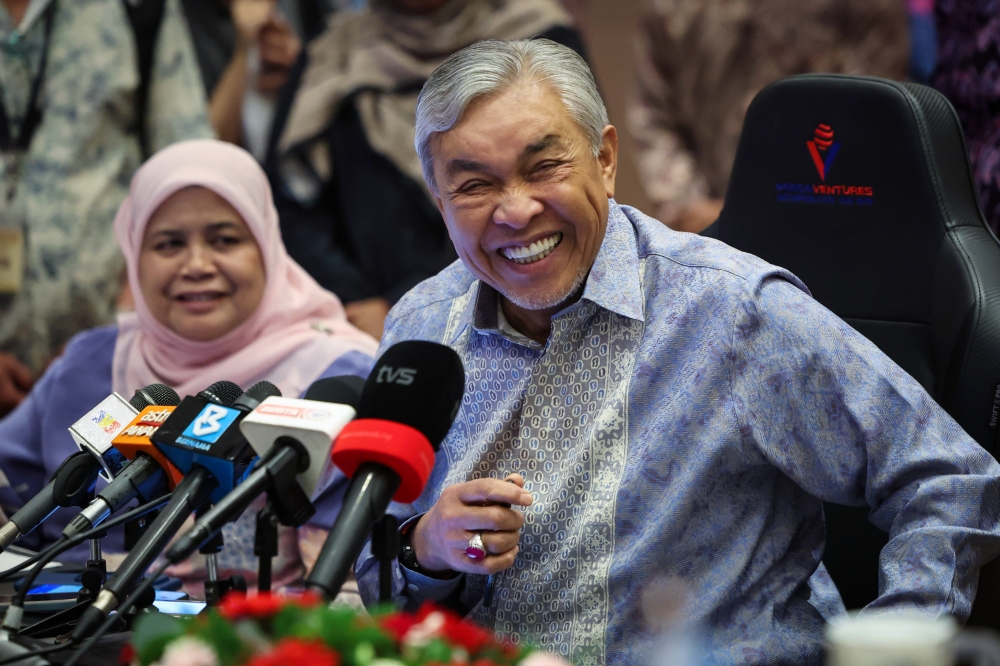
Deputy Prime Minister Datuk Seri Zahid Hamidi has moved to quash persistent rumours about Barisan Nasional's intentions within Malaysia's governing coalition, reiterating in George Town that the bloc maintains unwavering commitment to the Unity Government through the entire tenure of the 15th Parliament. His emphatic statement—ruling out any sudden political realignment whether orchestrated from Bangkok or Dubai—serves as a direct response to mounting speculation about potential shifts in the country's delicate political landscape.
The escalating chatter about backroom negotiations and clandestine political manoeuvring has become a fixture in Malaysian political discourse, raising investor anxiety and creating uncertainty about governance continuity. Zahid's categorical denial of any such machinations aims to provide reassurance not just to coalition partners but to the broader Malaysian public and international observers who monitor the region's political stability. The specific references to Bangkok and Dubai appear designed to address particular theories circulating in political circles about where any alleged realignment discussions might occur.
Barisan Nasional's role within the Unity Government represents a pragmatic compromise among Malaysia's major political forces following the 2022 elections, when no single bloc secured unambiguous parliamentary dominance. The coalition has maintained this arrangement across multiple political transitions and crises, demonstrating adaptability even when significant tensions surfaced between coalition members. Zahid's reaffirmation suggests leadership awareness that premature dissolution or restructuring could destabilize the government and trigger fresh electoral contests that might produce unpredictable outcomes.
The timing of Zahid's statement carries particular significance given the persistent drumbeat of speculation that has become increasingly difficult to ignore. Political analysts across Malaysia have noted periodic surges in such rumours, typically coinciding with moments when coalition tensions become visible or when particular events trigger recalculations among political players. By issuing a comprehensive denial that addresses multiple speculative scenarios simultaneously, Zahid appears attempting to establish a clear baseline from which any future developments can be measured.
For Malaysian readers and regional observers, the importance of such statements extends beyond mere political theatre. Government stability directly impacts investor confidence, foreign direct investment flows, and the country's reputation as a destination for business and tourism. Persistent uncertainty about whether the current administration might suddenly collapse or transform creates a drag on economic activity and complicates long-term planning for both public and private sector enterprises. Zahid's commitment language implicitly acknowledges these broader economic consequences.
The Unity Government framework itself emerged from necessity rather than ideological alignment among partners. Barisan Nasional, Pakatan Harapan, and other supporting parties represent distinct political traditions and constituencies that would normally compete vigorously during elections. Maintaining this artificial coalition requires continuous negotiation, compromise, and tolerance for occasional public disagreements. Each party must convince its own grassroots supporters that participation in such arrangements serves broader national interests—a perpetually challenging messaging task.
Barisan Nasional's specific position within this structure reflects its comeback from electoral defeat in 2018, when Malaysian voters delivered a historic rejection of the bloc that had dominated national politics for six decades. The subsequent internal turmoil, court cases, and electoral recovery have consumed enormous political capital. Any decision to abandon the Unity Government would necessitate Zahid and other BN leaders explaining to their own members why such a dramatic shift made strategic sense, particularly if it occurred before Parliament naturally concluded its term.
The international dimension that Zahid's reference to external cities introduces should not be dismissed as merely theatrical. Southeast Asia's political environment has increasingly become subject to external influence, with various powers cultivating relationships with different Malaysian political actors. Thailand and the United Arab Emirates maintain significant economic and diplomatic ties with Malaysia, and political figures from multiple countries maintain residences in Bangkok and Dubai. Zahid's statement implicitly addresses perceptions that Malaysian political decisions might be brokered in foreign locations rather than through domestic institutions—a concern that resonates particularly in a post-colonial nation that has historically guarded its sovereignty carefully.
For the Opposition and critical observers, however, such categorical statements occasionally prompt skepticism about whether categorical denials constitute credible assurances. Malaysian political history includes examples of dramatic reversals announced with similar confidence, only to dissolve within months. This historical context means Zahid's words, while important as statements of current intention, cannot entirely eliminate the speculative discourse they aim to address. The repetitive nature of such denials suggests they have become almost ritualistic—a necessary performance that participants in Malaysia's political system are expected to execute periodically.
Governance challenges extending beyond coalition management also provide context for Zahid's commitment statement. Rising living costs, inflation pressures, and economic uncertainty place governments everywhere under strain, and Malaysia is no exception. A fragmented coalition focused on internal survival rather than coherent policy implementation would struggle to address these challenges effectively. Zahid's assertion that BN will remain engaged until Parliament dissolves implies faith that collaborative governance can succeed despite its inherent complications.
Looking forward, the actual test of Zahid's pledge will come through concrete political behavior over succeeding months rather than rhetorical statements made in Penang. Elections scheduled for various state and municipal levels may generate pressures that test coalition cohesion. Economic developments beyond anyone's control could alter political calculations. International developments might shift Malaysia's strategic environment in ways that trigger policy disputes among coalition partners. The robustness of the Unity Government ultimately depends less on declarations of commitment and more on whether participating parties continue perceiving mutual advantage in maintaining their arrangement.
The fundamental dynamic remains that Malaysian politics, like democratic systems everywhere, involves continuous negotiation among competing interests and power centres. Zahid's statement should be understood as a public expression of current BN intentions rather than an absolute guarantee immune to changing circumstances. What matters most is whether this coalition-based approach to governance can deliver sufficient policy success and satisfy enough diverse constituencies to maintain stability through the remainder of Parliament's natural term without requiring dramatic reassertions of commitment.

