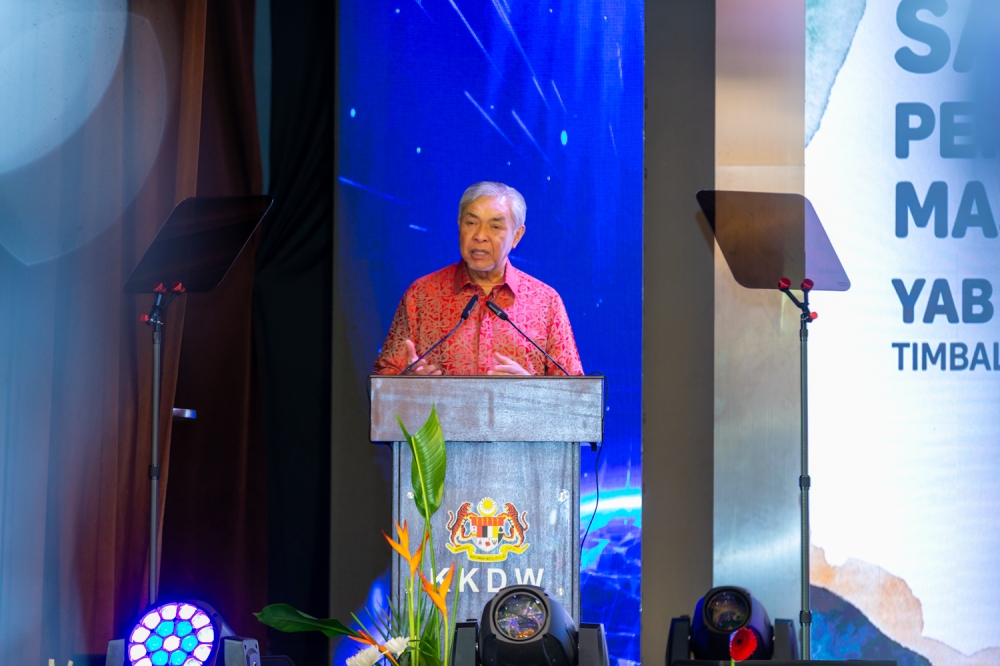
Deputy Prime Minister Datuk Seri Ahmad Zahid Hamidi has categorically rejected suggestions that he participated in or facilitated secret discussions between representatives of Barisan Nasional, Perikatan Nasional, Gabungan Parti Sarawak, and Gerakan Rakyat Sabah. Speaking from Putrajaya on July 21, Zahid characterized the circulating reports as baseless speculation, underscoring that such claims do not merit serious consideration given the established political arrangements governing Malaysia's federal administration.
The denial arrives amid sustained speculation within Malaysian political circles about the stability and future trajectory of the current unity government framework. Since the formation of this coalition structure, observers have consistently monitored for signals of potential realignment or fracturing, particularly as individual component parties navigate their own organizational pressures and electoral calculations. Zahid's forceful rebuttal suggests that senior government figures recognize the importance of projecting coherence and stability, particularly when external parties voice concerns about their position within the existing arrangement.
Zahid's statement reaffirms his personal commitment to the unity framework that has governed Malaysian politics since its establishment. His willingness to publicly address the allegations—rather than allowing them to circulate unchallenged—reflects the sensitivity surrounding coalition dynamics at this juncture. The deputy premier's emphasis on continuity signals that Barisan Nasional, his own political vehicle, remains invested in the current configuration despite the inevitable strains that arise when multiple large political formations share power.
The timing of these reports and Zahid's response carries particular significance given the domestic political environment in Malaysia. Regional tensions, economic headwinds, and internal party dynamics within the component coalitions all create incentives for political actors to explore alternative arrangements. The fact that such reports gained sufficient traction to warrant a formal denial from the second-highest official in government indicates that questions about coalition sustainability persist among Malaysian political observers and the informed public.
For Perikatan Nasional specifically, the circulation of such rumors may reflect ongoing concerns about its access to ministerial positions and influence within the unity framework. Although PN joined the coalition arrangement, some within the formation have periodically voiced frustrations about their party's role and the distribution of resources. These internal dynamics likely contributed to the emergence of the reported talks, whether or not they occurred as initially described.
The alleged involvement of Gabungan Parti Sarawak and Gerakan Rakyat Sabah in such discussions—had they actually taken place—would have had even more significant implications. Both state-based parties wield considerable influence over Malaysia's federal balance, commanding substantial parliamentary blocs and maintaining independent political organizations. Any serious realignment at the federal level would necessarily involve securing their participation or at minimum their acquiescence.
Zahid's emphasis on unity government principles carries broader meaning for Malaysia's political trajectory. The unity framework represents a deliberate choice to include multiple ideologically distinct political formations within a single governing coalition, a decision made explicitly to ensure political stability and prevent a return to the polarization that characterized earlier periods. The deputy premier's restatement of this commitment indicates that senior leaders continue to view this arrangement as superior to alternatives, despite its inherent complexities and occasional friction.
The implications of any genuine breakdown in this coalition structure would extend beyond parliamentary mathematics. A significant realignment involving these major political actors could alter the balance of power across Malaysia's states, affect the implementation of major policy initiatives, and potentially destabilize the broader governance framework that has enabled Malaysia to navigate recent economic and social challenges. This context explains why coalition stability commands such intense scrutiny from political observers and why denials from top officials carry weight.
Looking forward, Zahid's statement appears designed to forestall further speculation by establishing a clear official position on the matter. Whether such discussions have actually occurred behind closed doors remains known only to the principals involved, but the deputy premier's forceful denial aims to signal that the unity government remains the operative framework guiding Malaysian politics. His reaffirmation of support for this structure serves as a reminder that despite periodic tensions and rumors, the major coalitions remain committed to the existing arrangement, at least for the present political cycle and foreseeable future.

