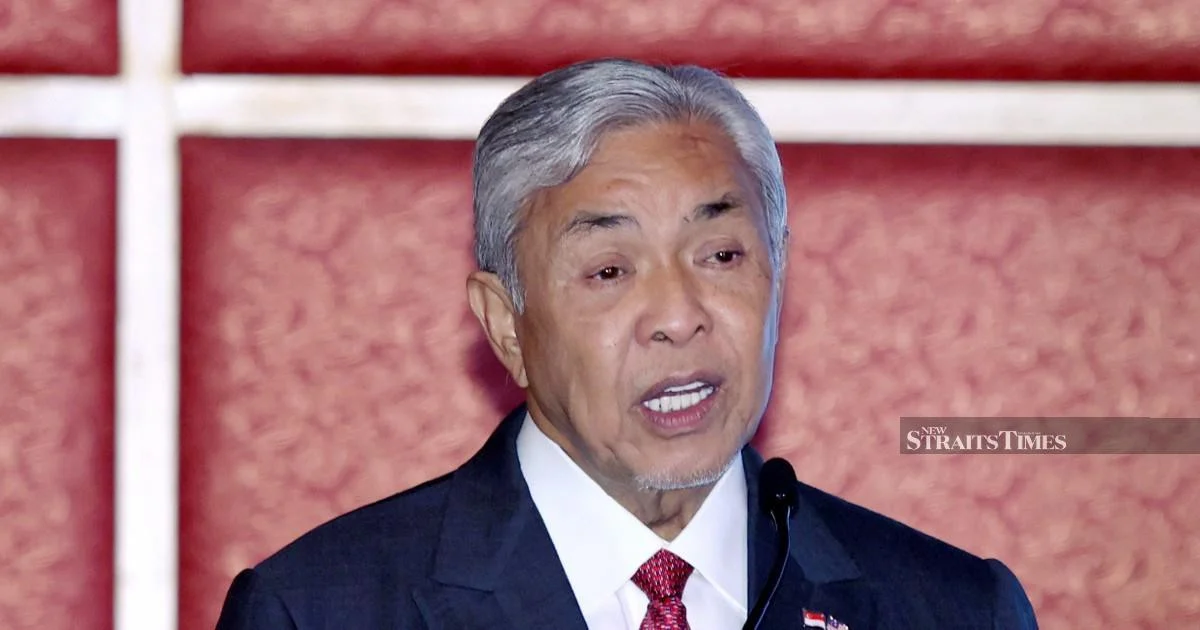
Umno president Datuk Seri Dr Ahmad Zahid Hamidi has firmly denied that his party reached any formal arrangement with Pas over electoral seat distribution for the forthcoming Negri Sembilan state election. His statement addresses mounting speculation within political circles about coalition dynamics and the terms under which Barisan Nasional components will compete in the state polls.
The denial carries significant weight given Umno's traditional dominance in Negri Sembilan and the party's critical role in maintaining the stability of federal coalitions. Zahid's explicit rejection of seat-negotiation claims suggests either that discussions have stalled or that Umno intends to contest the election under different terms than previously anticipated by observers.
Negri Sembilan has historically been considered an Umno stronghold, with the party winning substantial majorities in previous state elections. The state's political landscape remains crucial to the broader Barisan Nasional calculation, as losses there would carry symbolic and strategic weight beyond the state assembly. Zahid's stance may reflect Umno's confidence in its ground position or alternatively indicate friction between Barisan components over resource allocation.
The timing of these denials matters considerably, as state elections in Malaysia typically require careful choreography between coalition partners to avoid direct competition that might weaken the overall Barisan position. Pas, which has secured its own electoral foothold in several states, may have sought a formal arrangement to protect specific constituencies. Zahid's rejection of such claims could indicate that Umno prefers flexibility in its candidate selection process rather than being bound by prior commitments.
For Malaysian voters and political analysts, the statement raises questions about the coherence of the Barisan Nasional alliance, particularly as it relates to how partners share electoral territory. Coalition arrangements typically involve complicated negotiations over which party contests which seats, designed to prevent vote-splitting among opposition-hostile voters. Any breakdown in such processes can undermine overall performance.
The political stakes in Negri Sembilan extend beyond local concerns. State-level electoral outcomes frequently influence perceptions of federal government strength and can affect intra-coalition morale. A strong Barisan performance reinforces claims of democratic mandate, while setbacks invite questions about leadership and strategic direction within the coalition itself.
Pas has expanded its political presence substantially in recent years, moving beyond its traditional strongholds in the north to contest seats across Malaysia. This expansion sometimes creates friction with existing Barisan components that view Pas as encroaching on their traditional territory. Zahid's apparent unwillingness to commit to a formal arrangement with Pas may reflect Umno's determination to maintain its customary dominance in Negri Sembilan without constraints imposed by coalition partners.
The situation also reflects broader Malaysian coalition politics, where partners frequently negotiate over representation and resources while maintaining public unity. Such negotiations occur routinely ahead of state and federal elections, with agreements typically kept confidential until campaign periods. Public statements like Zahid's serve multiple purposes: they may communicate Umno's negotiating position to Pas, signal confidence to party members, or address concerns among Umno grassroots about potential seat losses.
Regionally, the dynamics within Malaysian coalition politics are closely watched by observers in Singapore, Thailand, and Indonesia, where similar multi-party arrangements face comparable challenges. The ability of diverse political parties to maintain functional alliances while competing internally is viewed as important to regional stability and democratic functioning across Southeast Asia.
For the ordinary voter in Negri Sembilan, clarity on seat arrangements directly affects electoral choices. Confused or duplicative candidacies can leave voters uncertain about which candidate represents their preferred coalition, potentially depressing turnout or inadvertently benefiting opposition candidates. Clear communication about who contests which seats ultimately serves democratic participation.
The broader implications of Zahid's statement extend to confidence in the Barisan Nasional's ability to present a unified front in upcoming electoral contests. Political observers will scrutinize subsequent developments closely to determine whether negotiations proceed differently behind closed doors or whether genuine disagreements exist between Umno and Pas on Negri Sembilan representation.

