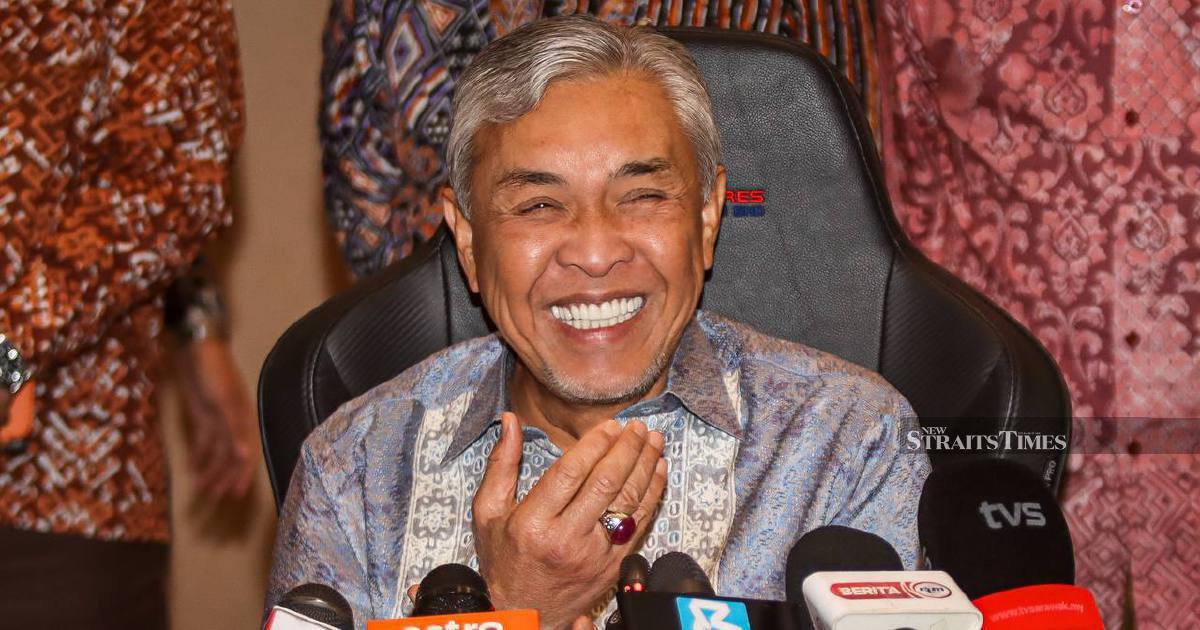
Deputy Prime Minister Datuk Seri Dr Ahmad Zahid Hamidi responded today in George Town to Prime Minister Datuk Seri Anwar Ibrahim's recent pantun with a four-line Malay verse of his own, extending a symbolic dialogue between Malaysia's two most senior political figures through the medium of traditional poetry.
The exchange represents an intriguing moment in contemporary Malaysian politics, where the nation's premier leadership has chosen pantun—the classical Malay quatrain that has long served as a vehicle for cultural expression and social commentary—as a channel for communicating messages of unity and national purpose. Such displays harken back to historical traditions where court poets and leaders employed verse to address matters of state and public sentiment, a practice that demonstrates how deeply rooted these linguistic forms remain in Malaysia's political consciousness.
Pantun, with its distinctive rhyme scheme and often layered meaning, has historically allowed speakers to convey messages with grace and diplomatic subtlety. The choice of this medium by both leaders suggests a deliberate attempt to appeal to cultural sensibilities while addressing substantive themes. The specific imagery employed—references to roofing and storms in Zahid's contribution—carries metaphorical weight, likely alluding to concepts of protection, stability, and weathering challenges, all relevant to national governance and social cohesion.
The interaction between Anwar and Zahid carries particular significance given Malaysia's recent political trajectory. The two leaders represent different political constituencies and have navigated complex relationships within the Madani framework of government. That they engage through pantun rather than press statements or formal declarations suggests an effort to maintain decorum while making statements that resonate with the broader Malaysian public, particularly those who value traditional cultural forms as markers of authentic Malaysian identity.
This poetic exchange also reflects broader communication strategies employed by political leaders seeking to connect with citizens beyond conventional media channels. In an era of social media and instant messaging, the deliberate choice to compose and share classical Malay verse carries symbolic weight—it signals respect for heritage, command of cultural literacy, and a commitment to unity messaging that transcends partisan divisions. The pantun format, with its requirement for creativity and linguistic precision, also subtly demonstrates intellectual capability and cultural grounding.
From a regional perspective, Malaysia's continuation of such traditional practices distinguishes its political discourse from neighbouring countries. While global trends increasingly push toward digital and informal communication, Malaysian political leaders occasionally retreat to classical forms, reaffirming the nation's multicultural literary heritage even as they address contemporary governance challenges. This balance between tradition and modernity reflects Malaysia's broader positioning within Southeast Asia.
The government's emphasis on unity through cultural channels comes at a time when Malaysian society grapples with various pressures—economic uncertainties, social divisions, and demographic shifts. By employing pantun, leaders implicitly reference shared cultural touchstones that transcend racial and religious boundaries, even as Malaysia remains a multi-ethnic nation. The imagery of roofs and storms carries universal resonance regarding collective security and shared burdens.
Observers of Malaysian politics will recognize this exchange as part of broader narrative management by the current administration. Anwar's initial pantun, followed by Zahid's response, creates an appearance of leadership harmony and cultural sophistication. Whether such gestures translate into substantive policy coordination or represent purely symbolic messaging remains an open question for political analysts and the public alike.
The incident also illustrates how Malaysian political communication often operates at multiple levels simultaneously. Surface readings focus on the poetic composition itself, while deeper interpretations examine what messages are being conveyed to various audiences—party members, coalition partners, the general public, and international observers. This layered approach to political speech has deep roots in Malaysian governance traditions.
For Malaysian citizens and regional observers, the exchange underscores the continuing relevance of traditional cultural forms in modern politics. In a world of rapid technological change and globalizing influences, the deliberate invocation of pantun by senior leaders affirms that classical Malaysian literary traditions retain currency and dignity at the highest levels of governance, contributing to national identity and political discourse.
The broader implications extend beyond the immediate exchange between the two leaders. Should this become an established pattern of communication between Anwar and Zahid, it could influence how other government officials and opposition figures engage in public discourse, potentially elevating the cultural quality of political speech while maintaining professional boundaries. The precedent, whether intentional or not, may inspire greater appreciation for Malaysia's literary heritage among younger generations navigating digital-first communication environments.

