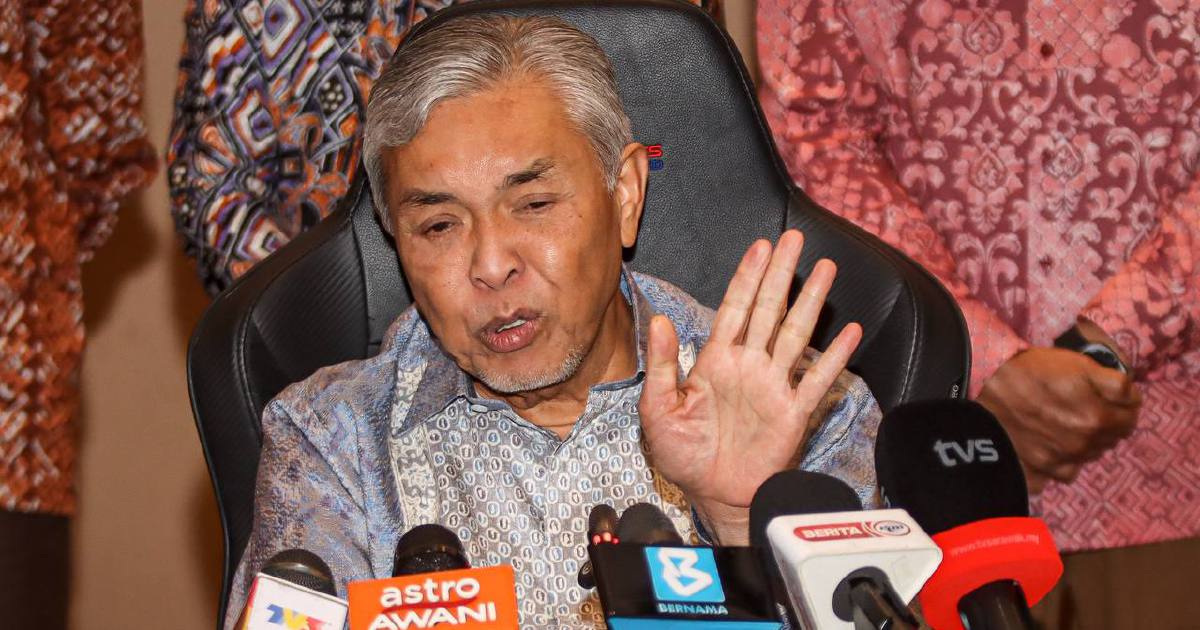
Datuk Seri Dr Ahmad Zahid Hamidi has moved swiftly to quash persistent rumours about any coalition manoeuvre aimed at removing Prime Minister Datuk Seri Anwar Ibrahim from office, signalling that Malaysia's governing alliance intends to maintain its current political arrangement. Speaking in George Town, the Barisan Nasional chairman sought to place the speculation to rest by explicitly confirming his coalition's unwavering dedication to the unity government framework, which has underpinned Malaysia's political stability since 2022.
The remarks carry particular weight given the ongoing tensions that periodically surface within Malaysia's complex political landscape, where coalition partners must constantly negotiate competing interests and maintain delicate internal balances. Zahid's intervention appears designed to prevent further destabilisation of an already fragile consensus among the government's multiple supporting parties, each of which brings its own constituency and policy preferences to the table. By offering this reassurance publicly and prominently, he effectively signals to both internal stakeholders and the broader business and investment community that Malaysia's political environment remains secure and predictable.
The unity government framework, established following the 2022 general election, represented a significant departure from Malaysia's traditional two-coalition system, bringing together Barisan Nasional, Pakatan Harapan, and various other political groupings under a shared governance arrangement. This unprecedented coalition structure has required sustained commitment from parties that historically competed as fierce rivals, making such periodic reaffirmations of solidarity essential to prevent the gradual erosion of trust that could eventually fracture the alliance. Zahid's position as Barisan Nasional chairman makes his statement particularly authoritative, since his coalition represents one of the largest blocs within the unity government and holds considerable sway over its viability.
Speculation about potential shifts in Malaysia's political configuration surfaces with surprising regularity, driven by observers seeking patterns in casual conversations between politicians, shifts in parliamentary voting patterns, or statements perceived as critical. The challenge for Malaysia's political leaders lies in managing legitimate debate and policy disagreement without allowing such discourse to catalyse actual defections or coalition-destabilising behaviour. By explicitly rejecting the notion of any removal attempt, Zahid attempts to establish clear parameters around what constitutes normal political discourse versus what would constitute a genuine threat to governmental stability.
The commitment to maintain the unity government until the conclusion of the 15th Parliament carries implications extending well beyond the immediate political sphere. International investors and foreign governments assess Malaysia's political stability as a crucial factor in making long-term economic commitments, and extended periods of governmental predictability support currency stability, credit ratings, and foreign direct investment flows. The region's other Southeast Asian nations, many facing their own political challenges, observe developments in Malaysia as a reference point for how multiparty coalitions navigate governance challenges, making Malaysia's political cohesion relevant to regional stability considerations.
Within the unity government framework, Barisan Nasional's role has shifted from its traditional dominance spanning decades to one of partnership among equals. This recalibration requires different approaches to negotiation, compromise, and consensus-building compared to the coalition's previous working methods. Zahid's statement implicitly acknowledges that maintaining this partnership demands active, public commitment rather than passive acceptance, particularly as the electoral cycle approaches and pressure builds from various quarters for policy adjustments favouring particular coalition partners.
The Malaysian context further complicates political calculations given the intersection of federal governance with state-level politics, where different coalitions control different territories. Some states remain under Barisan Nasional administration while others are governed by Pakatan Harapan-aligned governments, creating multiple levels of intergovernmental negotiation and occasional policy friction. Managing these tensions while maintaining unity at the federal level requires sophisticated political coordination and mutual respect for each partner's autonomy within agreed boundaries.
For ordinary Malaysians, declarations of political stability carry practical significance extending to predictability in economic policy, regulatory consistency, and infrastructure planning. Businesses planning expansion, investors considering entering Malaysian markets, and citizens making long-term financial decisions all benefit from assurance that the governing coalition will remain functional and able to implement planned policies. Conversely, persistent uncertainty about governmental viability can create drag on economic activity as decision-makers adopt a wait-and-see posture regarding major commitments.
Zahid's statement represents one component of an ongoing effort to normalise Malaysia's unity government arrangement and move beyond the narrative of temporary expedience or grudging cooperation that characterised early descriptions of the coalition. Building genuine, sustainable multiparty governance requires consistent messaging that transcends immediate tactical considerations, establishing patterns of predictable behaviour that allow coalition partners and external observers to develop confidence in the arrangement's durability. The 15th Parliament still has several years of its term remaining, providing sufficient time for the unity government to demonstrate its capacity to deliver governance outcomes and manage inevitable disagreements within a framework of shared commitment.
As Malaysia navigates its current political phase, Zahid's remarks serve simultaneously as an internal commitment to coalition partners, a reassurance to the investment community and foreign governments, and a message to opposition elements that the government coalition possesses the cohesion and determination to maintain its grip on power. Whether this rhetorical commitment translates into sustained political practice will ultimately determine whether the unity government becomes an established feature of Malaysian governance or remains a transitional arrangement driven by particular electoral circumstances.

