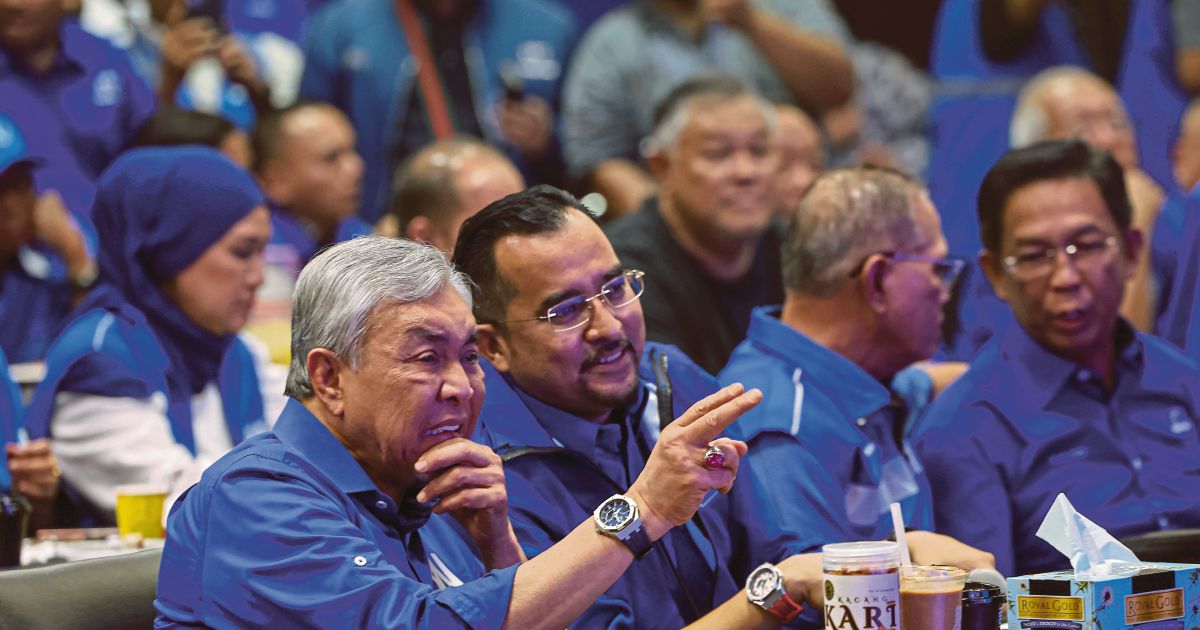
Barisan Nasional chairman Datuk Seri Dr Ahmad Zahid Hamidi has signalled that any decision on the coalition's Menteri Besar candidate for Negri Sembilan will not be made without first consulting the Yang di-Pertuan Besar, the state's constitutional ruler. The statement, made during a visit to Seremban, underscores the importance that BN places on maintaining the proper constitutional protocols when dealing with matters of state leadership appointments.
The deliberate approach marks a departure from rushed decision-making that has sometimes plagued leadership transitions in Malaysia's political landscape. By prioritising an audience with the state's ruler, Zahid demonstrates awareness that Menteri Besar appointments carry constitutional weight beyond mere party politics. The Yang di-Pertuan Besar, as the ceremonial head of state, exercises influence over such nominations, and securing his input beforehand ensures smoother proceedings and demonstrates respect for the state's institutional hierarchy.
This procedural emphasis reflects lessons learned from previous leadership succession disputes that have occasionally created friction between federal parties and state rulers across Malaysia. In recent years, various states have witnessed tensions when parties attempted to push through candidates without adequate consultation with the palace. Zahid's commitment to seeking the ruler's guidance suggests BN is determined to avoid such complications in Negri Sembilan, where stable governance remains crucial for the state's economic and administrative functions.
The Menteri Besar position carries significant implications for Negri Sembilan's development agenda and regional standing within Malaysia's federal framework. As a state positioned between Kuala Lumpur and the southern regions, Negri Sembilan serves as an important economic corridor and administrative hub. Whoever assumes the Menteri Besar role will oversee key portfolios including land development, state revenue generation, and implementation of federal-state coordination initiatives. The appointment therefore warrants careful consideration and consensus-building, not merely internal party calculations.
BN's coalition structure in Negri Sembilan encompasses multiple component parties, each potentially harbouring aspirants for the top state position. The multi-party nature of BN means that candidate selection involves balancing interests among UMNO, MCA, MIC, and other coalition members. By proposing a transparent consultation process involving the ruler, Zahid signals that the decision will be made on merit and suitability rather than purely on intra-party power struggles. This approach, if executed properly, could strengthen public confidence in BN's governance credentials.
The mention of formal audience protocols also carries symbolic importance in Malaysian politics. State rulers, while constitutionally limited in executive powers, retain significant moral authority and symbolic importance within their respective jurisdictions. Respecting this symbolism matters for maintaining the constitutional monarchy system that underpins Malaysia's political stability. When federal parties acknowledge and honour these protocols, they reinforce institutional trust and demonstrate commitment to constitutional norms rather than pure majoritarianism.
From a regional governance perspective, Negri Sembilan's leadership matters beyond state boundaries. The state hosts important federal territories and serves as a transit point for commerce between Klang Valley and southern states. A stable, well-regarded Menteri Besar can facilitate better coordination on infrastructure projects, investment initiatives, and interstate commerce. Conversely, a controversial appointment could generate friction that hampers administrative efficiency. Zahid's consultation approach appears designed to minimise such risks by building consensus before announcement.
The timing of such consultations also warrants attention. Political circumstances in Malaysia continue evolving, with Pakatan Harapan and other opposition coalitions actively competing for electoral advantage. In this competitive environment, BN's performance in states like Negri Sembilan becomes increasingly crucial for national political balance. Appointing a strong, respected Menteri Besar could bolster BN's electoral standing in the state, making the selection process far more consequential than a routine administrative decision.
For Malaysian observers tracking governance standards, Zahid's commitment to consulting the Yang di-Pertuan Besar represents a positive indicator for institutional respect. Whether such commitments translate into substantive democratic consultation or remain performative rhetoric remains to be determined once the actual candidate emerges. The critical test will involve whether the consultation genuinely influences the final decision or serves merely as ceremonial endorsement of a predetermined choice.
Looking ahead, the appointment process in Negri Sembilan could set precedent for how BN handles leadership transitions in other states where the coalition maintains control. If executed transparently and with genuine stakeholder input, the Negri Sembilan model could enhance BN's reputation for institutional governance. However, if the process appears cosmetic while predetermined party interests dominate, it could undermine public trust in the coalition's commitment to proper constitutional procedures.
The pathway forward will likely involve internal BN discussions identifying potential candidates, followed by Zahid's formal audience with the Yang di-Pertuan Besar. This sequence respects both party democratic processes and constitutional requirements, balancing practical governance with symbolic recognition of the state's institutional framework. How effectively BN navigates this balance will significantly influence perceptions of the coalition's commitment to good governance principles.

